
The Maryland Department of Agriculture (MDA) and the US Department of Agriculture's Animal and Plant Health Inspection Service expanded the quarantine for the box tree moth (Cydalima perspectalis) into Harford County from 24 September, restricting the movement of regulated articles within the area.
Nine Maryland counties are now under quarantine. Allegany, Frederick, Garrett and Washington counties were placed under an order in March 2026, because of their closeness to neighbouring states with established populations and a confirmed find in Washington County. In August the quarantine was widened to Caroline, Cecil, Kent and Queen Anne's counties; the moth had not then been seen in Kent County, but its presence there has since been confirmed.
Businesses that grow and ship boxwoods must hold a certificate of inspection and sign a compliance agreement with MDA to move regulated items into or out of the zone. Nursery owners and residents inside it are asked to watch their boxwoods and take steps to limit the risk.
The moth, native to East Asia, is a federally regulated pest. It was first identified in the United States in New York in 2021 and has since spread to Delaware, Massachusetts, Michigan, New Jersey, Ohio, Pennsylvania, Virginia and West Virginia.
It threatens the region's nursery industry because its caterpillars feed mainly on boxwood, a widely planted ornamental shrub. Early infestations are hard to spot because the caterpillars feed on the undersides of leaves, and several generations can live on one shrub. Once a plant is stripped of leaves the caterpillars eat the bark, girdling and killing it.
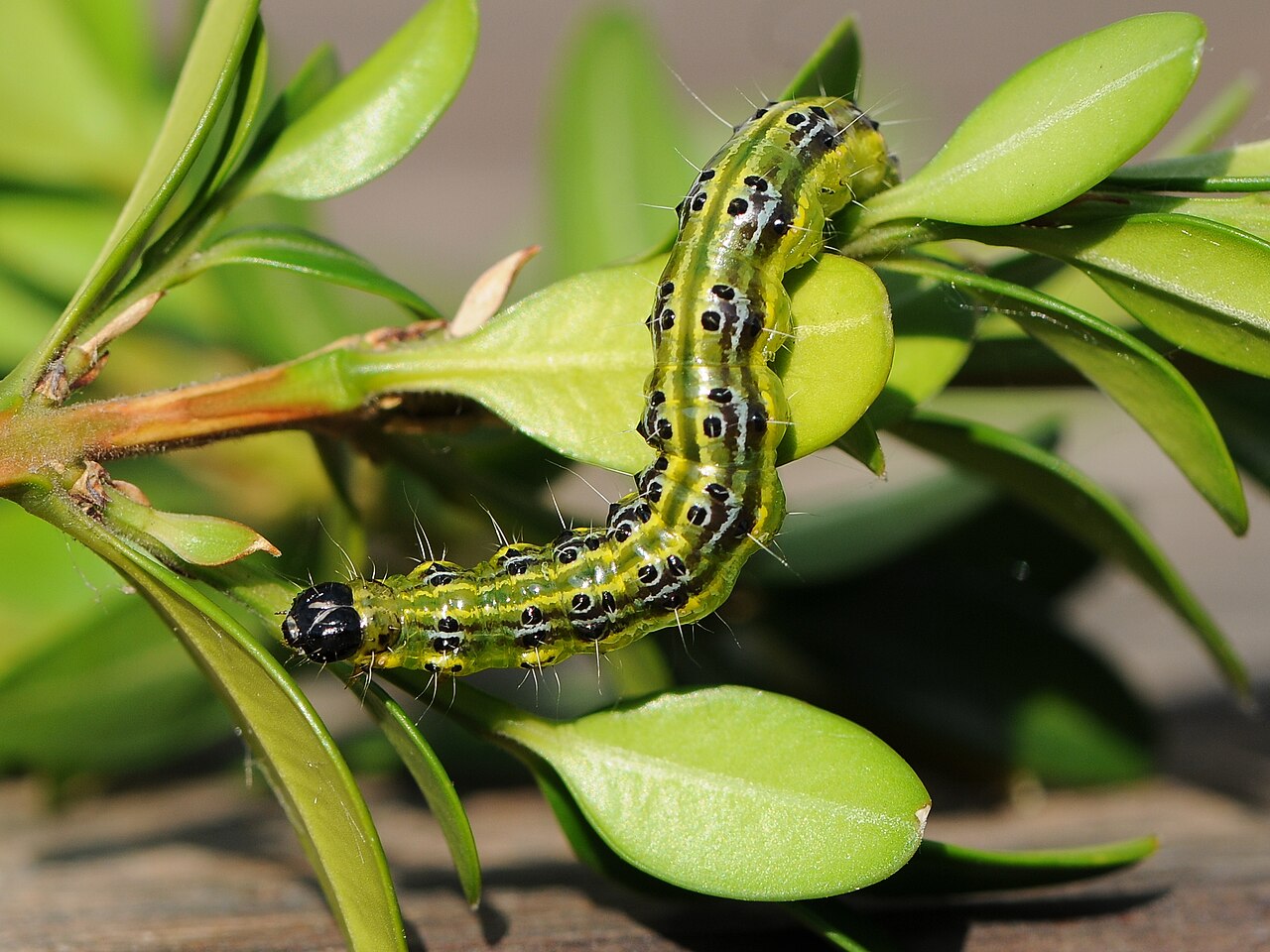
The caterpillars are lime green with thin black stripes and grow to about 1.5 inches; the adults have white wings with a brown border and are active mostly at night. MDA asks people to look for defoliation, stripped bark and caterpillar webbing, to report suspected moths through its online form, to allow officials to inspect plants and set traps, and to double-bag any infested material before putting it in the rubbish.
Photo: Friedrich Böhringer / Wikimedia Commons (CC BY-SA 2.5)
Source: Morning Ag Clips
Comments
(0)