
Boishakh is the first month of the Bengali year. Traditional fairs, festivals and other events run throughout the month. Amid new hopes, farmers turn back to their fields, because this is when they begin planning the whole year's farm work. Boishakh runs from mid-April to mid-May. Here is what farmers should do this month.
Boro rice
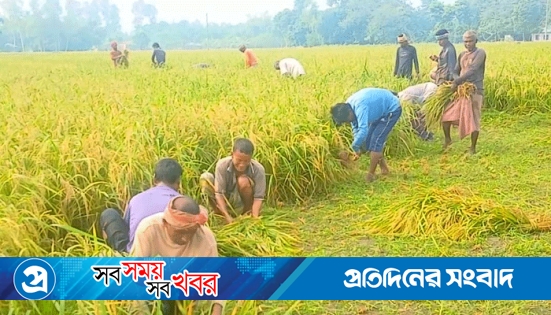
Those who planted boro rice this season must complete the last instalment of urea when the seedlings are about 50 to 55 days old; this is not needed if urea super granules are used. Weeding, irrigation and pest control must be done properly as always. When the panicle begins to form, the water in the field should be doubled, and when the grain hardens, the water should be drained from the field.
In Boishakh, boro rice is usually attacked by stem borers, brown planthoppers, green leafhoppers, rice bugs, armyworms, mealybugs, ear-cutting caterpillars and leaf folders. Fields should be checked regularly and attacks stopped through appropriate pest management.
First, rice fields should be kept pest-free by setting light traps, using sweep nets, destroying egg masses of harmful insects, conserving beneficial insects and putting up branches in fields as perches for birds. If these do not stop the attack, then as a last resort the right pesticide should be applied, on expert advice, at the right time, in the right dose and in the right way.
Rice fields may also suffer from ufra, brown spot, blast, bacterial leaf blight, tungro and other diseases at this time. If ufra appears, apply any nematicide such as Furadan 5G or Curater 5G. If blast appears, stop applying urea for the time being and apply 400 grams per hectare of Trooper, Zil or Native twice at intervals of 10 to 15 days.
For leaf blight, top-dress an extra 5 kg of potash per bigha, dry out the field and irrigate again after 7 to 10 days. To control tungro, its carrier, the green leafhopper, must be controlled.
Wheat and maize
Wheat and rabi maize usually come home from the field in Boishakh and must be stored well. Storage means drying the seed well, choosing a suitable container, storing it airtight and keeping the container off the soil or floor. Placing dried neem leaves or bishkatali leaves in the container easily prevents insect attack.
When kharif maize is 20 to 25 days old, urea should be top-dressed. If the soil lacks moisture, give a light irrigation, weed the field and at the same time earth up the base of the plants.
Jute
Boishakh is the right time to sow tossa jute seed. O-4 and Falguni tossa are good varieties. Tossa jute does well in loam or sandy loam soil. Before sowing, mix each kilogram of seed with 4 grams of Vitavax or 150 grams of crushed garlic, dry it and sow in lines or by broadcasting. Line sowing needs 25 to 30 grams of seed per decimal; broadcasting needs a little more, 35 to 40 grams.
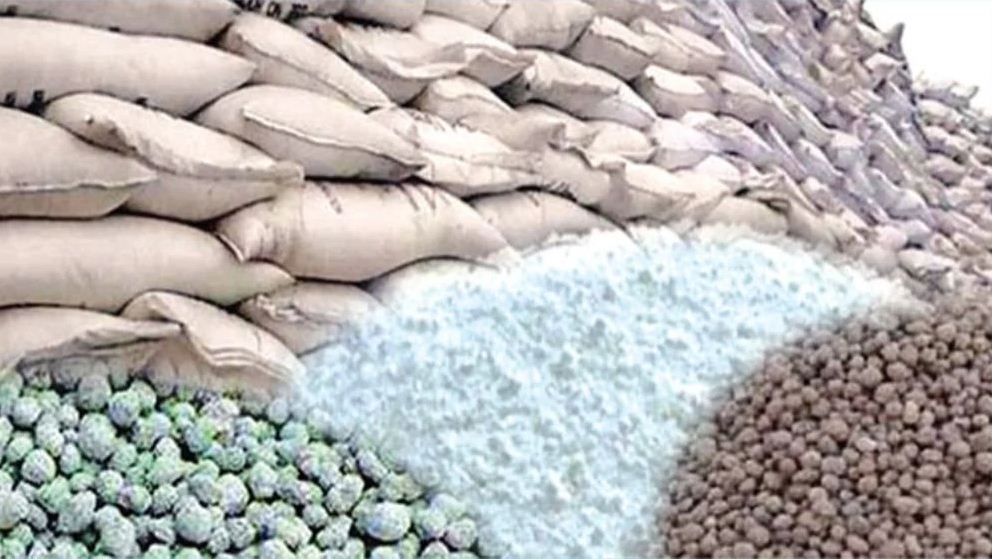
For a good yield, 800 grams of urea, 200 grams of TSP and 250 grams of MOP per decimal should be mixed well into the soil at the final ploughing. Where the soil lacks sulphur and zinc, 400 grams of gypsum per decimal and zinc fertiliser (the source gives 50 kg per decimal) should be applied. Using 20 kg of cow dung per decimal greatly reduces the amount of chemical fertiliser needed.
In early-sown jute fields, weeding, thinning out dense seedlings and irrigation should be done properly. Jute may be attacked by mole crickets and stem weevils at this time. Mole crickets should be controlled by irrigating and applying a soil insecticide. Plants attacked by stem weevils should be pulled out and the field kept clean.
Besides pests, jute may suffer from black band, soft rot, root knot and yellow-green leaf diseases. Weeding, removing affected plants and the rational use of pesticides give relief from these diseases.
Vegetables
This month, prepare the land in the homestead garden and grow stem amaranth, kangkong, Indian spinach, bitter gourd, okra, aubergine and pointed gourd. You can also make pits and sow snake gourd, ridge gourd, sponge gourd, cucumber, sweet pumpkin and ash gourd. If you have seedlings raised earlier, healthy 30 to 35-day-old seedlings can be planted. Most vegetables of this season are climbers, so trellises should be built as soon as possible.
The more a climbing vegetable grows in size, the less it flowers and fruits. So if plants grow too vigorously, 15 to 20 per cent of the leaves and vines should be cut back, which brings earlier flowers and fruit. Hand or artificial pollination greatly helps increase the yield of all gourds. Once flowering starts, collect freshly opened male flowers early every morning, remove the petals and rub the anther on the stigma of the female flowers; this will raise the yield a great deal.
Fruit flies do heavy damage to gourds this month. Setting poison-bait traps on stakes in the field helps a lot, and sex pheromones can also be used to prevent attacks.
To grow summer tomatoes, farmers can grow BARI Tomato 4, BARI Tomato 5, BARI Tomato 6, BARI Tomato 10, BARI Tomato 11, BARI Hybrid Tomato 4, BARI Hybrid Tomato 5, BINA Tomato 1 or BINA Tomato 2. Summer tomatoes need a polythene shelter, and a hormone called Tomatotone must be applied to grow the crop successfully.
Mix 20 ml of Tomatotone per litre of water and spray it on the flowers with a sprayer 2 to 3 times, 5 to 7 days apart, after flowering. A little extra care and attention brings remarkable results.
Trees and orchards
This month, watch out for mango fruit flies and other pests. The same kind of poison bait used in vegetable fields works well against fruit flies. A small amount of Dipterex, Dursban or Denkavepon helps. Soft rot of jackfruit appears at this time; where the disease is prevalent, spray Foliculu at 0.05 per cent, or Indofil M-45 or Ridomil MZ-75 at 2.5 grams per litre of water, three times before the disease appears on the fruit.
Coconut seedlings can be planted now. Healthy seedlings of good varieties can be planted 6 to 8 metres apart in pits 1 foot long, 1 foot wide and 1 foot deep. Five to seven days before planting, mix 10 kg of organic manure, 750 g of TSP, 550 g of MOP and 500 g of gypsum well with the soil in each pit. It is best to plant seedlings on the same day they are lifted from the nursery, or otherwise as soon as possible.
When planting, set the seedling in the pit so that only about an inch of the back of the coconut stays above the soil and the rest is below. Date palm and palmyra seedlings can now be planted in a planned way along village roads; with care, they grow big within 2 to 3 years. Fruit trees in particular need care now for a good yield: looking after mother trees, weeding and irrigating as needed bring good results. After rain, old bamboo clumps should be cleaned and given compost, and work on new bamboo clumps should begin now. Those who want to plant trees next season should now choose the land, prepare the orchard layout and finish other preliminary work.
Livestock and poultry
In hot weather, poultry farms see lower feed intake, slower weight gain in broilers, lower egg production and poorer shell quality in layers and breeders, and higher mortality. So chicks should be given plenty of vitamin C and glucose as soon as they are placed in the brooder shed.
For layer houses, the roof or ceiling of the shed should be painted white or aluminium, colours that reflect heat. In extreme heat, water should be sprayed through pipes or sprinklers. On small farms, water should be sprinkled on jute sacking placed over the roof. In intense heat, ice can be mixed into drinking water.
Regular vaccination is essential to prevent poultry diseases. Contact the upazila livestock office to arrange vaccination against Ranikhet, bronchitis, fowl pox, fowl cholera and Marek's disease in chickens, and plague and cholera in ducks.
Now is a good time to grow Napier, bajra, para grass, maize and ipil-ipil as fodder. Growing fodder around homes, on pond banks, along roads and on fallow land can be profitable. In the summer heat, livestock need extra feed, rest, ventilation and light in sheds, plenty of drinking water and other care. Vaccination and cleanliness must be ensured to prevent and treat anthrax and haemorrhagic septicaemia in cattle.
Fisheries
Boishakh is the right time to stock fish in ponds. Prepare the pond well by draining it, removing mud, applying lime, clearing weeds, filling it with water, testing the water and pruning or cutting down trees on the banks that shed leaves constantly. Then, for mixed culture, release 30 to 40 healthy fingerlings of 4 to 5 inches per decimal. Keeping the three layers of water in mind, tilapia, sarputi, nilotica, carps such as rui, catla, mrigal and kalibaus, and if possible prawn fry can be stocked. Fingerlings should be bought from a trusted source.
Beware of Kalbaishakhi storms
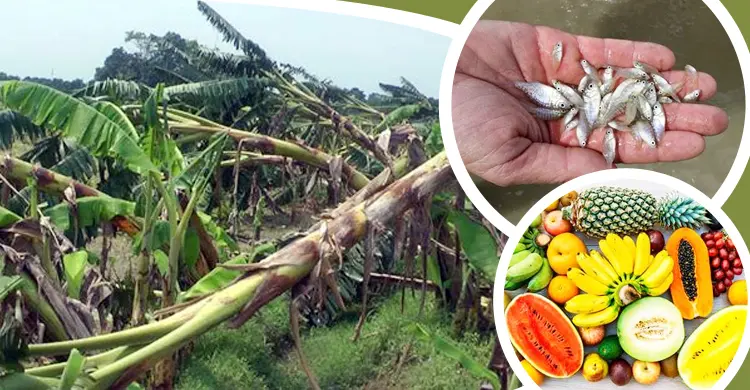
With the arrival of Boishakh, seasonal Kalbaishakhi storms have begun in different parts of the country and have already flattened farmers' crops in several places. A Kalbaishakhi is a kind of brief rain and thunderstorm that usually occurs in Bangladesh and parts of India from April to May, that is, in Boishakh.
The meteorological department now usually gives advance warnings of these storms by region using advanced technology, but because the storms strike within a very short time, the damage is heavy. Judging the weather, farmers should harvest early crops before a storm, which may reduce losses somewhat. Crops that can be grown early should be sown early so that they can be harvested before Boishakh. Losses can be reduced through advance publicity and wide public awareness.
Source: Jagonews24. First published in Bengali on The Agro News.
Comments
(0)