
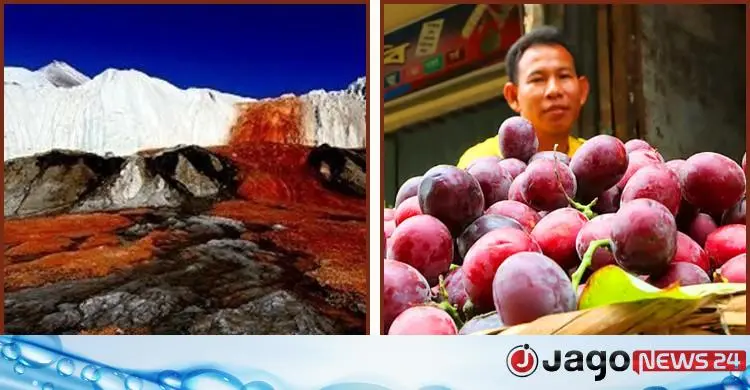
Everything around is covered in ice, and through it pours what looks like red blood, as if bursting from the heart of a frozen mountain. It is called Blood Falls. Set amid the white ice of Antarctica, this waterfall of 'blood' could frighten anyone who sees it unexpectedly: from a huge ice-covered mountain, red liquid flows instead of water.
Remarkably, below freezing point, where everything should freeze solid, a blood-red stream keeps flowing. It has come from the Taylor Glacier for ages. The valley, in Victoria Land, first came to light in 1911, when the Australian geologist Griffith Taylor found the red waterfall. It is essentially a flow of salty water mixed with iron oxide. The explorers of the time thought the red colour came from algae, but it was later found that there was no such red algae there; the deep red colour comes from large amounts of iron.
Why the water is red
According to research, the red water comes mainly from a mixture of excess salt and mineral iron, which reacts with the air and turns red. Just as iron turns red when it rusts, this water takes on a red colour: when the iron-rich brine meets the air, the iron reacts with oxygen and the water turns red.
Ken Levy, a physicist at Johns Hopkins University, said: "I studied it with a microscope and found it contains tiny pieces of iron. It also contains various elements besides iron. There is also ferric hydroxide beneath the glacier, and micro-organisms live with them. The red fountain is created by the reaction of all these things."
Scientists say the red colour shows that life is developing beneath the glacier. The glacier's water is salty and, scientists believe, part of a very ancient ecosystem. Even in such a hostile environment, with almost no oxygen, no sunlight and temperatures always far below freezing because of the ice cover, life has been found. The site is home to bacteria of a rare subglacial ecosystem that survive where there is no oxygen.
Research has found particles of silicon, calcium, aluminium and sodium in the falls as well as iron. About 2 million years ago there was a huge lake in the area, which was later buried under the glacier. Researchers at the University of Alaska Fairbanks found that the falls have been flowing for about 1.5 million years. Tourists and scientists flock to the valley to see them, though the route is very difficult; the mysterious falls in Antarctica's white ice remain an attraction for adventure lovers.
The hills' 'blood fruit'
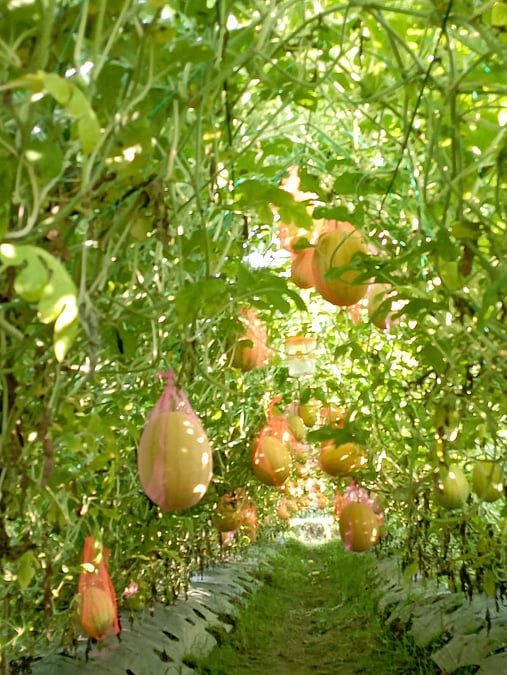
In Bangladesh, meanwhile, a hill fruit called 'blood fruit' has suddenly become a hot topic. From a distance it may look like hanging grapes, but it is not. It is a wild fruit, known in English as blood fruit, and hill communities call it by different names. At the start of this season it sold for more than Tk 400 a kg in markets in Dhaka and Chattogram. It went viral on social media because its bright red inside looks much like blood.
The fruit contains vitamin C, fibre and antioxidants, which are good for the body, and many are promoting it as low in calories and so helpful for weight control. The Chakma call it rosko and the Tripura taithak; other communities have their own names. Demand for the fruit has been rising for several years. In Bangladesh it is found in various natural forests of the Chittagong Hill Tracts and in many villages near the forests. It is also found in India's Andaman and Nicobar Islands and in Tripura.
Officials said, however, that the Department of Agricultural Extension (DAE) has no documented information on the fruit. The attractive fruit tastes a mix of sour and sweet. A report in Down To Earth, an Indian magazine on the environment, science and nature, said blood fruit grows mainly in natural forests and has become rare as forest cover has shrunk. An article in the journal Current Science suggested the variety could be conserved through cultivation.
Efforts to conserve it
Since 2018 several institutions have been working to protect the fruit. They include the Central Island Agricultural Research Institute (ICAR) for the Andamans, the ICAR Research Complex for the North Eastern Hill Region, and an agricultural college in Tripura. The fruit is not only tasty and 'nutritious'; it could also be used as a dye in various industries.
The fruit is green when unripe and red when ripe. The fleshy part between the skin and the seed is full of blood-red juice, which gives it its name. The plant flowers once a year and the fruit is available from April to June. With demand rising, farmers in Bangladesh have begun moves to grow it commercially.
The antioxidants and vitamin C in blood fruit help the body fight infection and boost immunity. Its high fibre aids digestion and helps relieve constipation. It may help keep the skin bright and hydrated, and its fats and antioxidants are good for the heart.
A word of caution: eating too much may cause an upset stomach or diarrhoea, and people with allergies should eat it carefully.
Source: Jagonews24. First published in Bengali on The Agro News.
Comments
(0)