
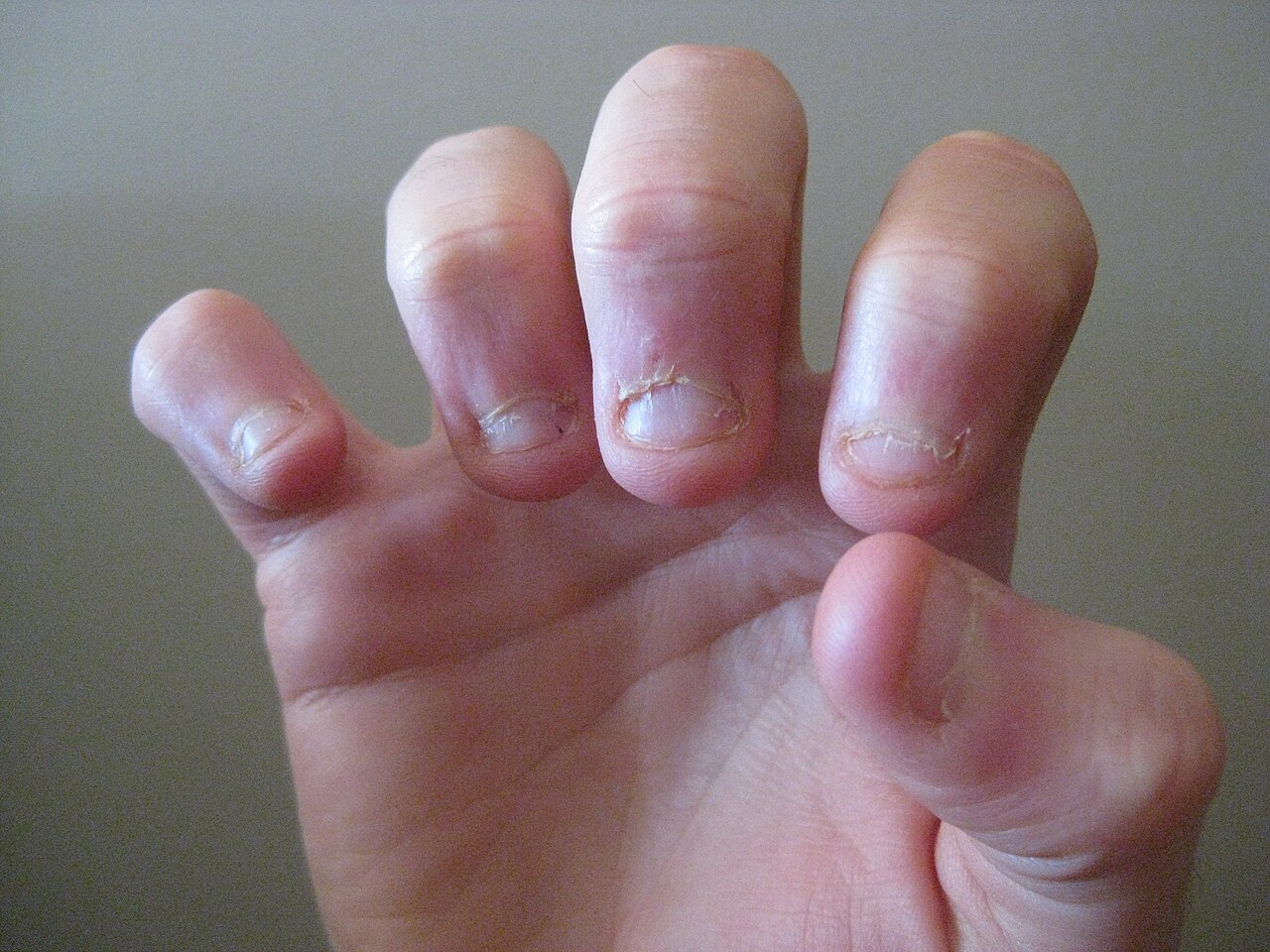
Many people bite their nails without noticing, while thinking hard, bored or under stress. Writing in Bigganchinta, Ashabil Yamin draws on several studies to show that the seemingly harmless habit carries real physical risks. A Cleveland Clinic survey in the United States found that two to three in every ten Americans bite their nails; there are no such figures for Bangladesh.
A 1988 study in the Journal of Clinical Microbiology by researchers from the University of Pennsylvania and Johns Hopkins University found more bacteria under the nails than anywhere else on the hand: about 245,000 on average, against about 355 on other parts. Biting nails puts those germs, dust and fungi straight into the mouth.
In 2007, researchers at Turkey's Ataturk University tested the saliva of 25 nail-biters and 34 non-biters and found harmful Enterobacteriaceae in 76 per cent of the biters but only 26.5 per cent of the others. A 2017 study of 200 saliva samples put the figures at 58 and 16 per cent.
A 2022 paper in the International Journal of Environmental Research and Public Health reported that regular nail-biters have abnormally short, ragged nails, damaged cuticles, sores and tiny bleeds around the nail, and nails that may darken or turn brittle. Constant biting also wears teeth and harms the gums.
Many people bite their nails to calm themselves, the piece notes, so the stress or restlessness behind the habit deserves attention too; keeping nails short and clean, like washing hands before eating, is a simple way to avoid germs.
Photo: Aboghetto / Wikimedia Commons (CC BY-SA 3.0)
Source: Bigganchinta


Comments
(0)