
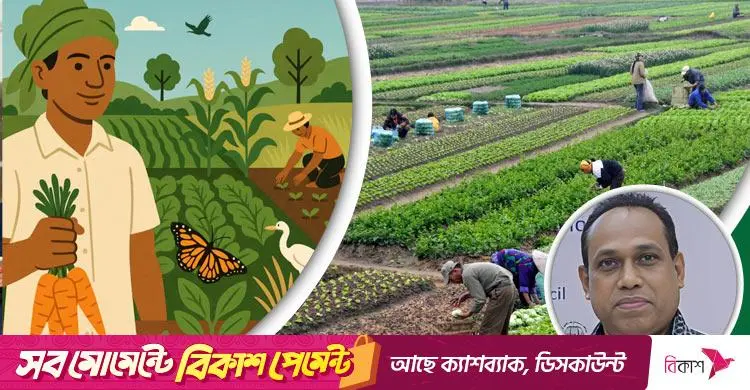
Biodiversity in agriculture means the variety of living things linked to farming systems, such as crops, plants, livestock, fish, insects and micro-organisms (bacteria, fungi). It covers the species of animals and plants used in farming or living in farm environments, and their different breeds and varieties.
How farming can protect biodiversity
- Growing many varieties and species: Biodiversity can be conserved by growing different varieties and species of rice, wheat, maize, vegetables, fruit and other crops on the same land.
- Conserving local varieties: Conserving local and ancient crop varieties and livestock such as cattle, goats, sheep, ducks and chickens is important for sustaining biodiversity.
- Organic farming: Farming by natural means without chemical fertilisers and pesticides protects biodiversity in agriculture.
- Intercropping and crop rotation: These two techniques are effective in protecting soil quality and biodiversity.
- Habitat conservation: Conserving forests, water bodies, natural grasslands and the like next to farmland maintains biodiversity.
- Conserving pollinators and beneficial insects: Bees, butterflies and insects that act as biological pest control need to be conserved.
- Beneficial micro-organisms in soil and plants: bacteria, rhizobium, fungi and others.
- Conserving genetic resources: building seed banks and farmer-run seed conservation centres.
- Sustainable farming methods: farming without harming the environment and ecology.
- Conserving local knowledge and practice: preserving the experience, traditional methods and techniques of farming communities.
- Spreading awareness and education: making farmers aware of the importance of biodiversity and training them.
Pioneers in Bangladesh
Planned work on biodiversity in the modern sense began after the 1970s. Notable institutions and people who pioneered biodiversity work in Bangladesh include:
- Bangladesh Forest Department: Since independence in 1971, the department has been protecting the country's reserved forests, such as the Sundarbans, Lawachara and Rema-Kalenga, and helps conserve the habitats of many plant and animal species.
- Bangladesh Agricultural University, Mymensingh: Teachers and researchers in its faculties, especially fisheries, veterinary science and agricultural biology, began research on biodiversity.
- University of Dhaka: Its biology, botany and zoology departments began biodiversity research after independence. Professor Dr Jamal Nazrul Islam, Professor Md Anwarul Islam and many others played a part in research and public awareness on biodiversity.
- IUCN Bangladesh: The International Union for Conservation of Nature and Natural Resources began work in Bangladesh in the 1980s and has helped shape biodiversity conservation policy.
- NGOs and environmental movements: Organisations such as Paribesh Andolon Mancha, Bangladesh Bird Club and WildTeam (which works to conserve tigers in the Sundarbans) brought biodiversity into public debate.
- National Biodiversity Strategy and Action Plan: The government of Bangladesh adopted a national strategy and plan for biodiversity conservation in 2004, prepared as part of the UN Convention on Biological Diversity (CBD).
Biodiversity is immensely important: it helps crop production, maintains environmental balance, protects crops from diseases and pests, and helps tackle the effects of climate change. In Bangladesh, the Bangladesh Agricultural Research Council, the Bangladesh Rice Research Institute (BRRI) and various NGOs are making significant contributions to conserving biodiversity in agriculture.
International partners
Many donor agencies work on conserving agricultural biodiversity, but the effort was mainly started by the UN Food and Agriculture Organization and Bioversity International, which have led agricultural biodiversity conservation around the world. Other important donors and partners include:
- FAO: The UN Food and Agriculture Organization has long supported the conservation of agricultural biodiversity and sustainable farming.
- Bioversity International: now a leading institution for scientific research on conserving agricultural biodiversity.
- GEF: The Global Environment Facility funds environmental conservation projects, including the conservation of agricultural biodiversity.
- IFAD: The International Fund for Agricultural Development works to reduce rural poverty and for sustainable development in agriculture.
- CGIAR: a global research partnership that carries out research on agricultural development and biodiversity conservation.
Work on biodiversity in Bangladesh began mainly through the combined efforts of the government, donor agencies, academic institutions, researchers and international organisations, driven by researchers and administrators who felt responsible for natural resources. Biodiversity in agriculture, the variety of life in farm environments, helps make farming environment-friendly and sustainable and is vital for sustainable agriculture and food security.
Source: Jagonews24. First published in Bengali on The Agro News.

Comments
(0)