
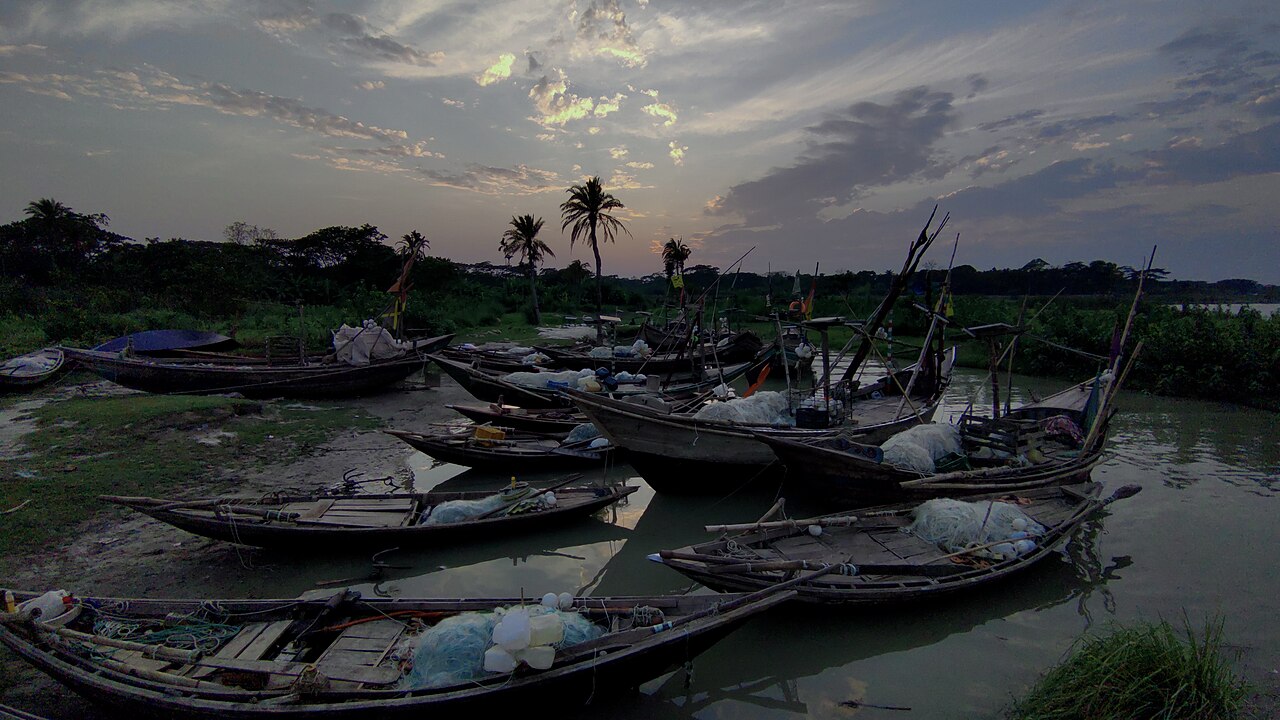
Fishing for hilsa and every other fish stopped on the rivers of Bhola on Thursday, 8 October, to let brood hilsa spawn undisturbed. The ban runs until 29 October. For those 22 days, storing, buying, selling, transporting and marketing hilsa are also prohibited.
According to the Department of Fisheries, Bhola's seven upazilas have 168,370 registered fishers. Of them, 143,656 will receive 25 kg of rice each under the VGF programme, with distribution expected to begin within a day or two.
Fishers say 25 kg of rice is not enough to feed a family for 22 days. Md Ershad Mia, general secretary of the small fishers' association in Bhola Sadar, wants the ration raised to at least 50 kg and at least Tk 5,000 in cash for oil, lentils and other essentials. Fishers are also asking for microcredit instalments to be suspended during the ban.
Bhola district fisheries officer Md Delwar Hossain said the ban is being announced by loudspeaker, leaflets and posters, and anyone who goes out on the river in breach of it will face legal action. Letters have gone to NGOs and microcredit lenders asking them to pause instalment collection while the ban lasts, he said.
By his account, Bangladesh's rivers produce about 500,000 tonnes of hilsa a year, and if brood hilsa can spawn safely, the rivers of Bhola alone could meet national demand. Mir Mohammad Ali, an assistant professor in the Department of Fisheries, Aquaculture and Marine Science at Sher-e-Bangla Agricultural University, said one female hilsa can lay from about 300,000 to 2.3 million eggs.
The fisheries department said all fishing will stop across 7,134 square kilometres of coastal waters identified as the main hilsa breeding grounds. The navy, coast guard, police and local administration will run joint drives with the department. The ban covers designated rivers and parts of 20 districts under a government notification of 29 September.
Agricare24 carried the report from BSS.
Photo: Toushik.hamid / Wikimedia Commons (CC BY-SA 4.0)
Source: Agricare24

Comments
(0)