
Nothing beats travel for breaking the monotony of busy city life. People leave their familiar surroundings to breathe freely amid open green, and travellers are always looking for new places. Here is one you could visit.
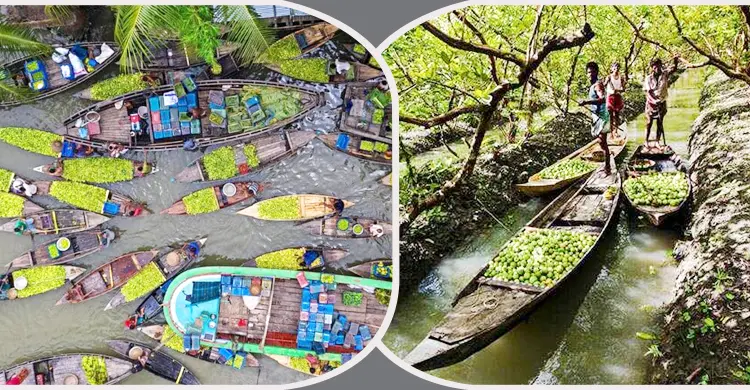
For close contact with nature on the water, you can visit Bangladesh's largest floating guava market, like those of Bangkok or Kolkata. The floating market has grown up over more than 200 years. Bhimruli is a small village on the border of Jhalakathi and Pirojpur.
Trade starts here every day at the mouth where small and large canals meet from four directions, so the village's name became permanently attached to the market. Locals, however, call it Goiar Haat. The guava season usually begins in July and runs through September.
A living from guava
To see the wholesale market in full swing, go in late July. Rows of floating boats are piled with green and yellow guavas, and there are countless guava orchards around. Farmers bring guavas straight from the orchards and sell to wholesalers from different regions.
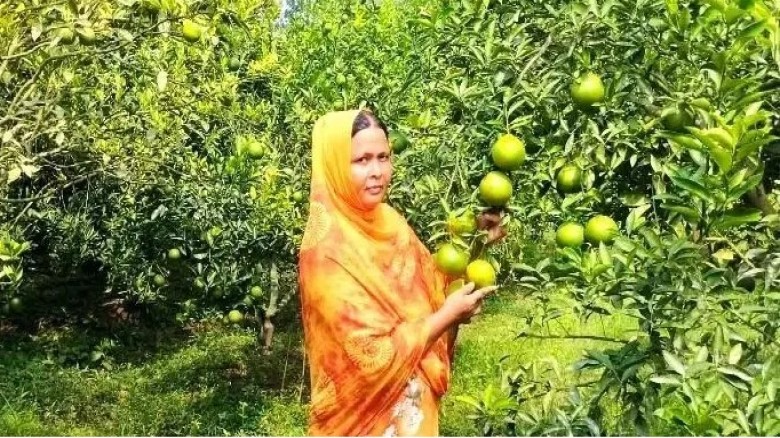
Guava is grown on about 24,000 acres in villages including Dumuria, Kaparkathi, Kanchabalia, Bhimruli, Himanandakathi, Shatadashkathi, Rampur, Mirakathi, Shaorakathi, Jagadishpur and Adamkathi in Jhalakathi Sadar upazila, and Atghar, Kuriana and Bankura in Swarupkathi upazila of Pirojpur.
The five villages of Nabagram union, Nabagram, Himanandakathi, Dariapur, Saorakathi and Gabharamchandrapur, produce the most. Jhalakathi Sadar upazila produces 24,000 to 25,000 tonnes of guava a year, with trade worth about Tk 46 to 50 crore. About 80 percent of the country's guavas are grown in this area.
About 20,000 families in 26 villages depend on the orchards for their living, and guava is one of the main sources of income here. Guava has been grown commercially in these villages for a hundred years. Every day 10,000 to 15,000 maunds of guava change hands at the markets.
The market runs every day of the week from dawn to dusk along the small canal, and the sight of hundreds of boats laden with guavas is astonishing. Farmers load their boats with fruit and look for buyers. Traders buy at the markets and send the guavas by trawler and truck to Dhaka, Chattogram, Barishal, Khulna, Faridpur, Noakhali, Bhola and elsewhere.
There is no cold storage in the district for perishable guavas and vegetables, but thanks to the Padma Bridge wholesalers can now reach Dhaka with guavas in three to four hours. A small bridge over the canal at the northern end of the floating market is the main attraction, because the whole market can be seen from it.
Interestingly, all the boats carrying guavas here are nearly the same in design and size, as if one craftsman had built them all. Small trenches have been dug into the orchards, and farmers enter them in small boats to pick guavas. Every house along the canal has a dinghy.
Locals call these kosha boats, and use them for markets, travel and every other task. Small boats can go straight into the orchards along the trenches; the larger ones are left at the bank while the farmers go in on foot. The houses, schools, bridges and roads along the canals give anyone the feeling of a slice of Thailand or of Venice, Italy, in the heart of Bengal.
If heavy rain starts, though, no traveller will have time to be spellbound. Private entertainment centres and picnic spots have also been set up here, and tourists stop at them. Visitor numbers around the guava orchards and floating market are growing day by day. Entry costs Tk 20 to 40, and inside there are rest areas and picnic facilities.
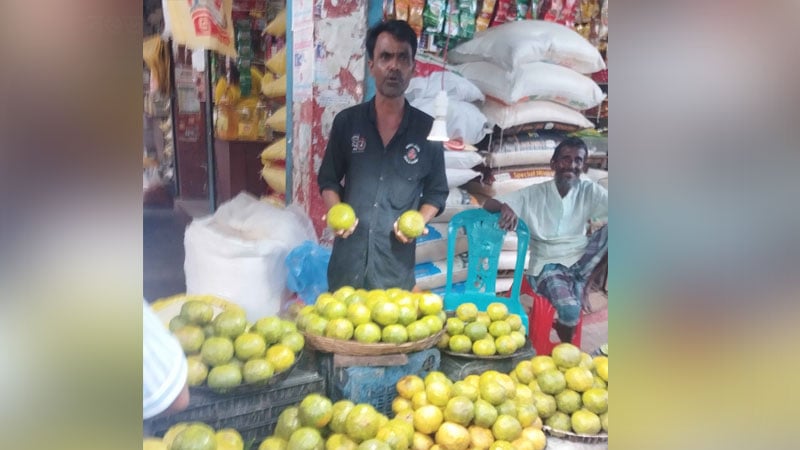
Trader Nasir Hossain said: "The guava market has only just started. In a few more days it will be very busy. Lots of lemons are also available alongside guavas now. Farmers bring them from the fields by boat, and wholesalers haggle and buy. Most crops here are grown with natural fertiliser and modern farm management, so the quality is very good and prices are not very high. When output is high, guava prices stay low."
How to get there
You can reach the floating guava market by water, road or even air. The best way is by river, on a launch: Dhaka–Barishal–Swarupkathi–Dhaka. Many luxury launches leave Sadarghat for Barishal at 8pm every day. Board on a full-moon night and you get beautiful moonlight as a bonus.
Fares are Tk 5,000–7,000 for a VIP cabin, Tk 4,000–4,500 for a semi-VIP cabin, Tk 2,500–3,500 for a family cabin, Tk 1,700–1,800 for a double cabin, Tk 900–1,000 for a single cabin and Tk 255 per person on deck.
The launch drops you in Barishal at 7am. Have breakfast and hire a leguna for Swarupkathi; a leguna takes 14 people and costs Tk 400–500 reserved. Small groups can hire a CNG-type tempo for Tk 250–300.
After a journey of an hour and a half you reach Swarupkathi. From there, hire an engine boat for the whole day for Tk 2,000–3,000. Depending on size, each boat holds 15 to 20 people. Some small boats are available, but very few.
By road, Sakura Paribahan's air-conditioned buses run from Gabtali in Dhaka to Barishal for Tk 800. Non-AC buses of Hanif, Eagle, Surovi and Sakura also run, for Tk 350–450, and Sugandha Paribahan buses go to Barishal from Sayedabad in Dhaka.
Where to eat
There are eateries at Kuriana Bazar, and their cooking is very good. Groups of five to seven need not book ahead; larger groups should order in advance.
Where to stay
You do not really need to stay overnight on this trip: you can tour all day and take a launch back at night. If you do want to stay, ordinary hotels in the district town are the only option. For a good hotel you will have to go to Barishal city.
Source: Jagonews24. First published in Bengali on The Agro News.
Comments
(0)