
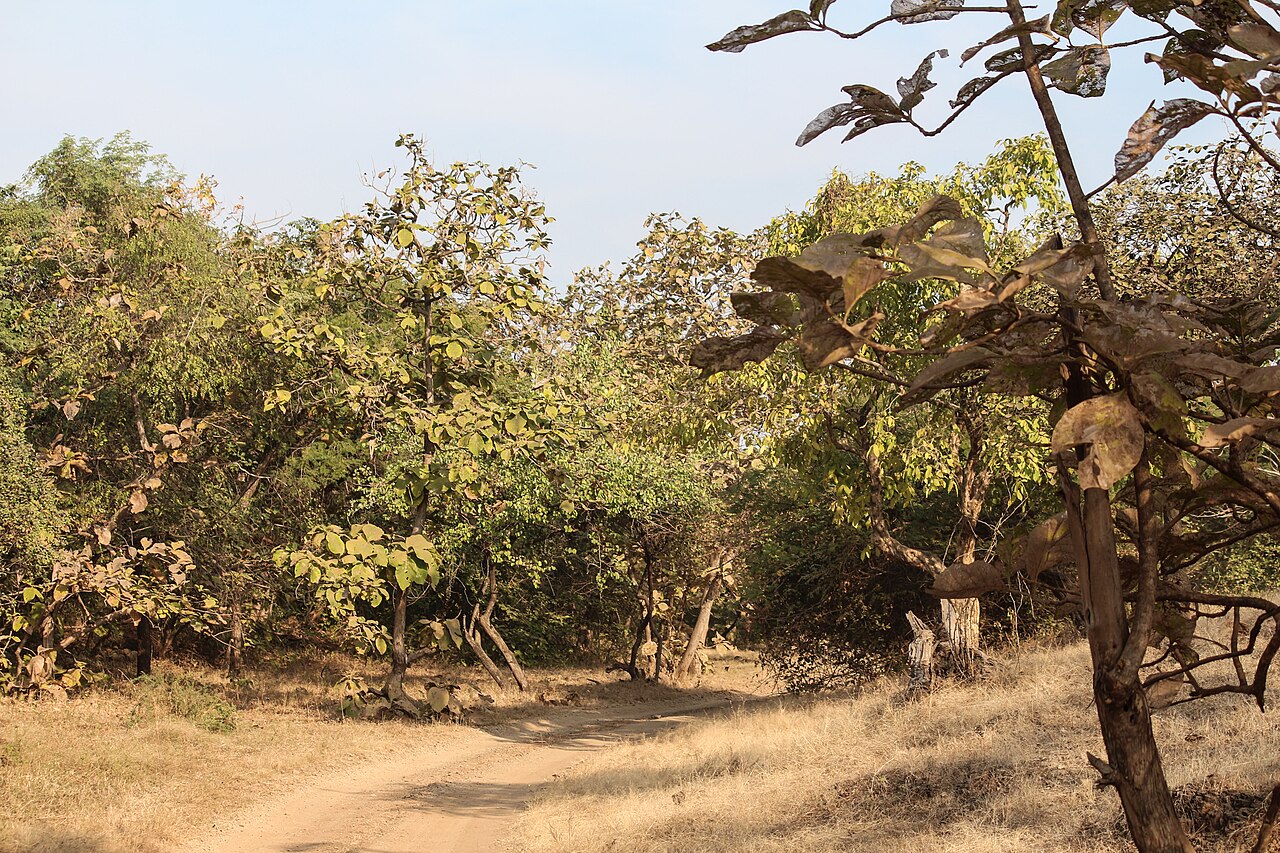
More than 25,000 mature teak trees have died over the past three years across 16,800 hectares of the West Betul forest division in Madhya Pradesh, and the investigation points to prolonged drought and heat stress rather than pests or disease, Himanshu Nitnaware reported for Down To Earth.
Pradeep Mishra, deputy conservator of forests and working plan officer in Betul, led a tree-by-tree GPS survey with Joint Forest Management Committees across the West Betul, Sawaligarh, Chicholi, Tawadi and Mohda ranges, with some deaths also in South Betul. "Large teak trees were standing completely dry, but there was no sign of borer, termite or fungus," he said. "As far as we know, no such scale of teak mortality has been reported in this region in the last twenty years."
Most of the dead trees measured 60-150 cm in girth and were an estimated 40 to 120 years old or more. Dead trees were scattered among healthy ones, the larger and older trees were hit hardest, and deaths were higher in drier places. A February 2025 investigation by the Tropical Forest Research Institute (TFRI) in South Betul found no fungal or other pathogenic infection, including Phomopsis tectonae, which is linked to teak dieback, but suggested monsoon waterlogging followed by dry April-June months could be damaging roots.
Mishra believes the cause is hydraulic failure: in long drought and heat, air bubbles form in the xylem that carries water from roots to leaves and block the flow, and a badly damaged tree may not recover even after rain returns. Satellite data showed vegetation and moisture stress as early as 2022-23. Betul received about 69 per cent of its normal rainfall in the 2026 monsoon, he said.
The losses matter for the district economy: Betul earns more than Rs 100 crore a year from timber harvesting, according to Mishra, and teak takes 20-25 years to reach commercial maturity. A 2010 study projected that about 30 per cent of India's teak-growing areas could become unsuitable as the climate changes.
The findings will feed into the next 10-year forest Working Plan. "The new plan must reflect what is actually happening in the forest, not what was there ten years ago," Mishra said.
Photo: Bernard Gagnon / Wikimedia Commons (CC BY-SA 3.0)
Source: Down To Earth

Comments
(0)