
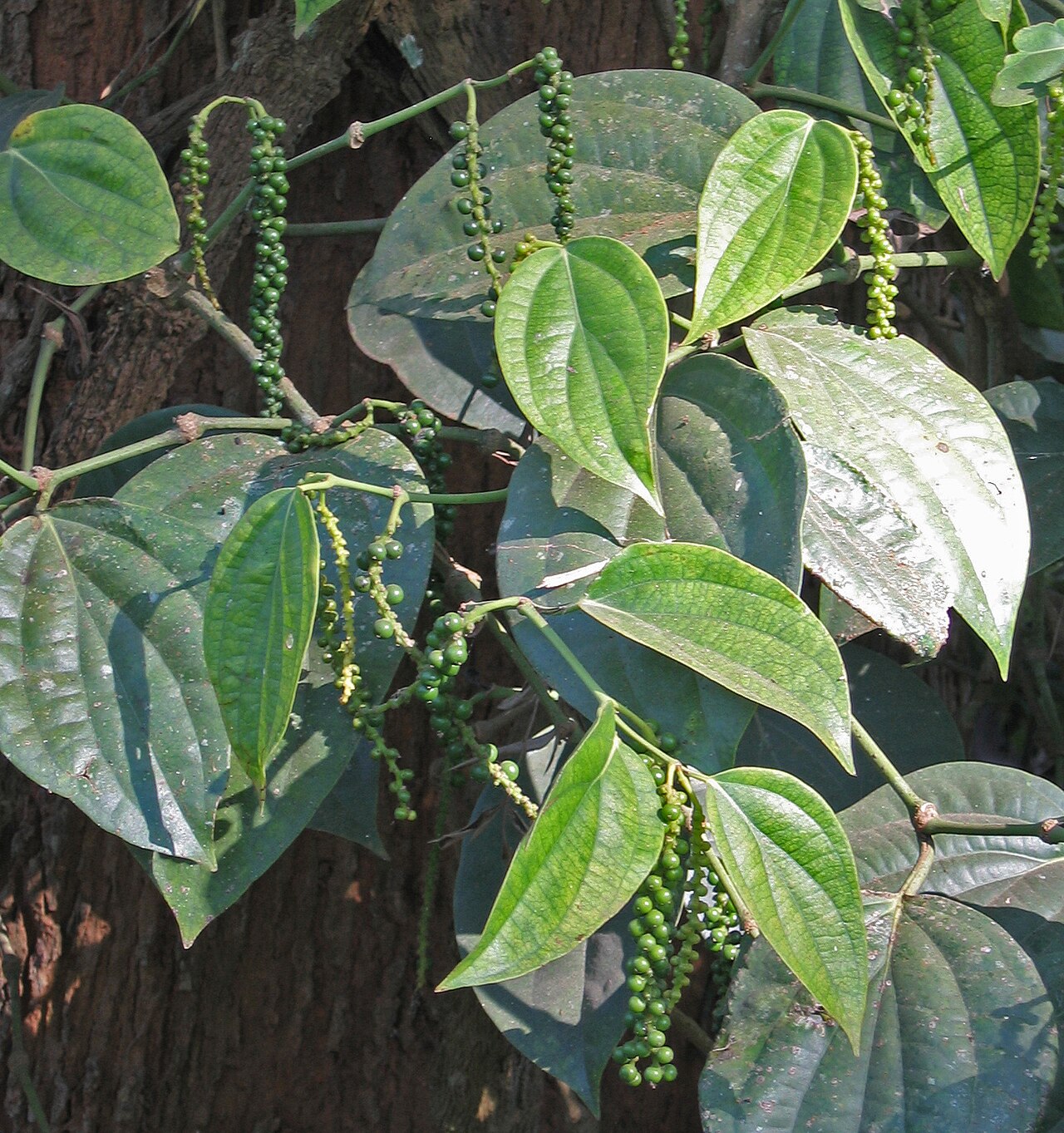
Hundreds of students at the Government Higher Secondary School in Mayur Dongar, in Chhattisgarh's Kondagaon district, have received free saplings of black pepper (Piper nigrum), giloy (Tinospora cordifolia) and sindoori, or annatto (Bixa orellana), in a programme meant to link schooling with farming, conservation and enterprise, Krishi Jagran reports. About 25 progressive farmers from the area also received saplings.
The initiative was supported by Maa Danteshwari Herbal Group, whose director Anurag Kumar showed the students how to plant and care for the saplings; they are to raise them at home or another suitable place.
Speaking to the students in Halbi, the local language of Bastar, the group's founder Dr Rajaram Tripathi said perennial plants such as black pepper and sindoori, planted and tended properly and grown scientifically, can give families an income for many years. He urged them to see farming as a modern business, with openings in herbal cultivation, processing, value addition, packaging and marketing. "Planting a sapling is not merely an act of environmental conservation. It can also be an investment in the economic future of a family," he said.
Principal Jameel Khan encouraged the students to become job creators rather than job seekers, pointing to Dr Tripathi's choice of farming and enterprise over a conventional career as a bank manager. The school said looking after the plants should become part of the students' practical learning.
Dr Tripathi said he would return to the villages after a year to inspect the plants, and students and farmers whose saplings are healthy will be considered for more valuable saplings free of cost. The village sarpanch, Jairam Netam, and other villagers also received saplings and pledged to look after them.
Photo: Dcrjsr / Wikimedia Commons (CC BY 3.0)
Source: Krishi Jagran

Comments
(0)