
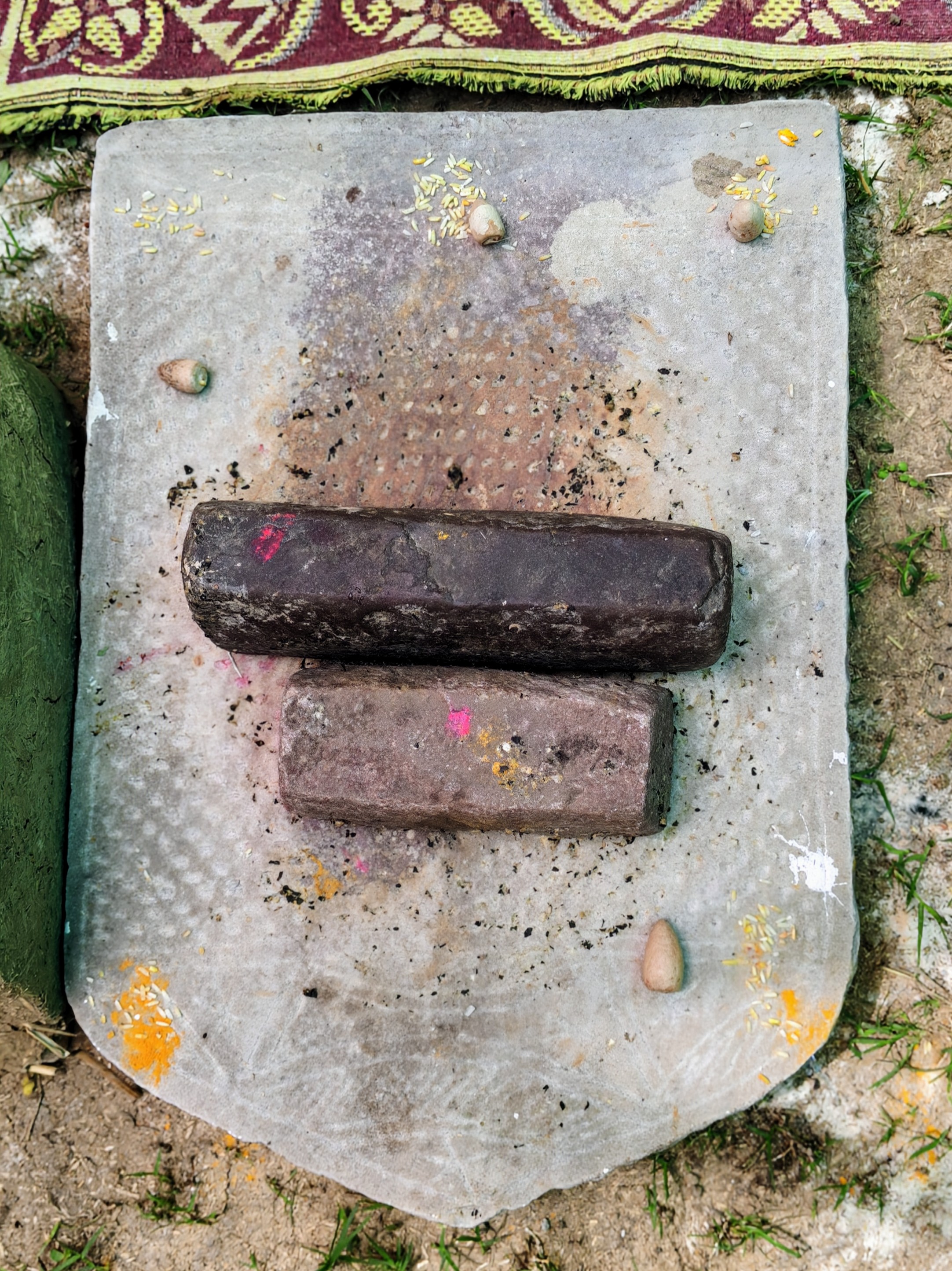
On the morning of Monday 15 September 2025, ten men from Jangalia village in Ayla Patakata union of Barguna Sadar upazila ground onion and dried chilli in front of their wives and neighbours. The task was the final round of a week-long "Gender Role Shifting Game" contest organised by Jago Nari, a non-government development organisation based in Barguna. The organisers said the aim was to change customary ideas about which household work belongs to women and which to men, and to encourage men to take an equal share of the work of running a family.
The programme was held under the Women Lead in Emergencies (WLiE) project, which Jago Nari carries out with technical support from CARE Bangladesh and funding from the Agence Française de Développement (AFD), France's development agency. Jagonews24 reported the event from Barguna on the afternoon of the same day.
A week of games ends at a village homestead
The closing session began at 10am at the premises of the Babar Ali Pakhi house in Jangalia. Former union parishad member Nizamuddin chaired the event. Ten men from the community took part, and three judges, Selim Howlader, Shamsul Haque and Nasir Uddin Pyada, assessed their work. More than a hundred local men and women came to watch.
The job the contestants were given is one of the most ordinary in a Bangladeshi kitchen: turning onion and dried red chilli into a paste for the day's cooking. Jagonews24 called the event an unusual initiative, and the photograph it published, which the paper credited as collected, showed the ten men taking part in the spice grinding. The report covered the closing day; it did not describe the games played on the earlier days of the week.
The name of the contest explains its idea. Instead of a talk on equality, the men were asked to do in public, before their wives and neighbours, a piece of daily kitchen work that is usually done by women.
In their own words: a contestant and the project manager
Nasir Uddin, a contestant from the Itbaria area, told Jagonews24 what the day had meant to him: "Our wives go through a lot doing all the housework, but to be honest they do not get the respect they deserve from us. Through this game today we have understood that all household work is really hard. From now on we will help our wives with everything."
Shukhla Mukherjee, manager of Jago Nari's WLiE project, explained why the organisation chose this kind of contest: "The main aim of this contest is to break down the division of work between men and women, to see women's work with dignity and to ensure men's equal share in household work, as well as to establish equality between men and women in society. That is why the spice-grinding contest for men was organised."
The organisers: Jago Nari, CARE Bangladesh and AFD
Jago Nari describes itself as a nonpolitical, nonprofit, rights-based non-government organisation. Its profile on the Bangladesh citizens' platform for the Sustainable Development Goals says it began its activities in 1998, working with poor and working women in the urban and rural areas of Barguna Sadar upazila, and that women's empowerment is its core programme. Its head office is on College Road in Barguna town. The same profile lists emergency response among its work, with experience it dates from Cyclone Sidr to the Covid-19 pandemic. Jago Nari has also been a member of Girls Not Brides, the global partnership against child marriage, since 26 November 2016, according to the partnership's member directory.
CARE, the technical partner, was founded in 1945 and works in more than 100 countries, according to CARE Bangladesh. The organisation says it began its work in what is now Bangladesh in 1949 and that its programmes in the country focus on women and youth empowerment, health and nutrition, humanitarian and climate action, and food and agricultural systems. CARE places women and girls at the centre of its work. Banglapedia, the national encyclopedia, lists CARE alongside BRAC and ASA as the operationally important NGOs in Barguna Sadar upazila.
The Agence Française de Développement, which funds the project, traces its origins to the Central Fund for Free France created in London in 1941; that fund became AFD in 1998. The agency says it implements France's policies of development and international solidarity, and it finances both public bodies and NGOs.
Women Lead in Emergencies: CARE's model for women's leadership in crises
Women Lead in Emergencies is CARE's model for putting its commitment to women's leadership into practice in emergencies. A global learning evaluation published by CARE International in November 2022 describes it as supporting women in crisis-affected communities to "claim their right to a say over the issues that affect them" and to take part in disaster preparedness, response and recovery.
According to that evaluation, the model had been piloted since 2018 in 15 locations across six countries: Colombia, Mali, Niger, the Philippines, Tonga and Uganda. In 2020 it worked directly with 804 women's groups. The evaluation, written by L. Dietrich, looked most closely at Niger and Uganda, where the pilots had run longest, and examined the outcomes, the pathways of change and how the model was implemented. The Barguna contest was organised under the Bangladesh project of the same name.
Bangladesh's own disaster rules give a formal place to women in local disaster committees. The Standing Orders on Disaster 2019, issued by the Ministry of Disaster Management and Relief, set out who sits on each Union Disaster Management Committee. The chair of the union parishad and the member of a reserved women's seat chair it by rotation; all elected members of the union parishad are members; and three representatives of vulnerable women, nominated by the reserved-seat woman member, also sit on it. The committee also includes teachers, representatives of government departments at union level, NGO representatives and representatives of farmers and fishing communities.
The full list in the Standing Orders also names, among others:
- a representative of the Cyclone Preparedness Programme, where it exists, or of local volunteers, and a representative of the Bangladesh Red Crescent Society, where available;
- two NGO representatives, one representative of farmers, one of fishing communities and one respected person or social worker, all nominated by the chair;
- representatives of religious communities, of associations of persons with disabilities, of landless communities, of local business organisations and of ethnic communities;
- two representatives of local Scouts, who may be a leader, a rover or a Girl Scout, and one representative each from local cultural organisations, the mass media and youth or sports organisations;
- an expert with traditional knowledge of local disasters, a representative of Ansar and VDP, and a retired local government officer, with the union parishad secretary as member-secretary.
The committee may co-opt further members. A third of the members make a quorum in normal and post-disaster periods and a quarter during warning and disaster periods, and every year by 15 January the committee must send an updated, signed list of its members to the Upazila Disaster Management Committee.
In normal times the committee is to meet once every two months, and before, during and after a disaster as often as needed. The first risk-reduction duty the Standing Orders give it is to undertake and implement awareness-raising programmes "in the light of gender and social inclusion at the family and social levels".
Barguna Sadar and Ayla Patakata on the cyclone coast
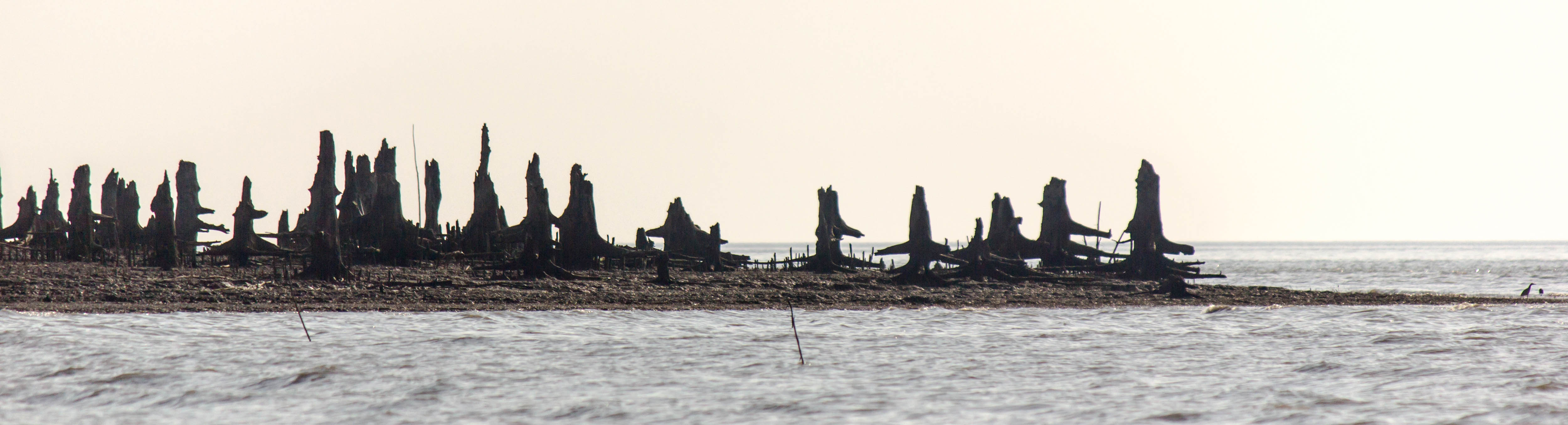
Barguna is a coastal district of Barisal division covering 1,509.42 square kilometres, according to Banglapedia. It is bounded by Jhalokati, Barisal, Pirojpur and Patuakhali districts to the north and by Patuakhali district and the Bay of Bengal to the south. Its notable rivers are the Bishkhali, Baleshwari, Burishwar, Payra, Andharmanik and Gajalia. Barguna thana was set up in the late eighteenth century, became a subdivision in 1969 and a district in 1984. The 2011 census, as Banglapedia reports it, counted 804,777 people in the district, 393,706 men and 411,071 women, and found agriculture to be the main source of income for 62.67 per cent of households. The district has five upazilas, Amtali, Patharghata, Barguna Sadar, Bamna and Betagi, and an average literacy rate of 57.6 per cent, 59.2 per cent for men and 56.1 per cent for women. Jarigan, sarigan, kavigan, kirtan, folk tales and folk drama are named as its notable folk culture.
Barguna Sadar, the district's headquarters upazila, covers 454.38 square kilometres and has one municipality and ten unions. Barguna thana was formed in 1904 and became an upazila in 1984, and the upazila's average literacy rate was 58.6 per cent, 60.4 per cent for men and 57.0 per cent for women. Its rivers include the Burishwar, Bishkhali, Khagdon and Nalidon, and its main crops are paddy, groundnut, khesari, mung bean and vegetables. Palm molasses, hilsa and dried shrimp are listed among its main exports. Ayla Patakata, the union where Jangalia lies, covers 7,086 acres; the 2011 census recorded 9,808 men and 9,974 women there and a literacy rate of 54.9 per cent.
The district's coast has been struck repeatedly by cyclones. Banglapedia's record of cyclones notes that the storm of 12-13 November 1970 hit Barguna among other places, that the cyclone of 29 April 1991 struck Barguna along with Chittagong, Cox's Bazar, Barisal, Noakhali, Patuakhali and Khulna with a tidal surge of 6.1 to 7.6 metres, and that the cyclonic storm of November 1986 damaged schools, mosques, warehouses, hospitals and houses in Amtali upazila of Barguna. The severe cyclonic storm Sidr of 15-17 November 2007 caused immense damage in southern Bangladesh and killed about 3,000 people.
The contest was chaired by a former union parishad member, the elected body closest to village life. Under the Local Government (Union Parishad) Act 2009, each union parishad has a chair and 12 members: nine members elected to general seats from nine wards, and three members elected to seats reserved for women. Women may also stand for the general seats. All of them are chosen by direct vote.
Household work in numbers: Bangladesh's first Time Use Survey
The concern the contest addressed is measured in official statistics. The Bangladesh Bureau of Statistics conducted the country's first Time Use Survey in 2021 with UN Women under the Women Count programme, and published it in July 2023. The survey selected 8,000 households at random using a two-stage stratified sampling design, in urban and rural areas of all eight divisions.
As The Financial Express reported on the survey's release, women in Bangladesh spend nearly one-fourth of their day on unpaid domestic and caregiving services. The main figures were:
- Women spend on average 4.6 hours a day on unpaid domestic services and 1.2 hours on caregiving, totalling 5.8 hours.
- Men spend 0.6 hours a day on unpaid domestic services and 0.2 hours on caregiving.
- Women aged 25-44 are the most active in domestic work, spending 237.64 minutes a day on food and meal management and preparation and 43.61 minutes on cleaning and maintaining their dwellings and surroundings.
- Women spend 1.15 hours a day on childcare, against 0.16 hours for men.
- Women spend 0.03 hours a day caring for dependent and non-dependent adults, against 0.01 hours for men.
Food and meal management and preparation, the work to which grinding spices belongs, is the first activity the survey names among those in which women aged 25-44 are most active. UN Women notes that this kind of care work is "mostly invisible, often unpaid, unrecognized".
The survey allows Bangladesh, for the first time, to report on indicator 5.4.1 of the Sustainable Development Goals, the "proportion of time spent on unpaid domestic and care work, by sex, age and location". The target it measures, SDG 5.4, asks countries to "recognize and value unpaid care and domestic work through the provision of public services, infrastructure and social protection policies and the promotion of shared responsibility within the household and the family as nationally appropriate". The Jangalia contest was aimed at the last part of that target: shared responsibility within the household.
Onion and dried chilli, the two ingredients at the grinding stone
In rural Bengal, spices have long been ground by hand on the shil-pata, which Banglapedia describes as a set of a stone slab and a grinding stone, one of the region's traditional cooking utensils. Onion and dried chilli, the two things the Barguna men ground, are among the most used spices in the country's kitchens; Banglapedia lists onion and red pepper among the commonly cultivated spices of Bangladesh.
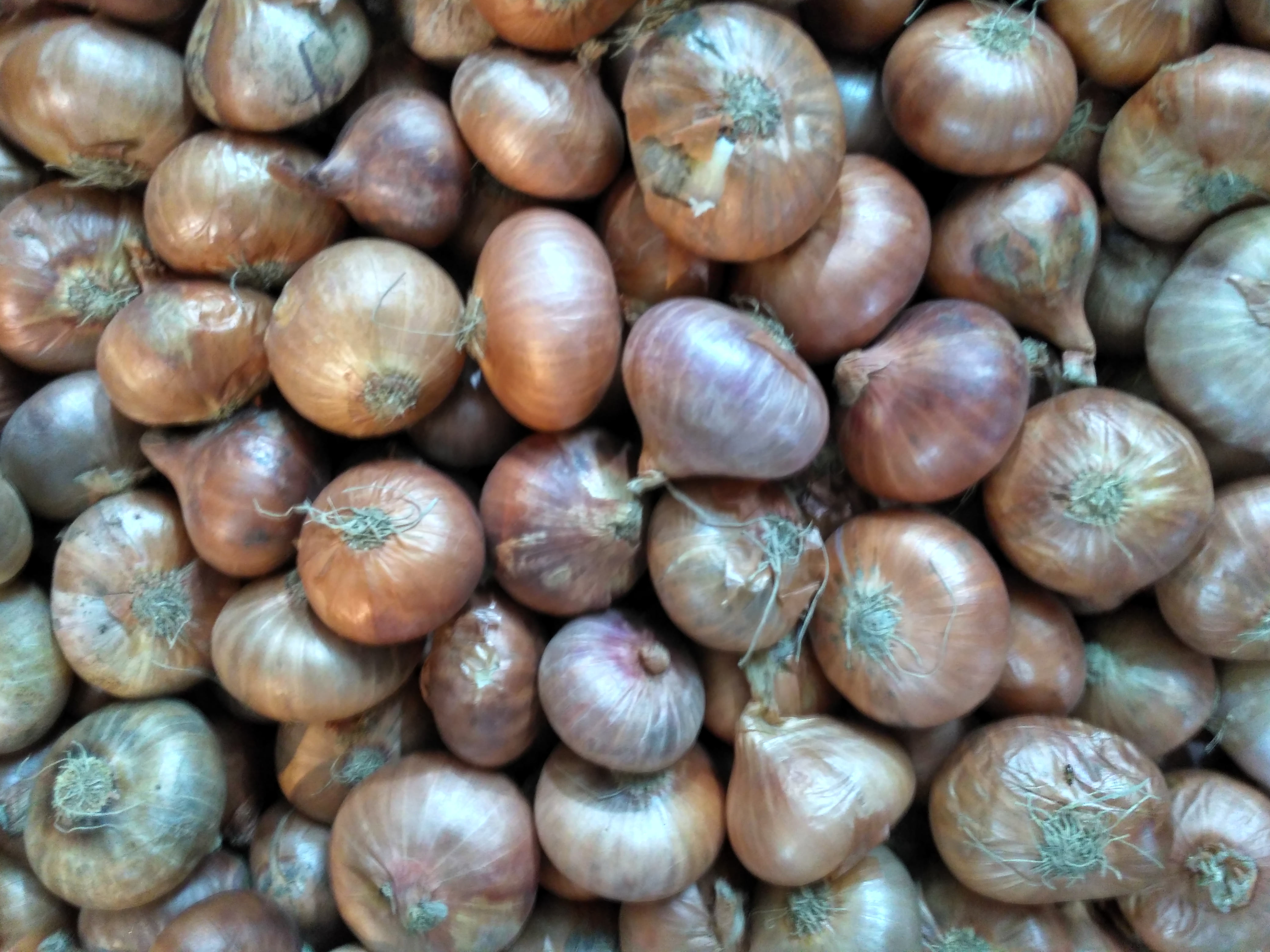
Onion (Allium cepa) is a bulbous herb whose edible bulb is made of food-storage leaves, according to Banglapedia. It possibly originated in Western Asia, and its pungency comes from a volatile oil, allyl-propyl disulphide. In Bangladesh it can be grown on all types of soil, with December or the first week of January the best time for transplanting. It is grown in every district and used as a fresh vegetable, as a spice and in curries, sauces, soups and pickles. Tahirpur and Faridpuri are two important local varieties, and the Bangladesh Agricultural Research Institute (BARI) has released a variety called BARI Piaj-1.
The Department of Agricultural Extension (DAE) put the country's onion crop for fiscal year 2023-24 at 39.112 lakh tonnes from about 2.665 lakh hectares, with a yield of 14.68 tonnes per hectare, The Daily Star reported in October 2024. For 2024-25 the DAE set a target of 39.663 lakh tonnes from 2.602 lakh hectares and a yield of 15.24 tonnes per hectare.
Supply had been tight in the weeks before the contest. On 18 August 2025, India's public broadcaster News On Air reported that Bangladesh had allowed importers to bring in onions from India through land ports again to curb rising prices, after a gap of about five and a half months; the last earlier consignment had entered through Hili land port on 2 March. It said 150 tonnes had arrived through Hili in Dinajpur and 660 tonnes in 23 trucks through Sonamasjid land port in Chapainawabganj.
Chilli, in Banglapedia's description, is the pod of a bushy plant of the family Solanaceae, native to Mexico, used widely as a spice. It can be grown in both summer and winter, and green chilli yields on average 5 to 6 tonnes per hectare; as a winter crop it is grown mostly in Comilla, Noakhali, Faridpur, Barisal, Patuakhali and Bogra, so the coastal Barisal region around Barguna is among its growing areas. Local varieties include Balijuri, Bona, Bain, Saita, Suryamukhi, Paba, Halda, Dhani, Shikarpuri and Patnai.
Both green and dried chillies are used to prepare curries, and dried chilli is an ingredient of curry powder, sauces and pickles. In rural areas chilli is commonly eaten with panta bhat, boiled rice soaked in water. Banglapedia adds that until the beginning of the twentieth century chilli was exported from Bengal on a very large scale, and that it was among the spices that drew the East India Company to the eastern part of India.
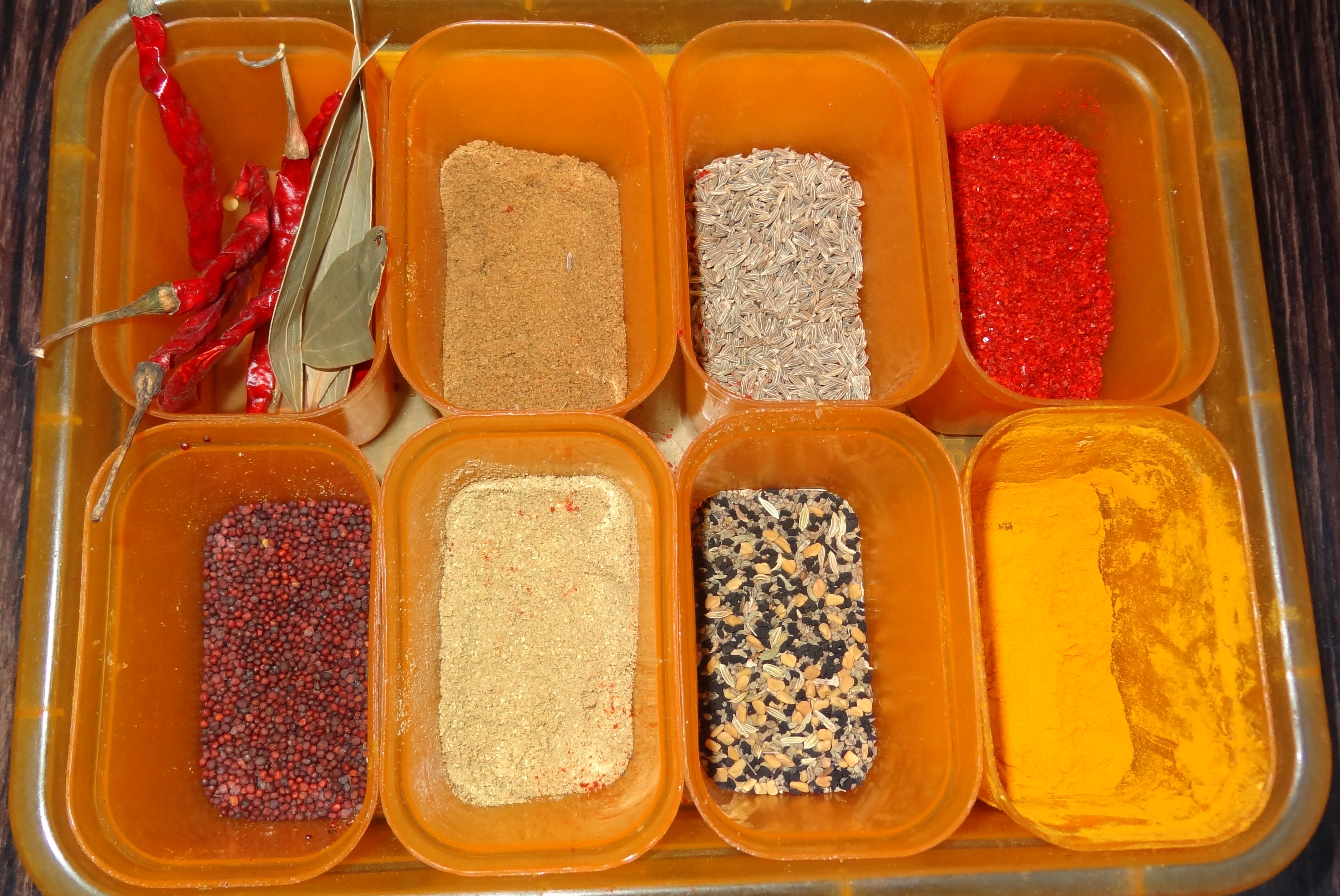
Photo: Suyash.dwivedi / Wikimedia Commons (CC BY-SA 4.0)
Sources: Jagonews24, Bangladesh Bureau of Statistics and UN Women (Time Use Survey 2021), The Financial Express, The Daily Star, News On Air, CARE International (Women Lead in Emergencies Global Learning Evaluation Report, via ALNAP), CARE Bangladesh, Agence Française de Développement, Ministry of Disaster Management and Relief (Standing Orders on Disaster 2019), Local Government (Union Parishad) Act 2009, United Nations (SDG 5), Banglapedia, Bangladesh Platform for SDGs, Girls Not Brides

Comments
(0)