
The Bangladesh Agriculture Reporters Forum (BARF), an association of journalists who report on agriculture, launched the "BARF Media Award-2025" to encourage writing on farming. In a notice reported on 3 December 2025, the forum invited agricultural reports from journalists working for national and local newspapers, online news portals and television channels in Bangladesh. Five journalists were to receive the award, the eligible reports were those published or broadcast between 1 December 2024 and 30 November 2025, and the last date for entries was 20 December 2025.
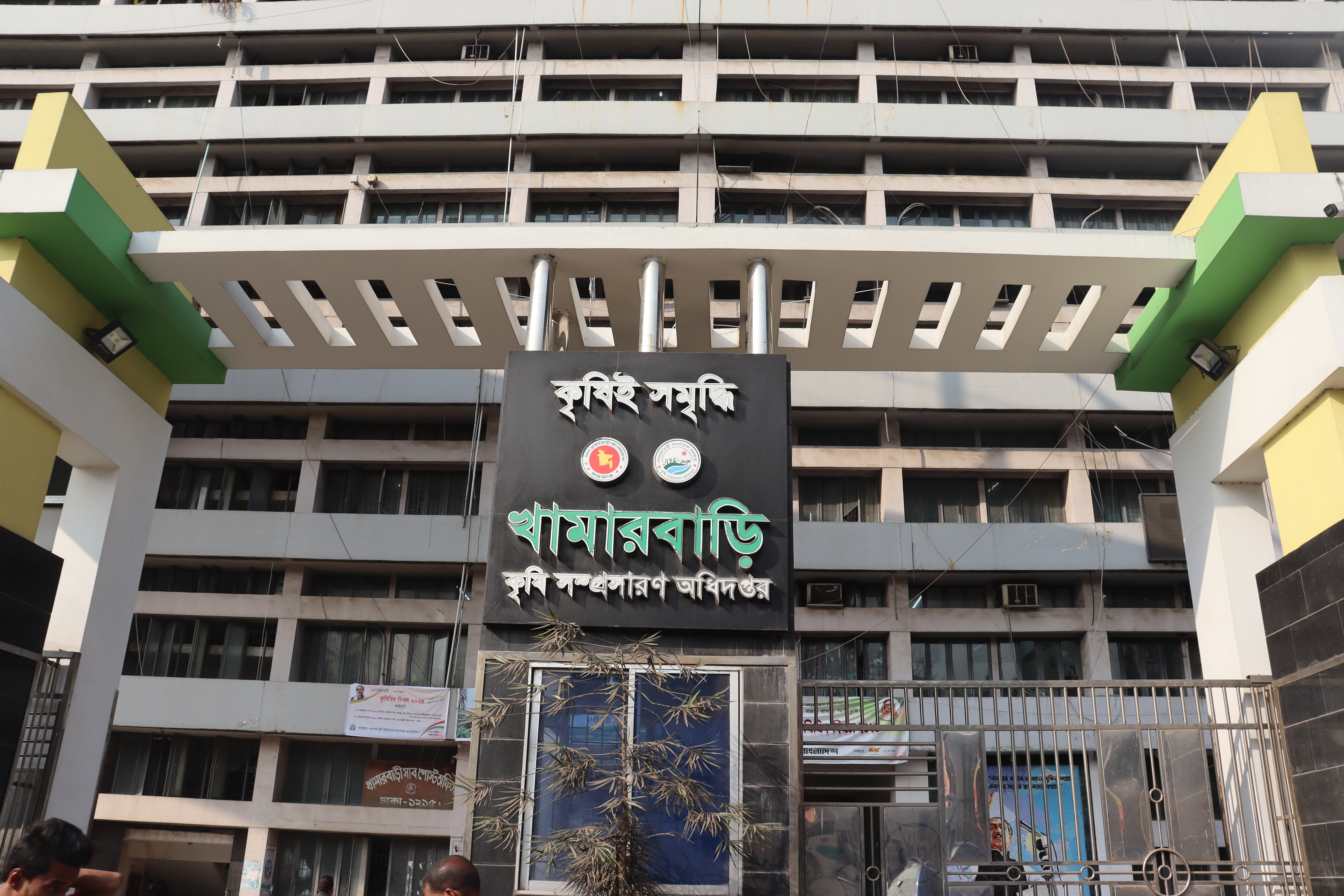
The decision was taken at a recent meeting of the forum's executive committee in a hall room at Khamarbari, the agricultural complex at Farmgate in Dhaka. BARF president Rafiqul Islam Sabuj chaired the meeting and general secretary Kawsar Azam conducted it, with other leaders of the organisation present. The call was carried that day by Jagonews24 and, in the same words, by the dailies Jugantor and Kalbela.
Five awards for a year of farm reporting
Under the executive committee's decision, the award was to go to five people that year. The notice addressed journalists working for newspapers published from Bangladesh, both national and local, as well as those working for online news portals and television. Reports on agriculture published or broadcast within the twelve months from 1 December 2024 to 30 November 2025 could be submitted, and the best of them were to be chosen through the assessment of impartial judges.
The winners were to receive Tk 30,000 in cash, a crest and a certificate of honour. According to the notice, the awards were to be handed over in the presence of one or more senior advisers of the government, distinguished figures from the sector and political leaders. The notice did not give a date or a venue for the ceremony, and it did not name the judges.
The forum described the award as a way of encouraging writing on agriculture. The notice set no separate categories for print, online and television work: all three kinds of report were to compete for the same five awards, under one set of rules.
The rules for entries
The notice set out seven rules for those who wished to take part:
- A total of five people would receive the award.
- Reports published or broadcast between 1 December 2024 and 30 November 2025 had to be submitted for the award by email.
- Apart from a series of reports, no one could submit more than one report.
- For print and online reports, the e-paper copy of the published report and its online link had to be submitted, and the subject line of the email had to read "BARF Media Award-2025".
- A link to a television report had to come from the official YouTube channel or Facebook page of the television station concerned.
- A short curriculum vitae of the reporter had to be submitted with two colour passport-size photographs.
- Reports submitted in the proper manner would be assessed by a panel of judges nominated by the Bangladesh Agriculture Reporters Forum, whose decision would be final. Each judge would examine every report separately, and the final winners would be decided at a meeting of the panel on the basis of the highest average marks.
The rules therefore allowed one entry per journalist, with an exception for a series of linked reports. A newspaper or online reporter had to show both the e-paper copy of the published page and the web version of the same report. A television reporter had to send a link from the broadcaster's own official YouTube channel or Facebook page.
The judging method was set out in the last rule. Every judge was to examine each report on his or her own, and the winners were to be settled at a joint meeting of the panel, with the reports holding the highest average marks winning. The panel's decision was to be final.
Reports and the accompanying documents were to be sent to the forum's email address. For any information, the notice gave the telephone numbers of Kawsar Azam, general secretary of BARF, and Faruk Ahmad Arif, the forum's office secretary.
The forum behind the award
The Bangladesh Agriculture Reporters Forum brings together reporters who cover agriculture for Dhaka newspapers, online portals and television channels. Its executive committee at the time of the notice had been formed on Wednesday, 10 July 2024, according to a report in Jugantor that day. The 15-member committee was formed unanimously at a meeting in a restaurant at Segunbagicha in Dhaka, chaired by a senior reporter of the daily Ittefaq.
Rafiqul Islam Sabuj, a special correspondent of the daily Shomoyer Alo, was made president, and Kawsar Azam, a staff reporter of the daily Naya Diganta, general secretary. The other posts on the committee, vice-president, joint general secretary, finance secretary, organising secretary, office secretary, publicity and publication secretary and training and research secretary, went to reporters of Amader Shomoy, ATN News, Ajker Patrika, Jago News, Protidiner Bangladesh, Sangbad and The Business Standard. Faruk Ahmad Arif of Protidiner Bangladesh, whom the award notice named as office secretary, held that post from the committee's formation. The executive members were reporters of Ittefaq, Samakal, Bhorer Kagoj, Kalbela, Khaborer Kagoj and Jugantor.
The committee's membership thus spread across the kinds of outlet the award was meant for: national dailies, an online news portal and a television channel. The same committee, under the same president and general secretary, took the decision to launch the BARF Media Award-2025.
Meeting the agriculture secretary in September 2024
On 8 September 2024 the forum's executive committee held an exchange of views with the secretary of the Ministry of Agriculture at the ministry, Kalbela reported that day. The forum's president and general secretary, its finance secretary, office secretary, training and research secretary and two executive members took part.
At that meeting the secretary told the reporters that the country's stocks of urea and non-urea fertiliser would last until December 2024 without a crisis, though some difficulty remained in opening letters of credit for fertiliser imports. The ministry put the stocks at 4.61 lakh tonnes of urea, 3.22 lakh tonnes of TSP, 3.57 lakh tonnes of DAP and 4.37 lakh tonnes of MoP.
The secretary also gave figures for the floods caused by hill water from upstream and heavy rain between 16 and 30 August 2024. In that period 14,14,089 farmers had been affected, about 10 lakh tonnes of paddy, vegetables, fruit and other crops had been lost, worth Tk 3,346 crore, and 3,72,733 hectares of land had been damaged. Of the 23 districts affected, 11 had suffered heavy losses. Tk 193 crore had been allocated so far for farm rehabilitation, to be used in stages.
Under the rehabilitation programme, 80,000 small and marginal farmers in nine districts were to receive high-yielding transplanted Aman seed for one bigha of land, 10 kg of fertiliser and Tk 1,000 each through mobile banking, and 1.5 lakh farmers in 22 districts were to receive vegetable seed and Tk 1,000 each for early winter vegetables at their homesteads. Asked whether the floods would cause a food shortage, the secretary said there would be no food security crisis if the next Boro season's production went well.
Khamarbari, where the decision was taken
Khamarbari, where the executive committee met, is the common name of the headquarters of the Department of Agricultural Extension (DAE) at Farmgate, one of the busiest commercial areas and transport hubs of Dhaka; the area takes its name from the main gate of a farm that stood there in the British period. The DAE is the government department under the Ministry of Agriculture responsible for agricultural extension, the work of carrying new crop varieties and farming methods to farmers.
The department was formed in 1982 by merging the Agriculture Directorate (Extension and Management), the Jute Directorate, the Plant Protection Directorate, the Horticulture Board, the Tobacco Development Board and the Central Extension Resource and Development Institute. It ran the Training and Visit system to train farmers until 1990 and then turned to group training, and in 1996 the government adopted the New Agricultural Extension Policy to guide its work.
Khamarbari is also the home of the Agriculture Information Service (AIS), the communication department of the Ministry of Agriculture, whose work began in 1961. According to Banglapedia, the AIS produces information and training material for field staff and farmers, publishes the monthly magazine Krishi Katha and the extension newsletter Samprosaron Barta in Bengali, and takes part in farm broadcasting such as the programme Mati-o-Manus. Among its stated aims are training field staff in the use of information materials and encouraging rural people to form farmers' and fishers' clubs. In 1985, by a decision of the Cabinet Division, the service was divided and a third of its staff and equipment went to the ministry responsible for livestock and fisheries. It also serves organisations under the ministry, among them the DAE, the agricultural research institutes, the Department of Agricultural Marketing, the Soil Resource Development Institute and the Bangladesh Agricultural Development Corporation.
Other prizes for farm journalism in 2025
The BARF award joined other prizes that recognised agricultural reporting in Bangladesh in 2025. In May 2025, Standard Chartered Bank and the television channel Channel i announced the tenth edition of their joint "Krishi Award" at a news conference at the Hotel InterContinental in Dhaka, Prothom Alo reported. The 2025 award had 13 categories honouring people and institutions that contribute to agriculture and food security, and one of them was for the best journalist in agriculture. The individual categories also included a lifetime honour, the best woman farmer, the best male farmer, a hero of change, a jury special award, meritorious struggling farmers, both men and women, and the best farmer in climate adaptation; the institutional awards were for research and innovation, for support and implementation in agriculture, and for the farm product exporter of the year. Rooftop farming was added as a new category that year. Nominations were to be accepted from 25 May to 15 July 2025, up to three candidates were to be shortlisted in each category between 16 and 20 July, and the winners were to be chosen after field checks and a review by judges.
In November 2025 the PRAN-RFL Group launched the Bangladesh Agro-Industry Media Award for journalists working on agriculture and agro-processing, Samakal reported on 18 November. That award was to honour seven journalists that year for the best reports in three categories, print, online and television. Entries were to be submitted online through a website, with no hard copy or direct submission needed, and a report published both online and in print had to be entered in only one category.
Set beside these, the BARF award was organised by reporters themselves rather than by a bank, a broadcaster or a company. Its rules also differed: it had no separate media categories, it took entries by email with an e-paper copy and an online link, and it set a single deadline of 20 December 2025.
A longer tradition of farm reporting
Agricultural journalism has a long history in Bangladesh. Shykh Seraj, a journalist and agriculture development activist, co-anchored the television series Mati O Manush (Men and Soil) on Bangladesh Television from 1982. The programme carried investigative documentaries and in-depth reports and pointed out solutions to problems farmers faced. In 2004 he started a programme on Channel i named Hridoye Mati O Manush, based on the format of the earlier programme. He received the Ekushey Padak in 1995 and the Independence Award in 2018 from the government of Bangladesh, and the A.H. Boerma Award of the Food and Agriculture Organization of the United Nations (FAO) in 2009.
The A.H. Boerma Award shows how international bodies have treated farm journalism. In November 1975 the FAO Conference adopted a resolution as a vote of thanks to its former Director-General Addeke H. Boerma, and in June 1977 the FAO Council approved a biennial award to a journalist or other person whose writing on development had helped to focus public attention on the world food problem, particularly agricultural and rural development in developing countries. The Council recommended a prize of US$10,000 for one person or shared among several winners, and said the award need not be confined to the written word but could extend to television and radio. Nominations were based on work published or presented during the four years ending on 31 March of the year of the award. The winner or winners were chosen by the FAO Director-General after a review of the nominations, and the award was presented at a special ceremony during the session of the FAO Conference.
Like the FAO award, the BARF award was open to print, online and broadcast work and judged reports published within a fixed period, in its case the twelve months to 30 November 2025.
The farm sector the reporters cover
The weight of the agriculture beat follows from the size of the sector. According to the final report of the Bangladesh Bureau of Statistics (BBS) Labour Force Survey 2023, reported by The Financial Express in December 2024, agriculture employed 44.42 per cent of the labour force, the highest share of any sector, down slightly from 45.4 per cent in 2022.
In an analysis of the 2022 survey in The Business Standard in April 2023, economist Zahid Hussain, a former lead economist of the World Bank's Dhaka office, noted that agriculture's share of total employment rose from 40.6 per cent in 2017 to 45.4 per cent in 2022, while its share of GDP fell from 13.6 per cent in FY2017 to 11.7 per cent in FY2022. The increase in labour supply in agriculture, he wrote, was dominated by more women working in the sector.
Agriculture thus remained the largest source of work in the country while its share of output declined, and the fertiliser supply, floods, crop losses and rehabilitation that the forum's members reported on reached a large part of the population. The award notice asked those reporters to put forward their best work on that sector from the year to November 2025.
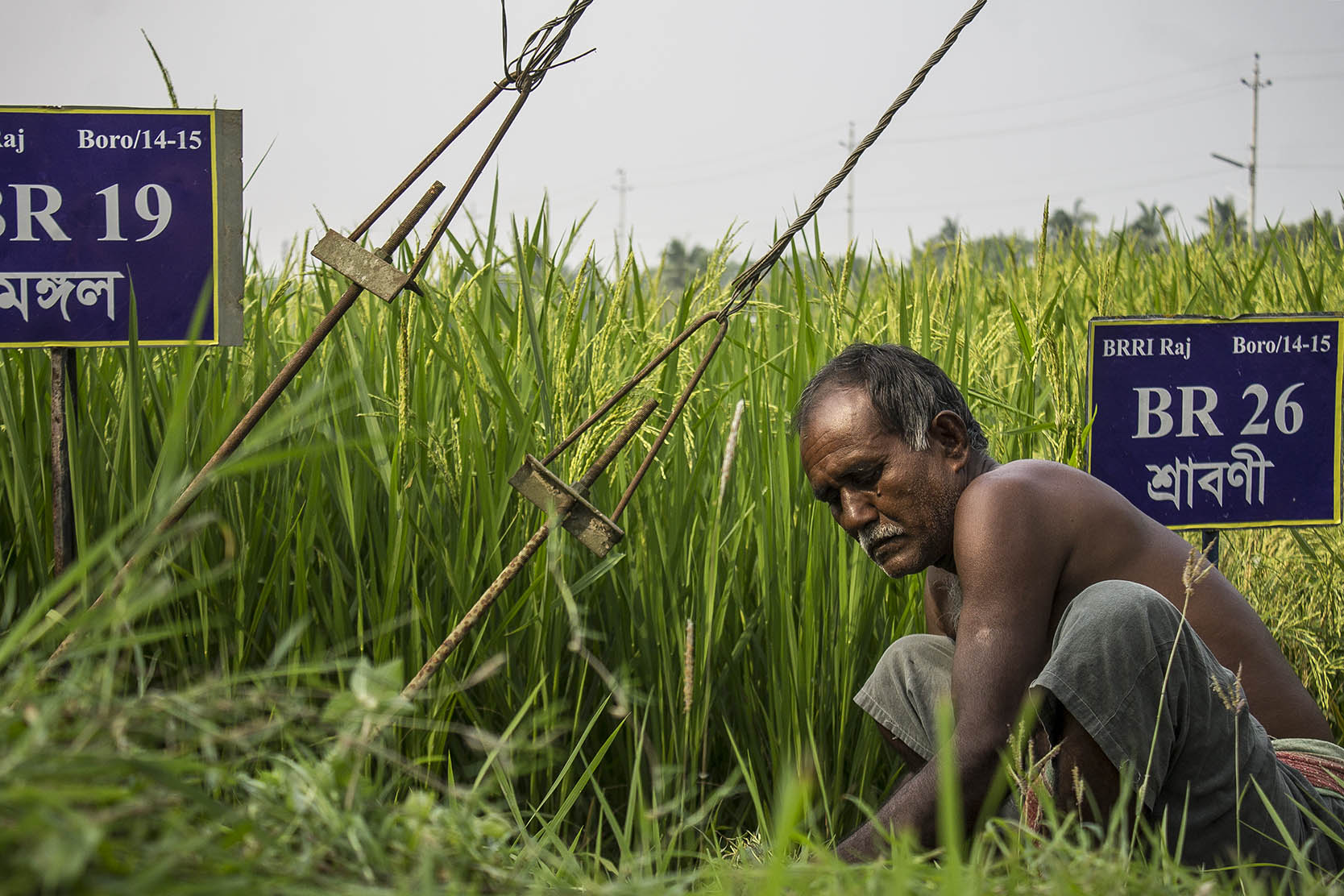
Photo: Wasiul Bahar / Wikimedia Commons (CC BY-SA 4.0)
Sources: Jagonews24, Jugantor, Kalbela, Prothom Alo, Samakal, The Financial Express, The Business Standard, Banglapedia, Food and Agriculture Organization of the United Nations (FAO), Wikipedia

Comments
(0)