
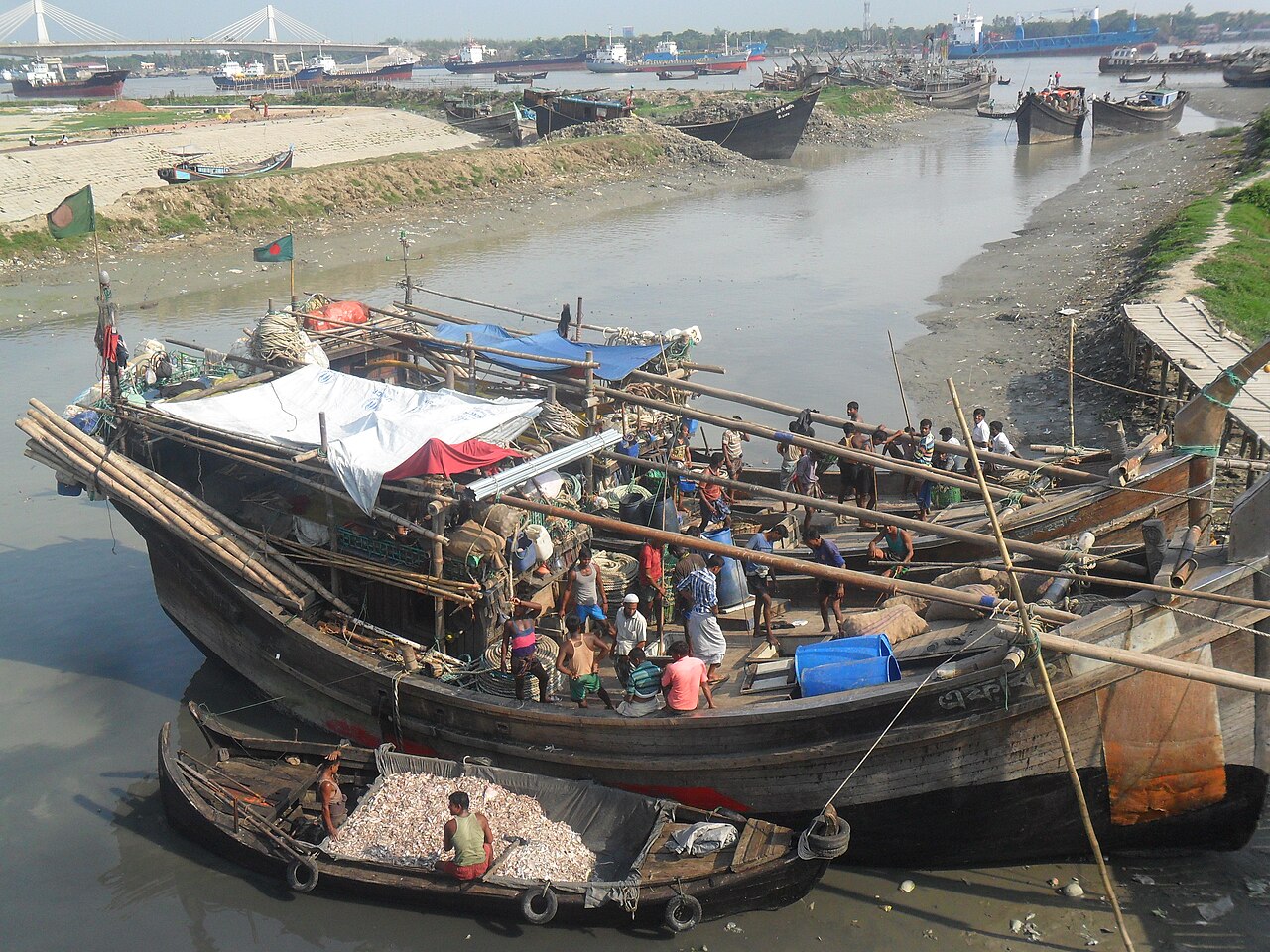
To protect breeding hilsa, catching, carrying, storing and selling hilsa is banned nationwide for 22 days, from 8 to 29 October. In Banshkhali, Chattogram, more than 50,000 people depend directly or indirectly on fishing, yet only 13,794 are on the government register, so a great many fishing families are struggling through the ban, Dainik Azadi reports.
Fishing families live in most parts of Banshkhali municipality and the Chhanua, Puichhari, Shekherkhil, Gandamara, Shilkup, Chambal, Saral, Bailchhari, Kathariya, Baharchhara, Kalipur, Sadhanpur, Pukuria and Khankhanabad unions.
Abdul Kader, Jalil Ahmed, Kalam, Shafi Alam, Nur Ahmed and other fishers were mending nets beside the Jalkadar canal at coastal Banglabazar. When the government closes the sea at different times to let fish stocks grow, they said, they obey, but nobody thinks about how they will get by.
Unable to go to sea for 22 days, and with the boat owners (bahaddars) not paying them, they said, they have been forced to take work weaving nets.
Senior upazila fisheries officer Md Tousib Uddin said Banshkhali has 13,794 registered fishers, of whom about 6,500 have received 25 kg of government rice each for the current brood hilsa campaign, which runs until 29 October.
That means fewer than half of the registered fishers, and a small share of all those who live by fishing, have received support during this ban.
The report is by Dainik Azadi's Banshkhali correspondent.
Photo: Rafaell Russell / Wikimedia Commons (CC BY-SA 4.0); a fisherman in Chattogram.
Source: Dainik Azadi


Comments
(0)