
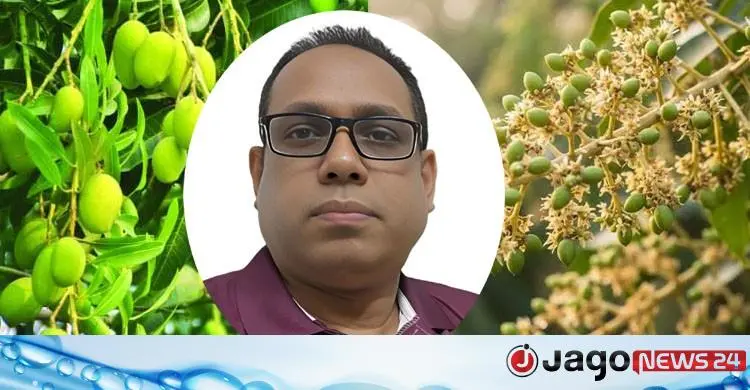
In Bangladesh the mango is not just a fruit but an important part of the economy, agriculture and culture. This season many districts have seen record blossom, pointing to a promising year. In Satkhira, Naogaon, Rajshahi and Chapainawabganj in particular, trees full of blossom have made farmers optimistic. Favourable weather, better saplings, balanced fertiliser use and modern orchard care have strengthened the prospect of higher yields.
But record blossom does not mean record exports. Competition in international markets, quality control, meeting MRL (maximum residue limit) standards, a shortage of hot water treatment facilities and a limited cold supply chain remain major challenges. To enter European and Middle Eastern markets, quality packaging, traceability and fast transport are essential.
If the public and private sectors work together, through a digital supply chain, farmer training and export incentives, Bangladeshi mangoes can build a strong position in foreign markets. So while record blossom opens the door to opportunity, coordinated planning and quality-based production are now needed for sustained export growth.
The mango is an important and promising sector of Bangladesh's farm economy. This season blossom hangs in clusters on trees across the country, and young fruit has already begun to set. If conditions stay favourable, farmers see a chance of record production this year and dream of good yields, fair prices and profit. Behind this optimism lie close advice from the agriculture department, technology-based care and the prospect of new markets.
Main mango-growing areas
Mangoes are grown mainly in Satkhira, Rajshahi, Chapainawabganj, Naogaon, Santahar, Sapahar and Niamatpur. Rajshahi and Chapainawabganj in particular are called the country's mango capital, as their soil, climate and temperature are highly suited to mangoes. Popular varieties grown in these areas include Gopalbhog, Himsagar, Gobindabhog, Gourmati, Amrapali, Haribhanga, BARI-4, Fazli, Langra, Banana and Miyazaki. Each differs in taste, colour, shape and market demand: Himsagar and Langra are very popular at home, Fazli is large and used in processing, and Miyazaki is gradually becoming known as a special high-value variety.
Figures point to potential
Mangoes are currently grown on about 2 lakh 3 thousand hectares in Bangladesh, with total annual production of 27,07,459 tonnes. The number of mango farmers is put at over a lakh. Such production and so many farmers show that the mango is not just a seasonal fruit but an important economic asset.
With record blossom this season, production could exceed the target. But weather is a major factor: excessive rain, hail or untimely storms can harm yields. So farmers are now paying special attention to proper care, disease control, and timely irrigation and nutrient management.
Agriculture department support
The Department of Agricultural Extension (DAE) and related departments are regularly advising farmers in the field. They are stressing fungicide sprays at blossoming, hormone application to prevent fruit drop, balanced fertiliser use and integrated pest management. In many areas farmers now get instant advice through mobile farming apps and hotlines. Work is also under way on following GlobalGAP standards for exportable mangoes, controlling chemical residues and improving packhouse facilities, all vital for entering international markets.
Production versus export
Although more than 27 lakh tonnes of mangoes are produced a year, exports are very small. In the 2024-25 fiscal year Bangladesh exported only 1,290 tonnes, a tiny fraction of production. Final export figures for 2025-26 have not yet been published, but with a new market opening in China and efforts to raise exports to the Middle East and Europe, exports are estimated at between 1,000 and 2,000 tonnes. That is progress, but still very limited compared with production.
Export prospects and what is needed
Bangladeshi mangoes are competitive in taste and quality internationally, and there is demand among expatriate Bangladeshis in Europe and the Middle East in particular. The main obstacles to export are:
- the lack of a proper sorting and grading system;
- a shortage of adequate cold chain facilities;
- limits in packaging and storage to international standards;
- the lack of fast and safe transport;
- weakness in meeting MRL and phytosanitary requirements.
Solving these needs joint action by the government and private sector. Modern packhouses, vapour heat treatment plants, better cold storage and fast airport cargo facilities could help raise exports.
Fair prices and farmers' profits
Even if production rises, farmers' profits fall if they do not get fair prices. Middlemen often deprive farmers of the real market price. Expanding digital marketing platforms, direct farmer-buyer links and e-commerce is therefore urgent. Contract farming and direct links with exporters could give farmers advance price assurance and make production planning more organised.
Climate change and risk management
Bangladesh is vulnerable to climate change. Untimely storms, excessive rain or drought can badly damage mango production, so weather-forecast-based farm planning, crop insurance and risk management are urgently needed. Agricultural research institutes must put more emphasis on developing drought-tolerant and disease-resistant varieties, and farmers' training and awareness must also be raised.
The road ahead
Bangladesh is in a strong position on production, but huge export potential remains untapped. With coordinated work on quality control, modern packaging, the cold chain and market expansion, exports could multiply within a few years. Record blossom and a likely high yield have given farmers new hope, and with favourable weather and proper care, production may exceed the target this year. But turning that production into economic success requires structural improvements in marketing and the export sector.
The mango sector stands at a crossroads: on one side the prospect of record production and farmers' dreams, on the other export limits and weak market structures. Through the agriculture department's advice, technology-based farming, international standards and new markets, the sector can become a strong export-oriented industry. If the weather helps and management is sound this year, new records could be set in both production and export, bringing smiles to farmers and prosperity to the economy. Now is the time for planned action, so that record blossom becomes record income.
Bangladesh's mango production has reached a commendable level in recent years, with farmers growing more skilled with different varieties. Export challenges remain, however, including quality control, proper processing and limited access to international markets. Technology and modern storage can reduce these barriers, and through coordinated public and private effort, international standards, and better branding and marketing, Bangladeshi mangoes can become well known in the global market. With the right planning and direction, the export potential is truly unique.
Source: Jagonews24. First published in Bengali on The Agro News.
Comments
(0)