
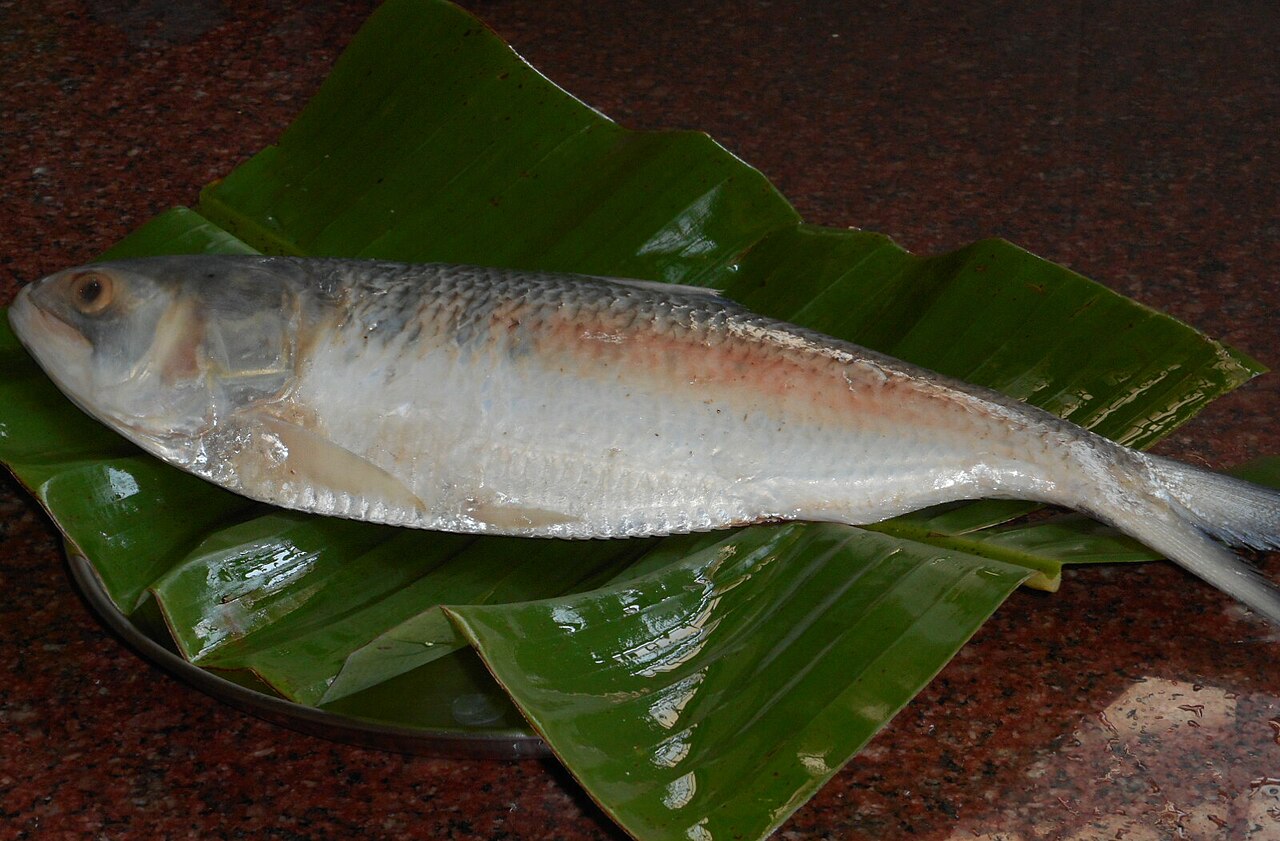
Bangladesh's hilsa production, which rose steadily for a decade, has been falling for the past three years. It peaked at 571,000 tonnes in the 2022-23 fiscal year and has since dropped by 10 percent over three fiscal years, hilsa researcher Mohammad Anisur Rahman said in the keynote paper at a regional workshop that opened at a Dhaka hotel on Friday, 27 November.
He listed the causes: overfishing and illegal fishing, new chars rising in the fish's migration routes, pollution, banned nets and rising temperatures from climate change. Hilsa is a transboundary migratory fish that moves between rivers, estuaries and the sea during its life cycle, he said, so it cannot be managed well without joint action by Bangladesh, India and Myanmar. More than 80 percent of the world's hilsa is caught in Bangladesh's waters, and catching and trading the fish earns the three countries more than US$3 billion a year.
Agriculture and Fisheries and Livestock Minister Mohammad Amin Ur Rashid opened the three-day workshop, titled "Sustainable management of hilsa fisheries in the Bay of Bengal region". He called the decline worrying and said the government would not tolerate overfishing or banned nets, adding that growing submerged chars and climate change were also to blame. Regional cooperation is now essential, he said, and management must be science-based, using even modern tools such as artificial intelligence.
The minister reminded the audience of the millions of people whose living depends on hilsa: fishers and their families, transport workers, processors and traders. Poor fishers who borrow from dadon moneylenders at high interest often end up worse off, he said, and he urged that they be given institutional loans and microcredit on easy terms.
P Krishnan, director of the Bay of Bengal Programme Inter-Governmental Organisation, said Bangladesh was a role model in hilsa harvesting and management and could lead the three countries out of the present crisis. Indian hilsa researcher Amiya Sahu proposed a large hilsa database, a hilsa management task force and intergovernmental cooperation on science-based management. Khin Maung Soe, former head of WorldFish in Myanmar, said uncontrolled fishing in many places there was one reason catches were falling.
The workshop was organised by the Bay of Bengal Programme Inter-Governmental Organisation, Bangladesh Maritime University, Noakhali Science and Technology University, Bangladesh Agricultural University and WorldFish. Its convener, hilsa researcher Abdul Wahab, said the fish would return to its former abundance if science-based management and regional cooperation could be ensured. The report is by Prothom Alo's staff correspondent.
Photo: Prabirghose / Wikimedia Commons (CC BY-SA 4.0)
Source: Prothom Alo

Comments
(0)