

Horticulture, which covers fruit, vegetables, flowers, spices and medicinal plants, is one of the most important parts of Bangladesh's agriculture. Fertile soil, a favourable climate and growing technological progress are driving a marked rise in horticultural production, and rising international demand for Bangladeshi fruit gives exports significant potential.
Bangladesh produces more than 1 crore tonnes of fruit. Fruit and vegetables worth about Tk 100-150 crore are currently exported. Mangoes, jackfruit, litchis, malta, vegetables, flowers and spices could all be exported to world markets.
Main fruits
Mango: grown widely in Chapainawabganj, Rajshahi, Satkhira, Meherpur, Sapahar and Dinajpur. Production is about 25-30 lakh tonnes a year, exported to Europe, the Middle East and various Asian countries.
Jackfruit: known as the national fruit and found in almost every district, with growing areas including Narsingdi, Tangail, Gazipur, Mymensingh and Chattogram. Production is 15-18 lakh tonnes a year. Besides local consumption, demand for packaged jackfruit is growing.
Banana: grown widely in Narsingdi, Munshiganj, Bogura and Cumilla; the regions are also listed as Narsingdi, Munshiganj, Bogura, Mymensingh and Jashore. Production is 12-15 lakh tonnes a year, exported to the UAE, Saudi Arabia, Qatar and other Middle Eastern countries.
Litchi: grown mainly in Dinajpur, Rajshahi, Pabna, Meherpur and Kushtia. Production is 1.5-2 lakh tonnes a year. Only small quantities are exported, but demand is growing in Europe and the Middle East.
Orange and malta: grown mostly in the Chittagong Hill Tracts, Moulvibazar, Sylhet and Chuadanga, while the regions are also given as Dinajpur, Rajshahi, Pabna and Meherpur. Production is 1.5-2 lakh tonnes a year. Only small quantities are exported, but demand is growing in Europe and the Middle East.
Papaya, pineapple and malta: grown in the Chittagong Hill Tracts, Sylhet and Mymensingh. Papaya and pineapple production is 10-12 lakh tonnes, and malta 1-2 lakh tonnes. Exports are small but have future potential.
Export markets
The main export markets are Saudi Arabia, the UAE, Qatar, Oman, Kuwait, the UK, Germany, Italy, India, Malaysia and Singapore. Mangoes are exported most to Europe and the Middle East, bananas are popular in the UAE, Qatar and Saudi Arabia, litchi and jackfruit exports are small though there is demand, and dragon fruit and strawberries are promising export products.
Growing fruit exports
Bangladesh's fruit and vegetable export market is expanding rapidly. Steps that could take the sector further include:
- Improving quality and meeting international standards: exports will rise if production follows Global GAP and European Union standards, and a focus on organic and safe fruit will make competing abroad easier.
- Developing processing and storage technology, as demand for frozen and processed fruit such as mango pulp, dried fruit and juice is rising.
Challenges and solutions
Proper storage and marketing are lacking, so air-conditioned warehouses and cold stores are needed. Improved farming technology is lacking, so farmers need training and modern technology. Better cold storage and packaging systems must be built. New markets should be sought and export policy simplified, as demand for Bangladeshi fruit is rising in Europe, America and Asian countries. More government export support and logistics would make exporting easier. Subsidies and bank loans for exporters would encourage farmers. The government and private sector are working together to increase production of exportable fruit.
Vegetables
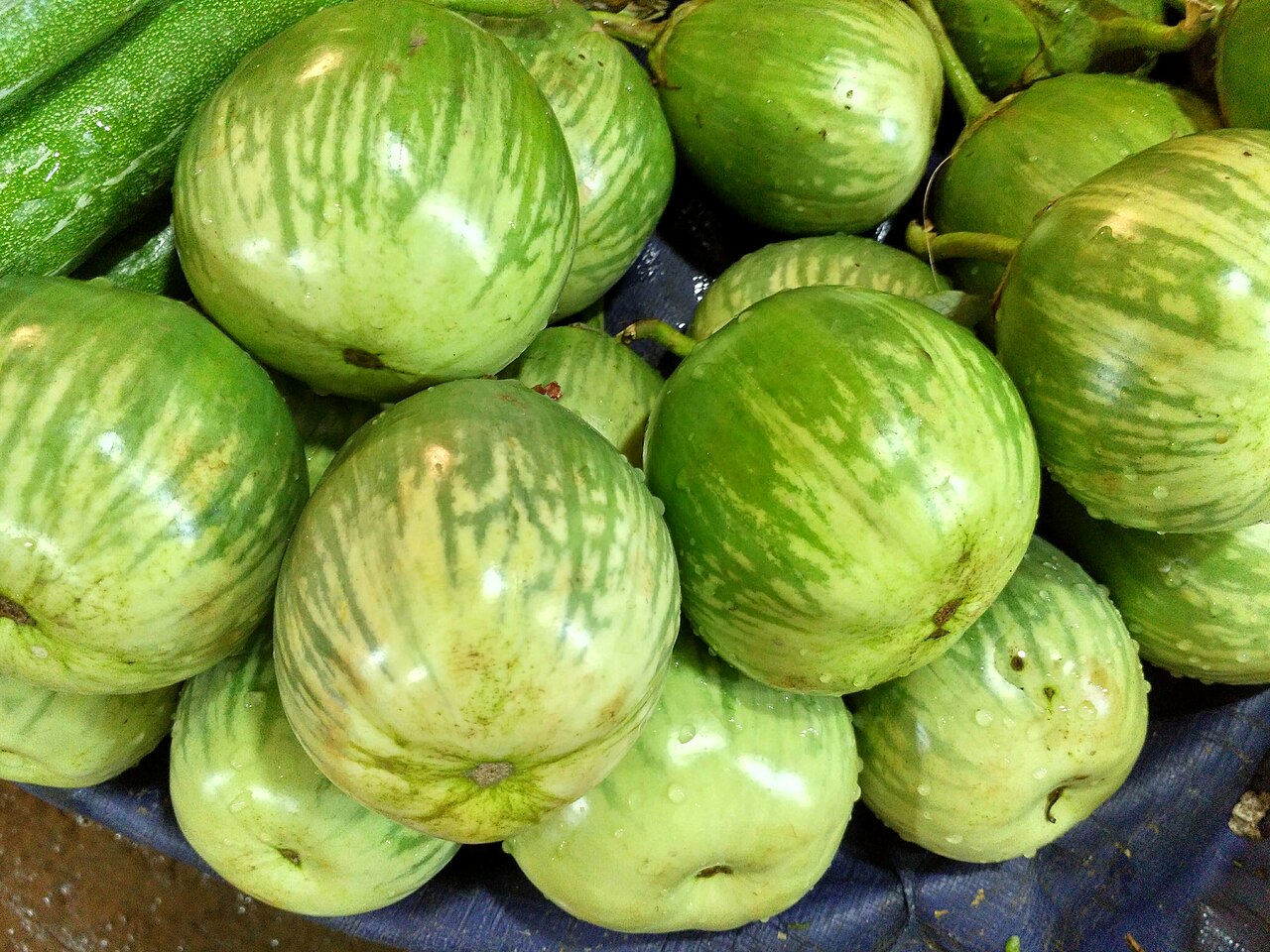
Bangladesh produces about 1.7 crore tonnes of vegetables a year. The main ones are aubergine, tomato, cauliflower, cabbage, carrot, beans, sweet pumpkin, bottle gourd, bitter gourd, cucumber and okra. Improved varieties and methods have brought significant progress.
However, vegetable exports have fallen sharply in recent years, from $182 million in 2017-18 to only $75 million in 2023-24. Fruit and vegetable export earnings combined fell from $239.19 million in 2013-14 to $74.93 million in 2022-23. High export costs, failure to follow Good Agricultural Practices (GAP) and a lack of necessary infrastructure are among the reasons, along with rising air freight costs and falling behind competing countries. The situation is worrying for Bangladesh's agricultural exports and calls for effective action.
Spices, flowers and medicinal plants
Cultivation of spices such as garlic, onion, ginger, turmeric, coriander, cumin and chilli is increasing, and steps are being taken to raise onion and garlic production as domestic demand grows.
The main flowers grown are roses, tuberose, gladiolus, marigold and gerbera. Godkhali in Jashore is called Bangladesh's "flower capital".
Important medicinal plants grown include tulsi, ashwagandha, black cumin, neem, henna, aloe vera and basak.
Technology, research and the way ahead
- New technology: yields can be raised through tissue culture, genetic engineering, greenhouses and AI in agriculture; hybrid and GMO varieties are increasing productivity.
- New varieties: the Bangladesh Agricultural Research Institute (BARI) and Bangladesh Agricultural University are developing high-yielding varieties to compete at home and abroad.
- Climate change: drought-, flood- and salinity-tolerant varieties are being developed, and losses are being reduced by growing fruit and vegetables on higher ground and through crop insurance.
- Fruit processing: packaging, storage and processing are expanding local and international markets, with demand rising for mango juice, frozen vegetables and dried fruit.
- Urban and rooftop farming: hydroponics, aeroponics and rooftop gardens are growing in cities, improving nutrition and food security and providing formalin-free fruit and vegetables.
- Climate change and natural disasters: climate-tolerant varieties and alternative farming systems must be developed, with crop insurance to cope with disasters.
The potential of Bangladesh's horticulture sector is vast. Public and private initiatives, modern technology and scientific research can enrich it further, and with proper planning and implementation Bangladesh can not only meet domestic demand but compete in international markets. Fruit production is rising every day, and export potential is huge.
Modern technology, quality storage and processing and wider international markets can make the sector more profitable. With the right government policy and farmers' innovation, Bangladesh could in the near future become one of the important players in global fruit exports.
Source: Jagonews24. First published in Bengali on The Agro News.

Comments
(0)