
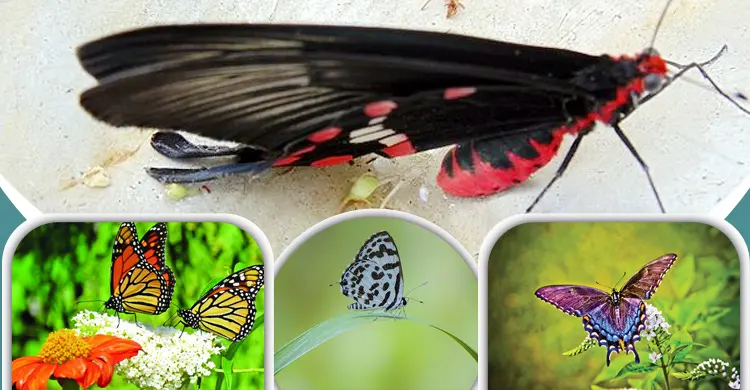
About a decade ago more than 600 species of butterfly could be seen in Bangladesh, but only half of them survive today. Indiscriminate felling of forest trees, clearing of scrub and trapping of butterflies have put these colourful, beautiful and varied insects in danger, like so many other creatures.
The butterfly is a moth-like insect of the order Lepidoptera. It is a highly attractive insect with a long body and wings of many colours. Most butterfly species are diurnal, flying by day and moving from flower to flower in search of nectar. The wings are very transparent: they are made of several layers of a protein called chitin, which forms the butterfly's exoskeleton.
Wings, taste and size
The layers of a butterfly's wing are so fine that you can see through them. Thousands of tiny scales cover the layers, and light of different colours reflected off the scales produces the many hues. Butterflies taste with their feet. A female butterfly settles on various flowering plants and rubs the leaves with her feet to take sap from the plant. At the back of the butterfly's legs is a sensory organ called a chemoreceptor, through which it tastes.
There are 15,000 to 20,000 species of butterfly in the world. The largest is the Queen Alexandra's birdwing, whose wings can reach 25 centimetres. The smallest is the western pygmy blue, only 1 centimetre long. Most butterfly species live one to two weeks, but some live up to a year and a half.
Where they survive
Butterflies were once seen in great numbers in the country's forests and villages; now there are far fewer. It would be hard to find anyone in the country who did not chase a butterfly as a child, enchanted by its colours. Many species can still be seen in Lawachara National Park in Moulvibazar, and butterflies are plentiful in the forests of Bandarban, Ukhiya, Chattogram and Cox's Bazar. Some species are also seen in the Sundarbans and Madhupur.
Research is under way in the country to preserve all butterfly species, and a butterfly park has been set up in Chattogram. Public awareness is needed above all. Many people damage the forest's creepers and shrubs when visiting, which destroys butterflies' habitat and disrupts breeding. Only preventing the destruction of breeding grounds, creating new habitat and raising awareness can save endangered butterfly species, so more effective steps must be taken quickly.
The writer, Niamur Rashid Shihab, is a student at Barishal Polytechnic Institute.
Source: Jagonews24. First published in Bengali on The Agro News.
Comments
(0)