
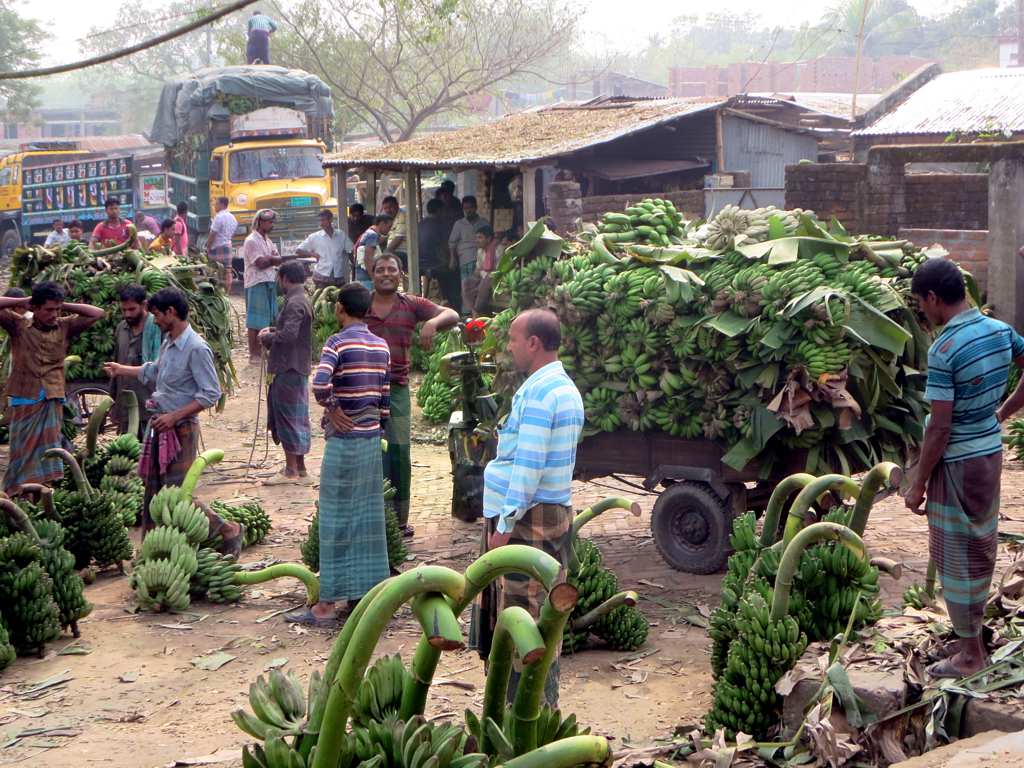
Bananas were the fruit the world produced in the largest quantity, according to the production database of the UN Food and Agriculture Organization (FAOSTAT) as it stood in June 2026. In its latest release, published in December 2025 with figures up to the 2024 harvest, FAOSTAT recorded about 139.4 million tonnes of bananas grown worldwide in 2024, ahead of about 105.0 million tonnes of watermelons and about 97.9 million tonnes of apples. Grapes, oranges, the mango group, mandarins, pineapples, melons and peaches made up the rest of the top of the table.
The ranking was the subject of a Jagonews24 report published on 27 June 2026, which drew on FAO and Statista figures to list the ten fruits grown in the largest quantities. This version checks that list against the FAOSTAT release that was public on the date. The order of the first eight fruits is the same, but several of the report's figures, which it gave as 2023 figures, match FAOSTAT's 2024 numbers, and two of its ten entries were left unnamed. Both points are set right below, and every figure here is stated with its data year.
Fruit matters for more than farm income. In a fact sheet on healthy diets dated 26 January 2026, the World Health Organization (WHO) advised that everyone older than 10 years of age should aim for at least 400 grams of fruits and vegetables a day. How much fruit the world grows, and where, is therefore a question about food supply as well as trade. For personal advice on diet, readers should consult a doctor.
The world's fruit harvest in figures
FAOSTAT adds the main fruit crops into a group it calls "Fruit Primary". By that measure, world fruit production was about 953.8 million tonnes in 2024 and about 946.2 million tonnes in 2023. Earlier years show how the total has grown: about 199.8 million tonnes in 1961, the first year in the database, about 402.4 million tonnes in 1990, about 571.8 million tonnes in 2000, about 737.0 million tonnes in 2010 and about 898.8 million tonnes in 2020.
The land under fruit grew as well. FAOSTAT records about 27.2 million hectares of fruit harvested in 1961 and about 68.4 million hectares in 2024, with an average world yield of 13,937 kilograms per hectare in 2024, against 7,344 kilograms in 1961.
Asia dominates the total. FAOSTAT puts Asia's fruit production at about 560.6 million tonnes in 2024, the Americas at about 168.9 million tonnes, Africa at about 137.7 million tonnes and Europe at about 77.7 million tonnes. Southern Asia, the region that includes Bangladesh and India, produced about 151.1 million tonnes. Europe is the only one of these regions where FAOSTAT shows a smaller fruit harvest in 2024 than in 1990, when it recorded about 94.5 million tonnes.
How FAOSTAT counts the harvest
FAOSTAT is FAO's public statistics database. Every number in its crop tables carries a flag that says what kind of figure it is: an official figure, an estimated value, a value imputed by the receiving agency, or a figure from an external organization. In the December 2025 release, for example, India's banana figure and China's apple figure are marked as official, while the figure for watermelons in mainland China, the largest producer, is marked as imputed by FAO.
The database is revised with each release. When a country corrects its numbers, earlier years change too, which is why 2023 totals quoted at different times do not always agree. For that reason this report takes every figure from the one FAOSTAT release that was public in June 2026, the December 2025 update.
FAOSTAT also counts each fruit separately from its close relatives. Bananas and "plantains and cooking bananas" are two items; oranges are listed apart from "tangerines, mandarins, clementines"; and mangoes are reported together with guavas and mangosteens as one item. A top-ten list therefore depends on which items are counted. Production is the weight of the harvest, area is the area actually harvested in the year, and yield is the production per hectare, all as FAOSTAT reports them.
The top ten in FAOSTAT's figures
Ranked by world production in 2024, as FAOSTAT published it in December 2025, the leading fruit items were as follows, with the 2023 figure from the same release in brackets:
- Bananas: about 139.4 million tonnes (2023: about 136.7 million)
- Watermelons: about 105.0 million tonnes (2023: about 104.4 million)
- Apples: about 97.9 million tonnes (2023: about 97.4 million)
- Grapes: about 75.9 million tonnes (2023: about 75.4 million)
- Oranges: about 67.2 million tonnes (2023: about 69.3 million)
- Mangoes, guavas and mangosteens: about 62.2 million tonnes (2023: about 60.6 million)
- Tangerines, mandarins and clementines: about 51.9 million tonnes (2023: about 52.8 million)
- Pineapples: about 29.4 million tonnes (2023: about 29.8 million)
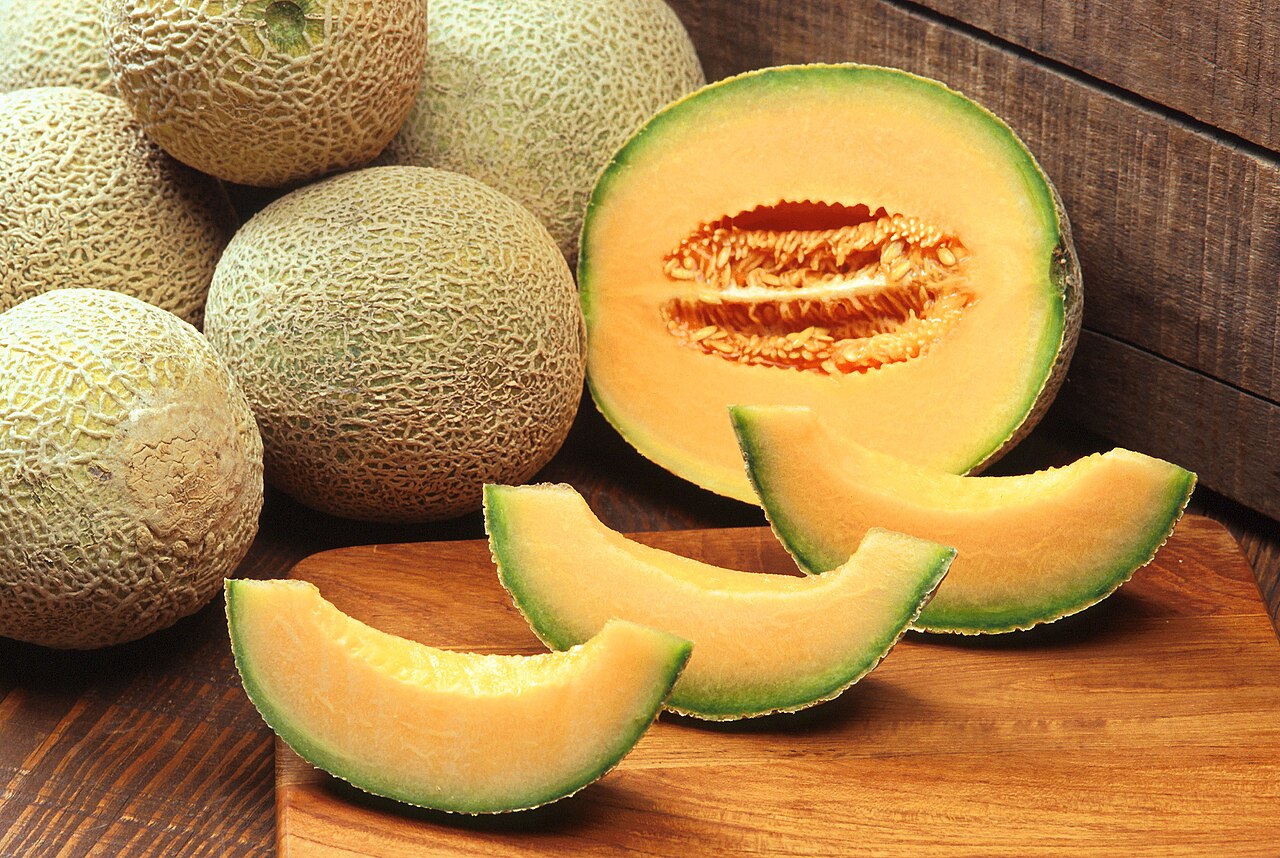
- Cantaloupes and other melons: about 28.2 million tonnes (2023: about 28.3 million)
- Peaches and nectarines: about 27.9 million tonnes (2023: about 27.2 million)
Pears came close behind at about 27.6 million tonnes in 2024. The list leaves out plantains and cooking bananas, which FAOSTAT reports as a separate item: about 44.6 million tonnes in 2024, led by Uganda with about 11.8 million tonnes, the Democratic Republic of the Congo with about 4.9 million and Cameroon with about 4.7 million. Counted as a fruit of their own, plantains would sit between mandarins and pineapples.
Two corrections follow from these figures. The Jagonews24 report gave 139 million tonnes of bananas, 105 million tonnes of watermelons and 97 million tonnes of apples as 2023 output; in the FAOSTAT release those are the 2024 figures. Its ninth and tenth entries, at about 28.2 million and 27.9 million tonnes, were not named; they match cantaloupes and other melons and peaches and nectarines. The report named China and Italy as the main producers of the tenth fruit; FAOSTAT shows mainland China first for peaches and nectarines, with about 17.6 million tonnes in 2024, followed by Spain with about 1.38 million tonnes, Türkiye with about 1.18 million and Italy with about 1.09 million.
Banana: the most produced fruit
FAOSTAT's series shows the banana's rise. World banana production was about 22.4 million tonnes in 1961, about 49.9 million in 1990, about 68.2 million in 2000, about 113.0 million in 2010, about 126.5 million in 2020, about 136.7 million in 2023 and about 139.4 million in 2024. The area harvested in 2024 was about 5.88 million hectares, and the average world yield was 23,702 kilograms per hectare.
India was by far the largest grower, with about 37.6 million tonnes in 2024. Mainland China followed with about 11.8 million tonnes, then Indonesia with about 9.3 million, Ecuador with about 7.6 million, Brazil with about 7.0 million and Nigeria with about 6.9 million. By region, Asia produced about 73.1 million tonnes of bananas in 2024, the Americas about 32.7 million, Africa about 31.3 million and Europe about 0.66 million.
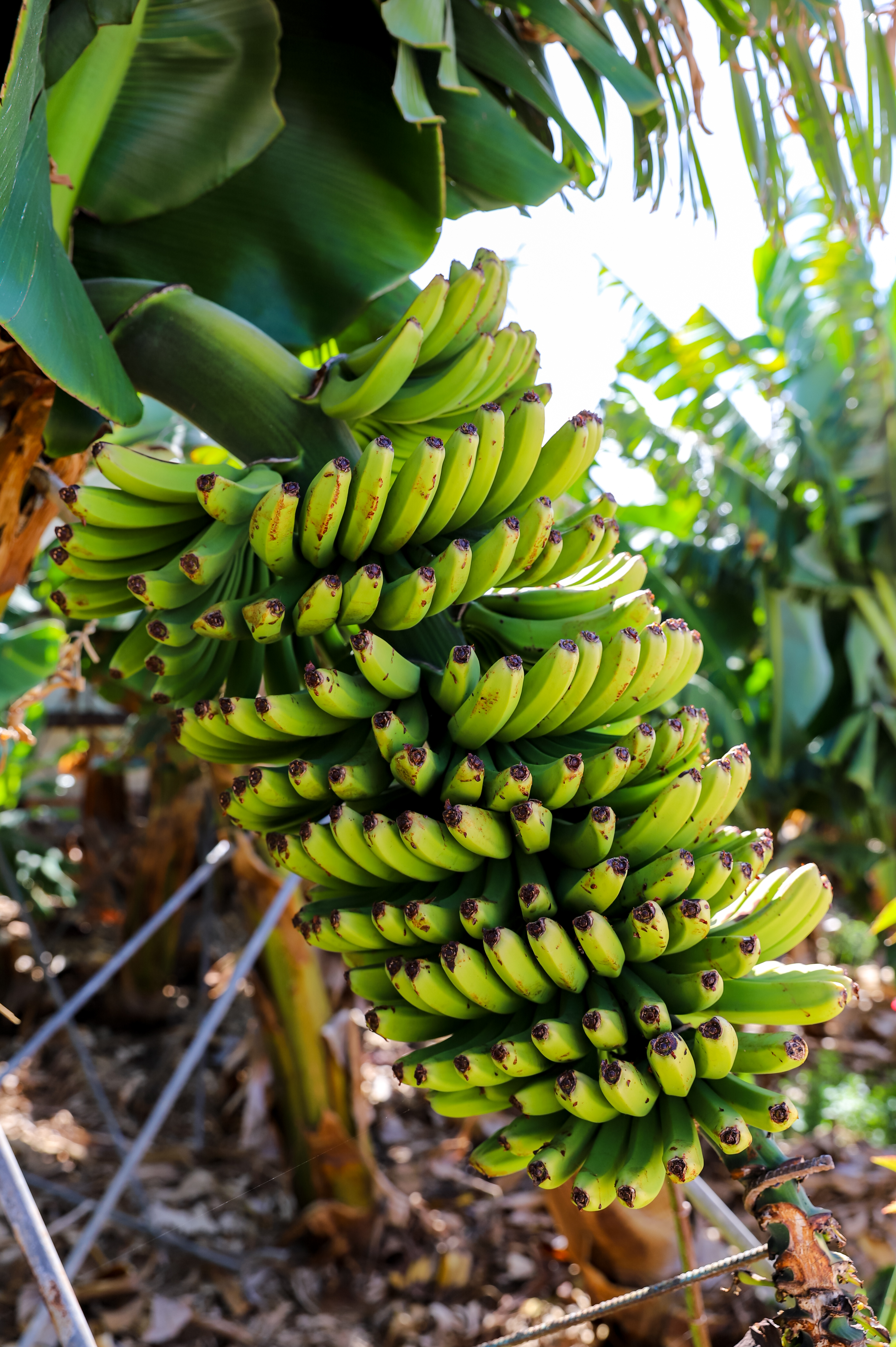
The banana plant is the largest herbaceous flowering plant. What looks like a trunk is a pseudostem made of tightly packed leaf sheaths, and all the parts above ground grow from an underground corm. Each pseudostem normally carries one flower spike, the "banana heart", which develops into a hanging bunch of around nine tiers, called hands, with up to 20 fruits to a hand. After fruiting, the pseudostem dies, but suckers from the base grow on, so the plant as a whole is perennial.
Almost all edible bananas are seedless and come from two wild species, Musa acuminata and Musa balbisiana, or their hybrids. Musa species are native to tropical Indomalaya and Australia, and bananas were probably first domesticated in New Guinea, where banana remains at the Kuk Swamp archaeological site have been dated to between about 10,000 and 6,500 years before the present. Bananas are grown in 135 countries. In Europe and the Americas, sweet dessert bananas are told apart from starchy cooking plantains, but in Southeast Asia, the centre of banana diversity, the languages make no such distinction.
Banana trade, the Cavendish and Panama disease
Only a small part of the world's bananas crosses a border. In its Banana Market Review: Preliminary Results 2025, published on 28 January 2026, FAO estimated world banana exports, excluding plantains, at some 20.8 million tonnes in 2025, an expansion of about 6 percent from 2024, when its table shows about 19.6 million tonnes. Ecuador, the largest exporter, was expected to ship about 6.4 million tonnes; Colombia about 2.5 million, which FAO said would be its highest on record; and the Philippines, the key exporter in Asia, about 2.9 million.
India, the largest grower, is a small but fast-growing exporter: the same review estimated its banana exports at about 955,000 tonnes in 2025, against about 764,000 tonnes in 2024. On the import side, FAO estimated the European Union's imports at about 5.46 million tonnes in 2025, the United States' at about 4.02 million, China's at about 2.04 million and the Russian Federation's at about 1.37 million. FAO said a shortage in China's own banana production had driven its imports up.
Most bananas in international trade belong to the Cavendish group, triploid cultivars of Musa acuminata that replaced the earlier export variety, Gros Michel, after Panama disease devastated it in the 1950s. Because Cavendish plants are propagated as clones, their genetic diversity is very low. Panama disease is caused by a Fusarium soil fungus that enters through the roots and blocks the flow of water in the plant. A virulent strain, Fusarium wilt Tropical Race 4 (TR4), was discovered in 1993 and has spread from Southeast Asia to Australia, India and the Americas; it was found on farms on the Caribbean coast of Colombia in 2019. In its January 2026 review, FAO described the presence of TR4 in Peru and Venezuela as alarming and said it continued to cause production losses and heavy prevention costs.
Watermelon: second place from less land
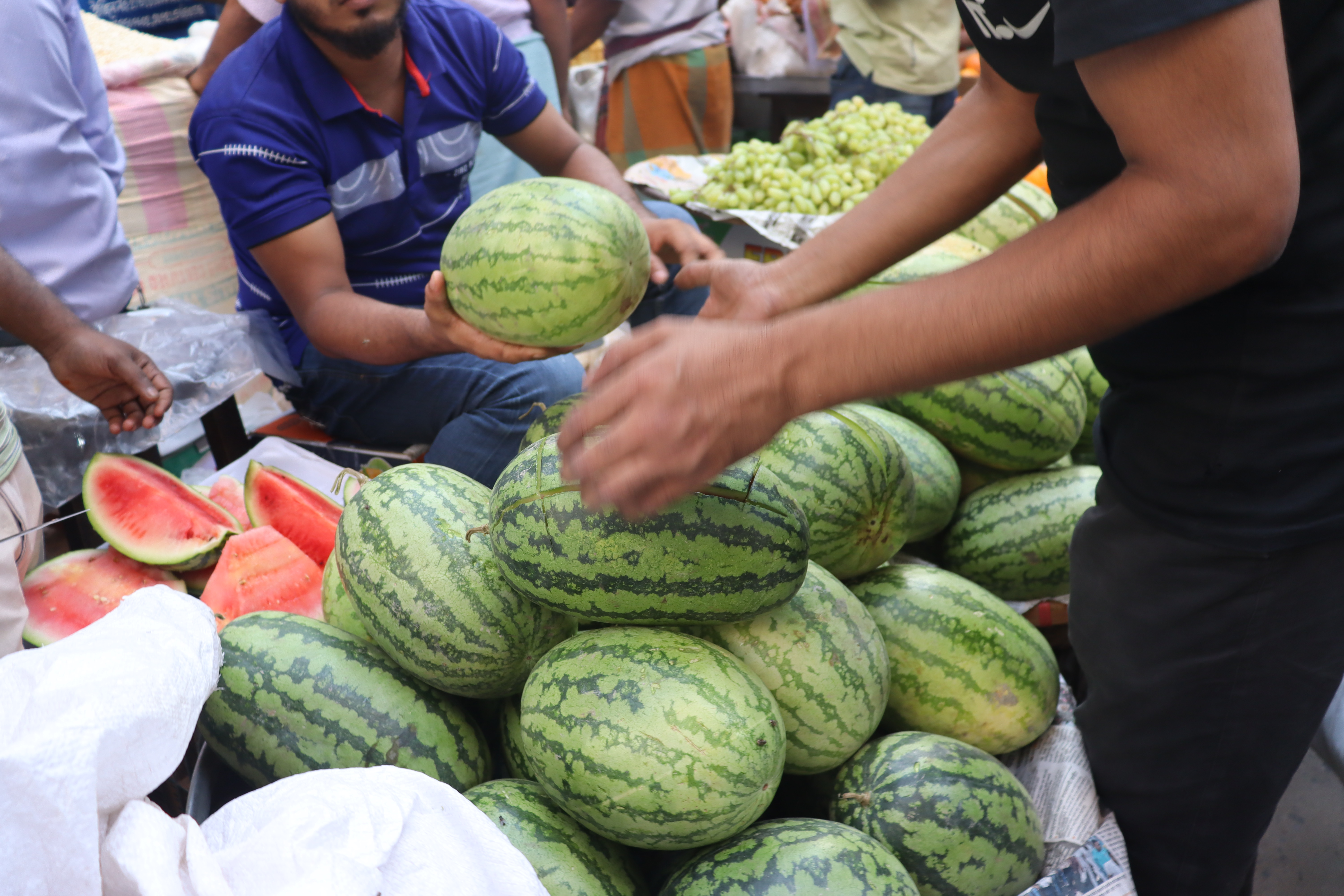
FAOSTAT recorded about 105.0 million tonnes of watermelons in 2024 and about 104.4 million tonnes in 2023. The series runs from about 17.8 million tonnes in 1961 to about 34.9 million in 1990, about 77.2 million in 2000 and about 94.6 million in 2010. In the 2000 figures, watermelon output was larger than banana output, which FAOSTAT put at about 68.2 million tonnes that year.
Watermelons came from about 3.05 million hectares in 2024, a smaller area than bananas or apples, because their yield is the highest of the three: FAOSTAT gives a world average of 34,377 kilograms per hectare. Mainland China grew about 63.5 million tonnes in 2024, a figure FAO imputed. India followed with about 3.7 million tonnes, Türkiye with about 3.2 million, Algeria with about 2.5 million, Brazil with about 2.0 million and the Russian Federation with about 1.9 million. Asia as a whole produced about 83.6 million tonnes.
The watermelon, Citrullus lanatus, belongs to the gourd family, Cucurbitaceae. It is an annual, trailing vine, and the fruit is a kind of berry with a hard rind called a pepo. There are more than 1,000 varieties, and many cultivars produce ripe fruit within 100 days of planting. The plant originated in Africa; it was cultivated in Egypt by 2000 BC, in India by the 7th century and in China by the 10th century. Early watermelons were bitter, and the sweet modern fruit came from selective breeding. Japanese scientists developed the first seedless triploid watermelons in 1939.
The crop needs warmth and grows best in well-drained sandy loam with a pH between 5.7 and 7.2. Its main pests include aphids, fruit flies and root-knot nematodes, and in humid weather the plants are prone to powdery mildew and mosaic virus. Some varieties grown in Japan and elsewhere in the Far East are susceptible to fusarium wilt, and growers protect them by grafting them onto disease-resistant rootstocks.
Apple: China's dominant crop
Apples were third, with about 97.9 million tonnes in 2024 and about 97.4 million tonnes in 2023. FAOSTAT's series shows about 17.1 million tonnes in 1961, about 40.9 million in 1990, about 59.1 million in 2000 and about 71.2 million in 2010. The area harvested was about 4.69 million hectares in 2024, with an average yield of 20,890 kilograms per hectare.
Mainland China grew about 51.3 million tonnes of apples in 2024, an official figure, far ahead of the United States with about 4.9 million tonnes, Türkiye with about 4.4 million, Poland with about 3.4 million, India with about 2.6 million and Italy with about 2.4 million. By region, Asia produced about 67.1 million tonnes, Europe about 16.9 million, the Americas about 9.1 million and Africa about 3.9 million. Europe's apple harvest was larger in 1990, at about 19.5 million tonnes, than in 2024.
The domestic apple, Malus domestica, is a deciduous tree that originated in Central Asia, where its wild ancestor, Malus sieversii, still grows. Trees grown from seed differ from their parents, so commercial cultivars are propagated by grafting onto rootstocks, which also control the size of the tree. There are more than 7,500 cultivars. Open blossoms are damaged by even brief frost, while the dormant wood and buds survive hard winters. The apple genome was first sequenced in 2010, from the cultivar Golden Delicious.
Apples can be stored for months. Controlled-atmosphere stores, which hold fruit in high humidity with low oxygen and controlled carbon dioxide, were first researched at Cambridge University in the 1920s and first used in the United States in the 1950s. A raw apple is 86 percent water and 14 percent carbohydrates.

Grapes, oranges and the rest of the list
Grapes, fourth with about 75.9 million tonnes in 2024, are the only fruit among the top five whose harvested area has shrunk since 1961: FAOSTAT records about 9.33 million hectares in 1961 and about 6.73 million in 2024, while the yield rose from 4,605 to 11,285 kilograms per hectare. Mainland China led production with about 16.8 million tonnes, followed by Italy with about 7.6 million, Spain with about 5.4 million, the United States with about 4.9 million and France with about 4.7 million. Europe's grape harvest, much of it for wine, was about 24.5 million tonnes in 2024.
Oranges were fifth, with about 67.2 million tonnes in 2024, down from about 69.3 million in 2023. Brazil was the largest producer with about 15.7 million tonnes, followed by mainland China with about 7.6 million, Mexico with about 4.8 million, Egypt with about 4.2 million and India with about 3.9 million. Production in the Americas fell from about 41.3 million tonnes in 2000 to about 27.7 million in 2024.
India was the leader in the mango group by a wide margin, with about 27.8 million tonnes of mangoes, guavas and mangosteens in 2024, ahead of Indonesia and mainland China at about 4.1 million tonnes each. Mainland China grew about 27.0 million tonnes of tangerines, mandarins and clementines, with India second at about 6.1 million. Pineapples were led by Costa Rica with about 3.1 million tonnes, the Philippines with about 2.9 million and Indonesia with about 2.7 million. Mainland China was also the largest grower of melons, at about 13.2 million tonnes, and of pears, at about 21.0 million tonnes.
Where Bangladesh stands
FAOSTAT records Bangladesh's fruit production at about 6.25 million tonnes in 2024, up from about 5.78 million tonnes in 2023, both official figures. Bananas were about 813,560 tonnes from about 49,720 hectares in 2024, against about 840,362 tonnes in 2023. The mango, guava and mangosteen item was about 2.10 million tonnes from about 176,865 hectares, up from about 1.51 million tonnes in 2023. FAOSTAT also lists about 208,827 tonnes of pineapples, about 184,515 tonnes of plantains and cooking bananas and about 146,157 tonnes of papayas for Bangladesh in 2024.
According to Banglapedia, the national encyclopedia of Bangladesh, the banana grows almost everywhere in the country and throughout the year. Its main growing areas are Rangamati, Barisal, Rangpur, Dinajpur, Noakhali, Faridpur and Khulna, and the popular local varieties include Sagar, Sabri, Chanpa, Singapuri and Mahersagar. Banglapedia records the 2005-06 banana harvest at 909,060 tonnes from 138,360 acres.
The same entry lists the diseases Bangladeshi growers face. Panama wilt, caused by the soil fungus Fusarium oxysporum f. sp. cubense, is described as widespread and devastating in Bangladesh as in other banana-growing countries; the fungus enters through the roots and blocks the plant's vascular system. Bunchy top, a viral disease, is spread by the banana aphid. Bacterial wilt, leaf spot and anthracnose on the fruit are also common, and the banana stem weevil and the leaf and fruit beetle are the main insect pests. Farmers who see these signs in their gardens can take advice from the upazila agriculture officer.
Photo: David Stanley / Wikimedia Commons (CC BY 2.0)
Sources: Jagonews24, FAOSTAT (FAO production database, release of December 2025), FAO Banana Market Review: Preliminary Results 2025, World Health Organization, Banglapedia, Wikipedia

Comments
(0)