
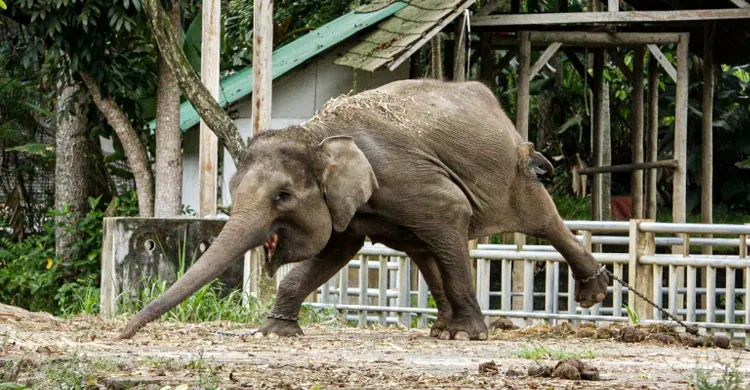
Animals too are not escaping the negative impact of the coronavirus pandemic. Many animals on Indonesia's Bali island, famous for tourism, are now skin and bone. The elephants in particular are in such a fragile state that there seems to be nothing on their bodies but skin and bone.
Experts say tourism in Indonesia has collapsed because of the coronavirus, raising questions over whether the country's tourism built around elephants will survive.
At an elephant park on Bali, about a dozen elephants are close to dying for lack of food. The park's staff have been sent on unpaid leave. With ticket sales down because of the coronavirus, these animals are under threat along with people.
An endangered species
Bali Elephant Camp (BEC) is a safari park about half an hour from Ubud, Indonesia's cultural capital. In 2005 BEC joined a wildlife conservation programme run by the country's forestry ministry, and later took responsibility for conserving endangered Sumatran elephants from Indonesia's privately owned zoos and safari parks.
A 2007 world wildlife conservation study said there were 2,400 Sumatran elephants. The number has since halved because of deforestation and conflict with people. From 1980 to 2005, 67 percent of the Sumatran elephant's habitat was destroyed, and as numbers fell for various reasons it was placed on the endangered list in 2012.
BEC's elephants were brought from a breeding centre in Sumatra 30 years ago, and the government also permitted using the animals for conservation and business. The camp made profits for a long time, but the coronavirus has wrecked that. BEC charged US$230 (more than Tk 19,000) for two people to ride an elephant for half an hour, income that has now stopped. Because of BEC's standstill, several elephants have recently been moved elsewhere.
"Only skin and bone"
The birth of three calves over the past 15 years shows that BEC was not only meeting animal welfare needs; the company's website also shows pictures of healthy, beautiful elephants.
A vet from the Netherlands who has worked there for 20 years said: "You cannot imagine a skinny elephant until you see it with your own eyes. They are big animals and you do not want to see their bones. But they were only skin and bone."
The country's government is reported to be giving every kind of help to save the elephants, since each costs US$1,400 a month, an expense the authorities are struggling to meet.
Citing Al Jazeera.
Source: Jagonews24. First published in Bengali on The Agro News.
Comments
(0)