
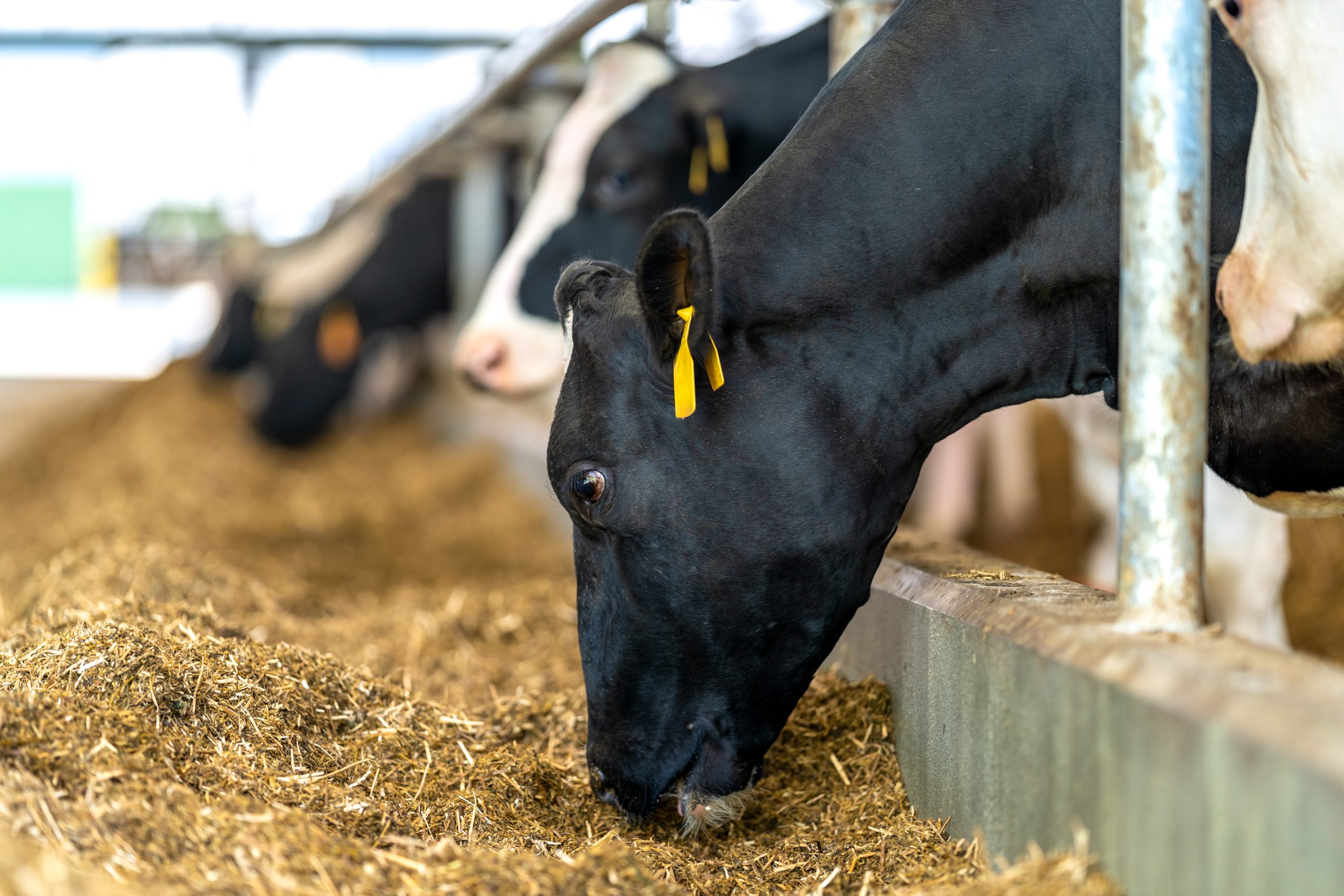
Many dairy herds expect to start feeding conserved forage early this autumn, and reseeding grassland now could be the answer to a shortage next spring, according to Imogen Ward of Massey Harpers Feeds. Sown in autumn, grass establishes its roots before winter and grows vigorously in spring, she said, and newer varieties raise yield, energy content and nitrogen-use efficiency.
The gap is large. A newly reseeded sward can yield up to 15.5 tonnes of dry matter a hectare, Ms Ward said, while an old ley full of unproductive species and weeds may give only about 7 tonnes. Each additional tonne of dry matter represents roughly 11,000 megajoules of energy — about 2,000 litres of milk, or 234 kg of lamb or beef, depending on the enterprise.
Ryegrass swards are also far better at using nitrogen, with efficiency of up to 100% compared with about 17% in annual meadowgrass, which she counted as a further saving.
Her advice was to choose mixtures that hold their yield in drought-prone years now that weather patterns have changed: deep-rooted festulolium and hybrid species tolerate stress and make the most of nutrients, and can be mixed with perennial ryegrass for persistence and density. Soil health should be checked before sowing to get the full return on the investment and to help the sward through dry spells.
Reseeding, she added, belongs in a wider efficiency plan: dairy production needs savings at every level, feed is a major cost, and effective grass production is essential to achieving them in the UK.
Source: The Scottish Farmer

Comments
(0)