
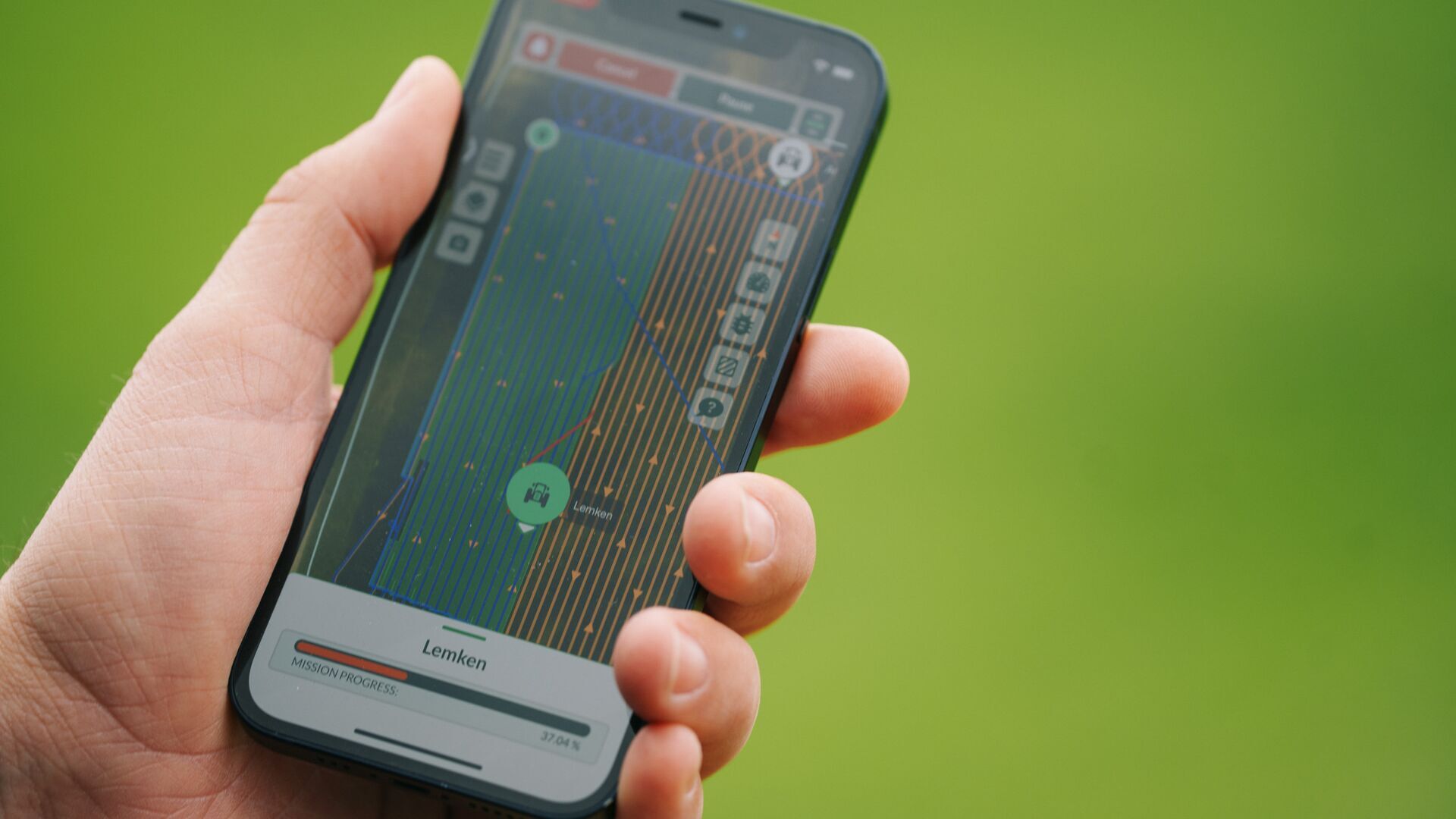
Fendt says it can now reach level 4 on the SAE scale of driving automation with its PTx OutRun retrofit kit. Level 4 means the automated system completes the whole driving task within a defined set of operating conditions without expecting a person to intervene, and Fendt says OutRun's Tillage and Grain Cart applications show how that works in the field.
With the Grain Cart application, a combine operator can call a fleet of driverless, sensor-equipped tractors from the field edge to the harvester from a tablet in the cab, then assign new tasks or send them to a transfer point; the system supports front and rear approaches and automatic alignment. Since July 2026 the platform has added autonomous soil cultivation with OutRun Tillage, and the retrofit is to be offered in certain regions for the Fendt 900 Vario and 1000 Vario series.
Fendt maps its existing systems onto the SAE levels, which run from 0 (the driver does everything) to 5 (full autonomy anywhere). Its FendtONE platform, Fendt Guide guidance and ISOBUS implement control count as level 1; Fendt Guide with TI Headland automatic headland management is level 2, where the driver still stays vigilant; level 3, where the machine steers, accelerates and brakes inside its operating domain and must detect and respond to obstacles such as a person in its path, is illustrated by spot spraying under a driver's supervision.
John Deere is pushing for level 4 with its own stack: StarFire positioning, a well-defined operating domain, the Operations Center and AI-powered cameras. Deere tractors also underpin other companies' autonomy, such as Autonomous Solutions Inc's unmanned fleet on US Sugar's 255,000-acre farm in south Florida, run by one operator from a central station through ASI's Mobius fleet-management system.
Kubota announced last month that its Agri Robo Tractor MR Series will launch in Japan in April 2027, the first Japanese-built tractors capable of unmanned operation under remote monitoring. Operators can leave the site and watch the tractor on a tablet, receive alerts if it stops, check the surroundings and restart it remotely; AI cameras detect people and millimetre-wave radar detects obstacles, halting the machine at once. Japan's agriculture ministry is promoting smart farming as farms struggle to find skilled machinery operators, and Kubota has no plans to sell the series outside Japan.
Level 5, the equivalent of sending a tractor from central Dublin to a farm in Co. Offaly through weather, bad roads and diversions on its own, has not been achieved by any car maker or precision-agriculture company.
Source: Agriland

Comments
(0)