
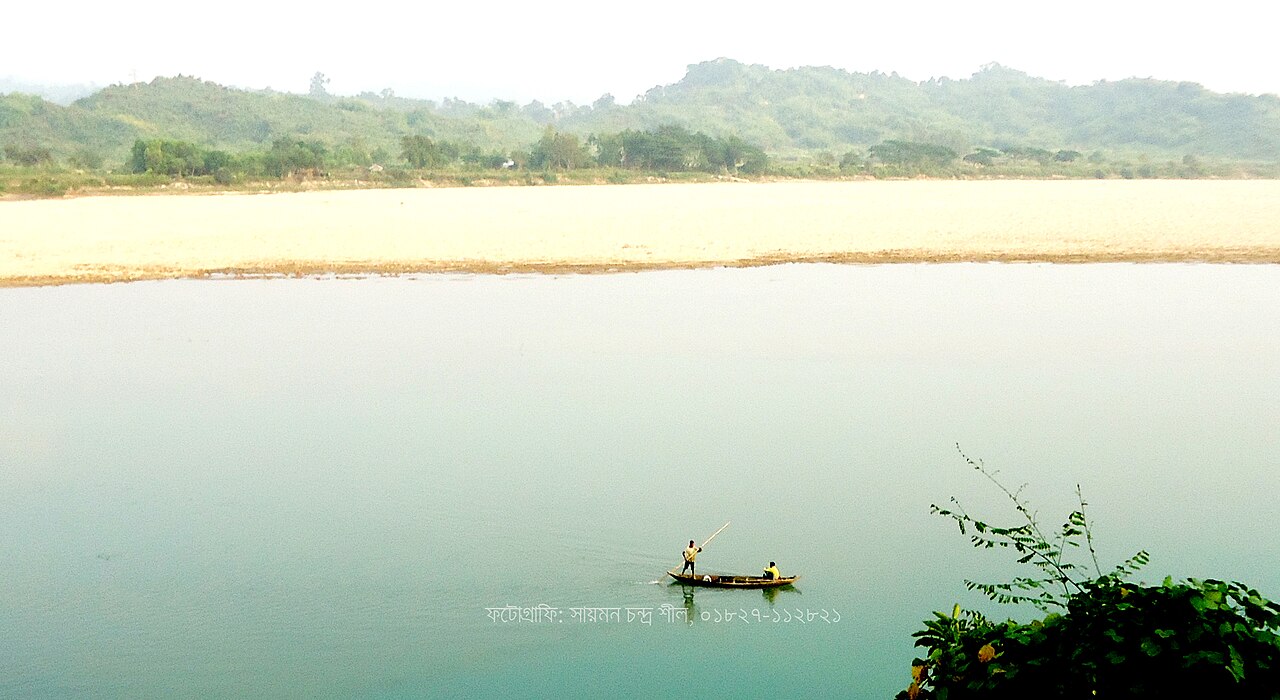
The Atrakhali, a branch of the hill river Someshwari in Netrokona, has turned into a sandbank after more than a decade of encroachment and sand extraction. The river, about 20 km long and 51 metres wide, once ran fast and clear and was known as a haven for native fish. Now its fish, its boat traffic and the farming that depended on it are all slipping away.
Residents and environmental campaigners say unregulated extraction of sand and stone from the Someshwari has damaged its branches. The mouth of the Atrakhali was completely blocked when a road was built for sand trucks, and the river has since silted up into heaps of sand and earth.
Hundreds of boats once used the river every day to reach neighbouring upazilas. Hundreds of hectares beside it were irrigated from it for crops and vegetables. With no water, much of that land now lies fallow and farmers are frustrated.
Local resident Jamal Mia said that after the river was leased, dredgers took sand at will, deepening the western stretch while silt closed the natural channel. Water that once flowed west to east now drains the other way. Only urgent re-excavation can save the river, he said. Most of the district's roughly 95 rivers are threatened by silting and encroachment.
Md Sakhawat Hossain, executive engineer of the Water Development Board in Netrokona, said a detailed feasibility study of the district's main rivers is complete and several rivers and canals will be re-excavated on its recommendations. "The mouth of a river can never be kept closed," he said.
Deputy Commissioner Khandaker Mushfiqur Rahman said cleaning of the river will begin soon under a short-term plan, with visible results in one to two months, and eviction drives will start as soon as the UNO and assistant commissioner (land) report on illegal occupation.
Photo: Saimon Chandra Shil (Someshwari river, Durgapur) / Wikimedia Commons (CC BY-SA 4.0)
Source: Desh Rupantor
Comments
(0)