
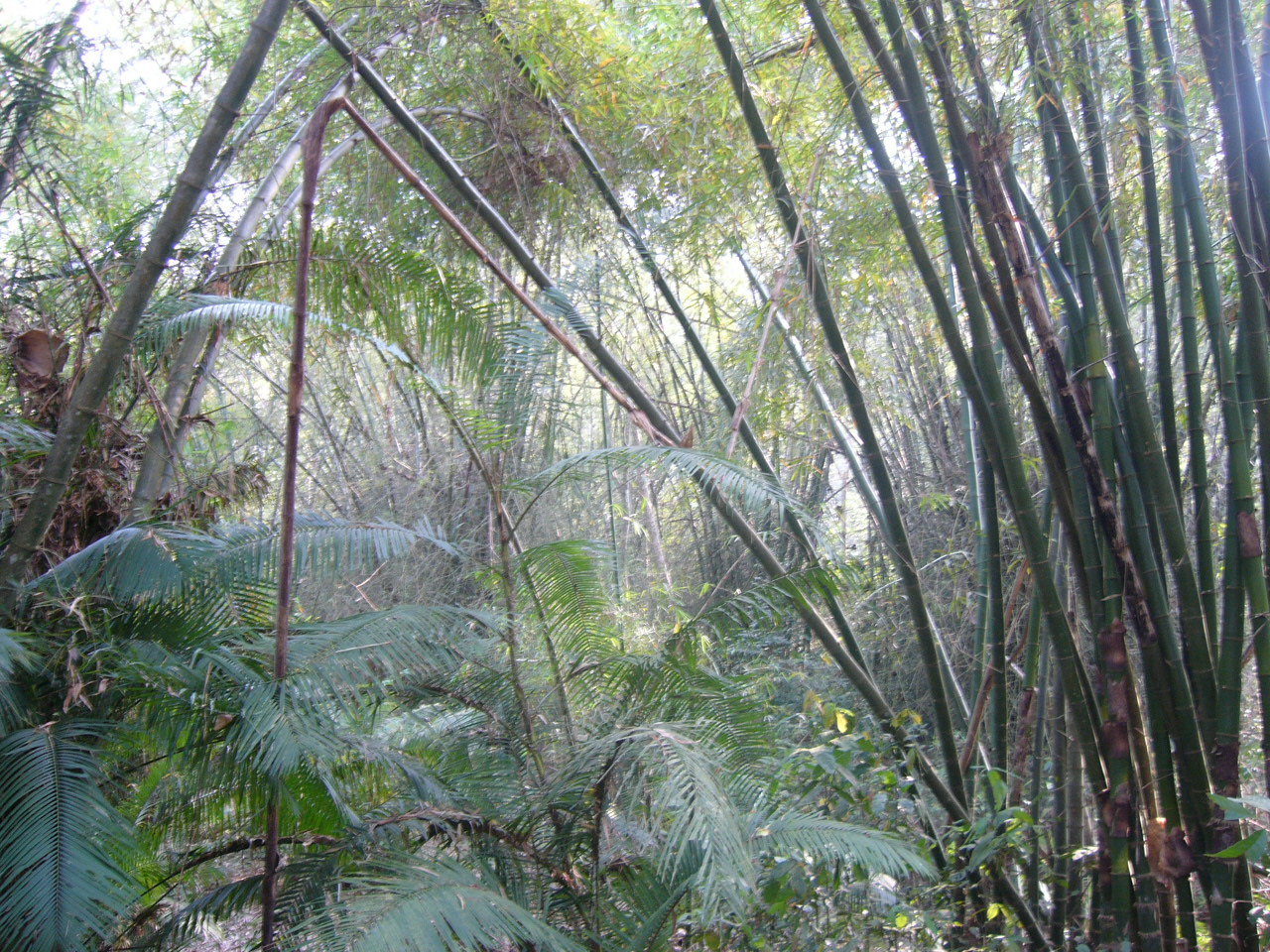
There is no alternative to long-term government planning and effective action to tackle the environment and climate crisis, National Citizen Party (NCP) spokesperson Asif Mahmud Shojib Bhuyain said in Dhaka on Saturday, 6 June 2026. He was speaking at the launch of NCP Dhaka Metropolitan North's week-long programme of tree planting, sapling distribution and awareness seminars for World Environment Day, Jagonews24 reported that evening.
According to Jagonews24, he spoke about the shrinking of the country's forest cover, the pledge made before the election to plant 25 crore (250 million) trees, air pollution, waste management and unplanned urbanisation in the capital, and the role of the city corporation administrators. His remarks are reported here as his own; the background to the issues he raised comes from government documents, international bodies and news reports published before that date.
What the week-long programme involved
Bangla Tribune reported on 6 June that the programme was announced on Saturday afternoon by Ariful Islam Adib, convener of NCP Dhaka Metropolitan North. He said about 200 saplings would be planted at 20 educational institutions in the capital. Saplings of various species were handed out at the event, and a seminar on environmental conservation was also announced. Adib asked citizens to take part in greening from wherever they are. The party's joint convener Javed Rasin was also present.
Dhaka Times reported that the seminar would discuss what can be done to stop encroachment, pollution and burning. The two papers differed slightly on the dates: Bangla Tribune gave 6 to 11 June and Dhaka Times 6 to 12 June. Both described a week-long programme beginning on 6 June.
Jagonews24 reported Asif Mahmud as saying that, as a political party, their scope to work on a very large scale was limited, but people listened to them and followed them, and it was out of that sense of responsibility that NCP Dhaka Metropolitan North had taken up the awareness programme. He called on party leaders and activists at district and upazila level across the country to organise tree planting and other public awareness activities for Environment Day. At the end of the event he formally declared the week of tree planting, sapling distribution, seminars and discussions open, and asked everyone to come forward to raise public awareness of conservation.
He also said, according to Jagonews24, that environment and climate change could not be confined to formal programmes or symbolic tree planting: it was a matter of long-term state planning, policy and implementation, and the government needed to play a more sincere and responsible role. Dhaka Times reported that, criticising the government's stance on the environment, he said the environment was not a priority in government policy, and that if this government did not act, the damage would be greater for whoever came to power five years later.
The forest cover claim and the Forest Department's figures
According to Jagonews24, Asif Mahmud said the country's forest cover was steadily shrinking, which was worrying. In his words, it had fallen to about 10 per cent, whereas at least 25 per cent was needed to maintain environmental balance. The report does not say where his figures came from.
Estimates of Bangladesh's forest depend on the definition and method used. In a 2017 presentation to the Climate Investment Funds' Forest Investment Programme at World Bank headquarters in Washington, the Bangladesh Forest Department put the country's forest area at 2.6 million hectares, or 17.5 per cent of the country. That figure is based on the 2007 National Forest Assessment and includes homestead groves. The same presentation, citing remote-sensing data, showed forest area falling from 1.65 million hectares in 1975 to 1.40 million hectares in 2014, and gave an annual deforestation rate of 0.2 per cent.
The document also breaks the forest down by type: tropical evergreen forest, including hill forest and unclassed state forest, 1.40 million hectares; the Sundarbans and other mangroves, 0.79 million hectares; tropical deciduous forest dominated by sal, 0.12 million hectares; freshwater swamp forest, 0.02 million hectares; and homestead forest, 0.27 million hectares.
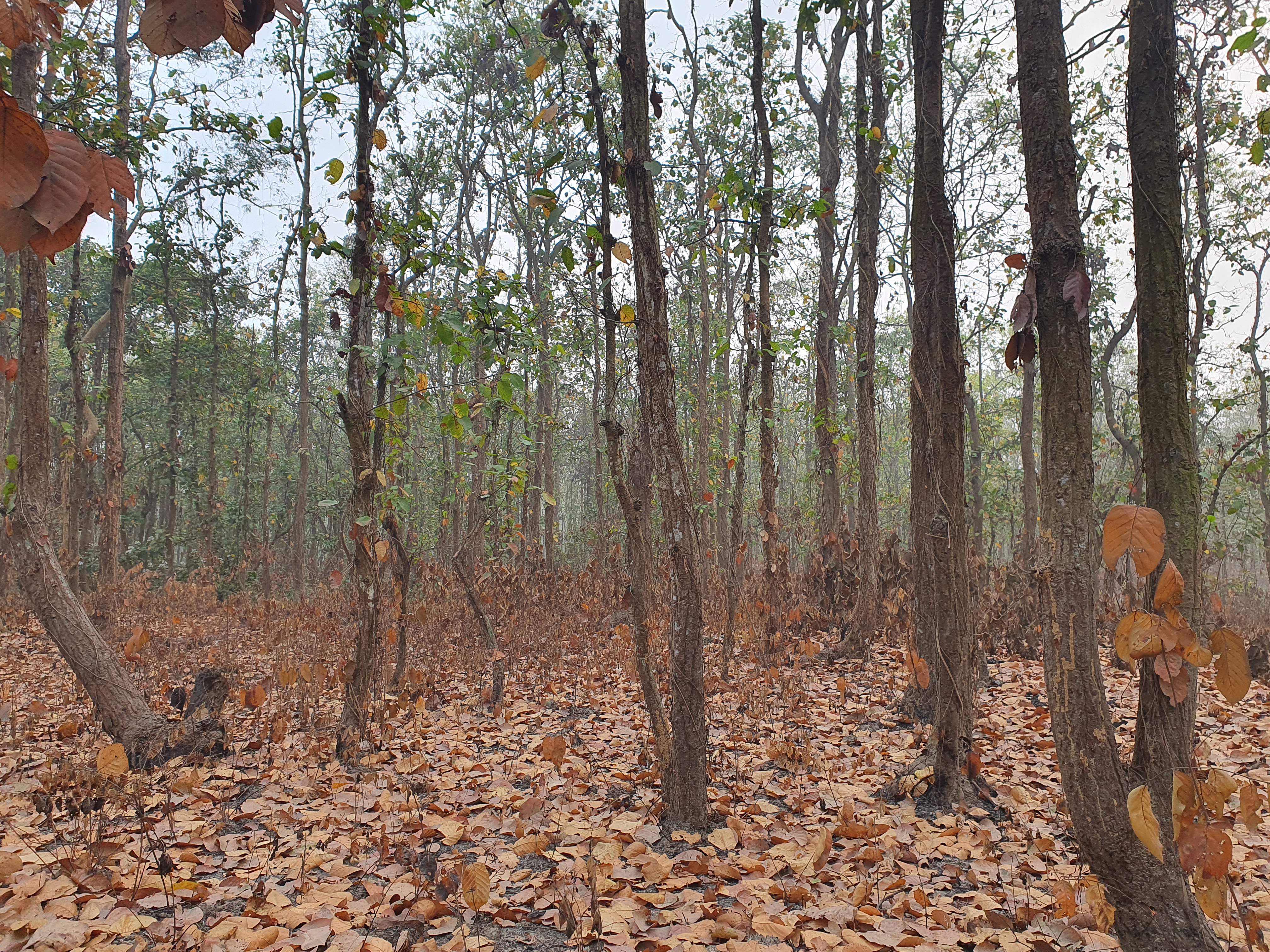
On targets, the Forest Department document states that the Forest Policy of 1994 and the Seventh Five Year Plan aimed to bring 20 per cent of the land area under forest or tree cover, with forests at 70 per cent crown density. It also gives the policy goal for forest restoration as 20 per cent of the land surface. The 25 per cent Asif Mahmud cited is higher than the official target in that document.
Citing Bangladesh's UN-REDD project, the Forest Department lists the drivers of deforestation as heavy population pressure, high demand for fuelwood and other forest products, illegal felling, over-exploitation and unsustainable harvesting, encroachment, conversion of forest land to other uses, poorly defined forest boundaries and land tenure in some regions, inadequate investment in the sector, and natural causes such as cyclones, tidal surges, salinity and sea level rise.
The same document says forestry contributes 3 per cent of GDP, or 6.4 per cent if forest ecosystem services are counted. About 19 million people depend on forests, and village forests contribute between 8.9 and 18.6 per cent of household income. It also describes Bangladesh as one of the countries most vulnerable to weather-related losses, ranked first in its region and sixth in the world for losses, deaths and damage to property.
The document also sets out the government's forestry plans at the time. It says four forest-sector mitigation strategies are included in Bangladesh's nationally determined contribution (NDC): continued coastal mangrove planting, reforestation and afforestation in reserved forests, planting in the island areas, and continued social and homestead forestry; these depend on conditional financing, and the NDC sets no specific targets or areas. According to the document, the government was undertaking a forest restoration project with an estimated IDA loan of US$175 million and a government contribution of US$20 million for five years, from 1 July 2018 to 30 June 2023. Forestry employed 1.5 million people in full-time equivalent terms in 2015, 0.6 million of them women, and 2 per cent of the labour force worked in forestry.
The pledge to plant 25 crore trees
According to Jagonews24, Asif Mahmud criticised the government, saying that although a pledge to plant 25 crore trees had been made before the election, no visible step had yet been taken to carry it out. He said he hoped the government would take proper steps to fulfil it.
The pledge came from the BNP's election manifesto. An analysis by The Business Standard on 10 February 2026 described planting and maintaining 250 million trees nationwide over five years as one of the party's headline environmental pledges. The party said the programme could create more than 350,000 green jobs, with another 250,000 jobs through new nursery enterprises. The manifesto also proposed GIS-based land mapping to find suitable planting sites and region-specific species, and a digital "Tree Monitoring App" to track survival and upkeep.
The programme was also discussed on the government side on the same day, 6 June. The daily Ittefaq reported that afternoon that, at a meeting on climate messaging and World Environment Day activities at the Prime Minister's Office in Tejgaon, Prime Minister Tarique Rahman directed that the government programme to plant 25 crore trees across the country over the next five years be carried out successfully, and stressed raising public awareness of climate change. The meeting was told that the programme would be formally launched from Chattogram the following week. Preparations for World Environment Day and progress on tree planting were also discussed.
Environmental pledges in the manifestos and what experts said
According to The Business Standard's analysis, beyond tree planting the BNP manifesto promised to generate at least 20 per cent of the country's electricity from renewable sources by 2030; a central measurement, reporting and verification (MRV) system for carbon emissions from energy, agriculture, waste and reforestation; a 30 per cent cut in plastic waste within five years; regional material recovery centres and e-waste facilities in each division; and the inclusion of around 200,000 informal waste workers. The same analysis described Jamaat-e-Islami's "Three-Zero Vision" of zero environmental degradation, zero waste and zero flood risk by 2030, along with pledges to halt deforestation and plant native species.
The environmental news site Mongabay reported on 11 February 2026 that the NCP's manifesto promised to make effluent treatment plants mandatory in factories, regulate illegal battery dumping and lead pollution, carry out river dredging and wetland restoration with the help of satellite imagery, and control unplanned development in flood-prone areas. Mongabay also noted the BNP's pledge to stop deforestation and industrialisation in wildlife habitats.
In the same report, environmentalists voiced frustration with the manifestos. Md Shamsuddoha, chief executive of CPRD, called the targets of 20 per cent renewable electricity by 2030 and 250 million trees unrealistic. Sohanur Rahman of YouthNet Global said the manifestos largely ignored climate-induced migration, the resilience of urban slums, and air and lead pollution. Monirul H. Khan, a professor at Jahangirnagar University, said the central issue of biodiversity conservation had not been properly addressed.
Dhaka's air: IQAir's figures for 2025
Voicing concern about the capital, Asif Mahmud said, according to Jagonews24, that air pollution, waste management problems and unplanned urbanisation were making Dhaka less liveable day by day, and that city dwellers faced a range of physical and mental health risks because of the polluted environment.
Two and a half months earlier, bdnews24.com reported on 24 March 2026, citing the World Air Quality Report released that month by the Swiss company IQAir, that Bangladesh's annual average concentration of fine particulate matter (PM2.5) in 2025 was 66.1 micrograms per cubic metre. That made it the world's second most polluted country after Pakistan (67.3 micrograms), the same ranking as in 2024. The WHO guideline for the annual average is 5 micrograms per cubic metre, and the report noted that Bangladesh's level was more than 13 times that limit.
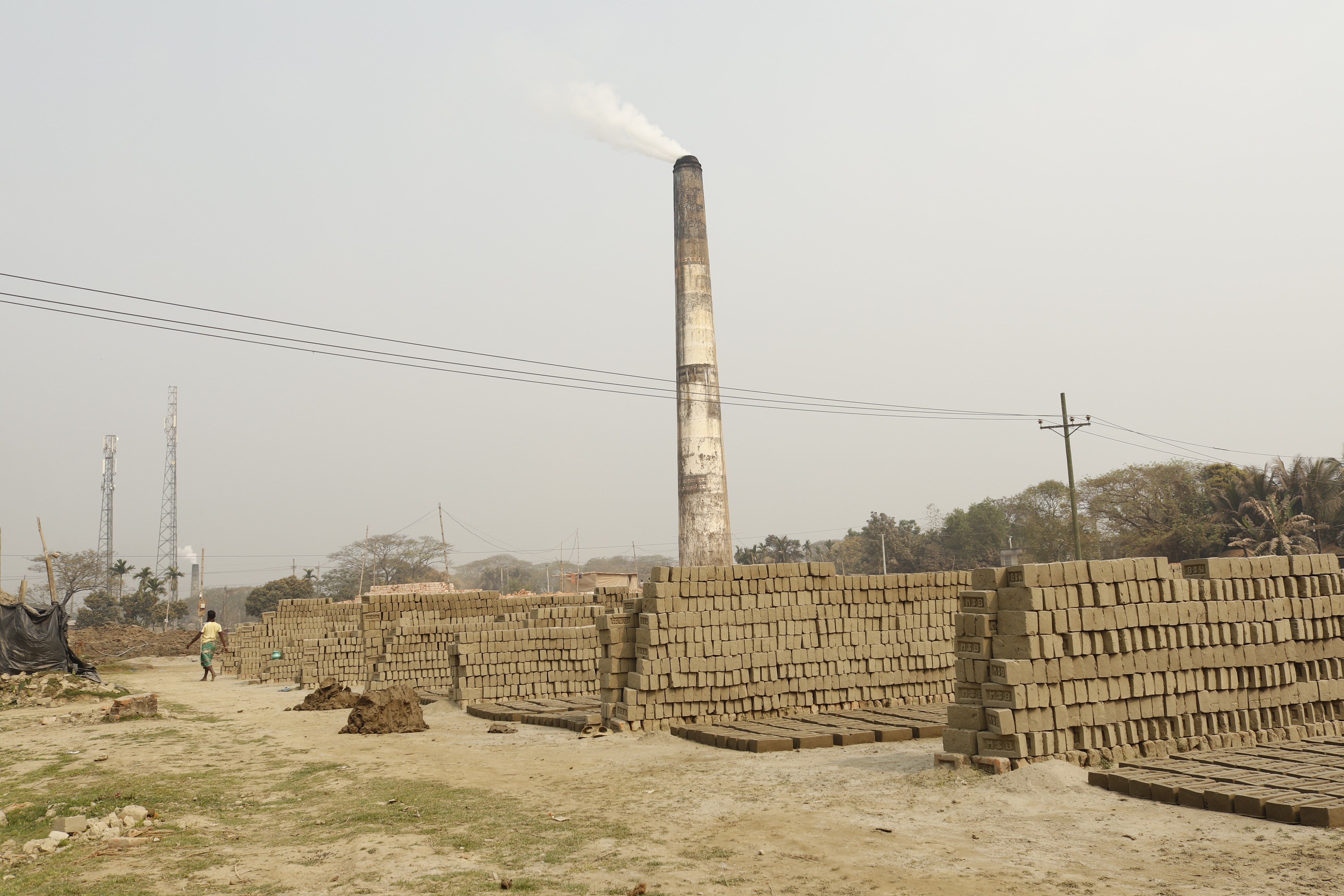
According to the same report, Dhaka was among the capitals with particularly severe pollution in 2025: along with Dushanbe and Delhi, it recorded at least two months in which PM2.5 exceeded 100 micrograms per cubic metre. IQAir attributed the pollution to industrial and vehicle emissions, brick kilns, construction dust and seasonal crop burning.
On the health risks, the World Health Organization's fact sheet of 24 October 2024 says ambient air pollution caused 4.2 million premature deaths worldwide in 2019, 89 per cent of them in low- and middle-income countries. Of those deaths, 68 per cent were due to ischaemic heart disease and stroke, 14 per cent to chronic obstructive pulmonary disease, 14 per cent to acute lower respiratory infections and 4 per cent to lung cancer. In 2019, 99 per cent of the world's population lived where WHO air quality guideline levels were not met. Anyone with breathing difficulty or chest pain should see a doctor.
Earlier reports on waste and liveability
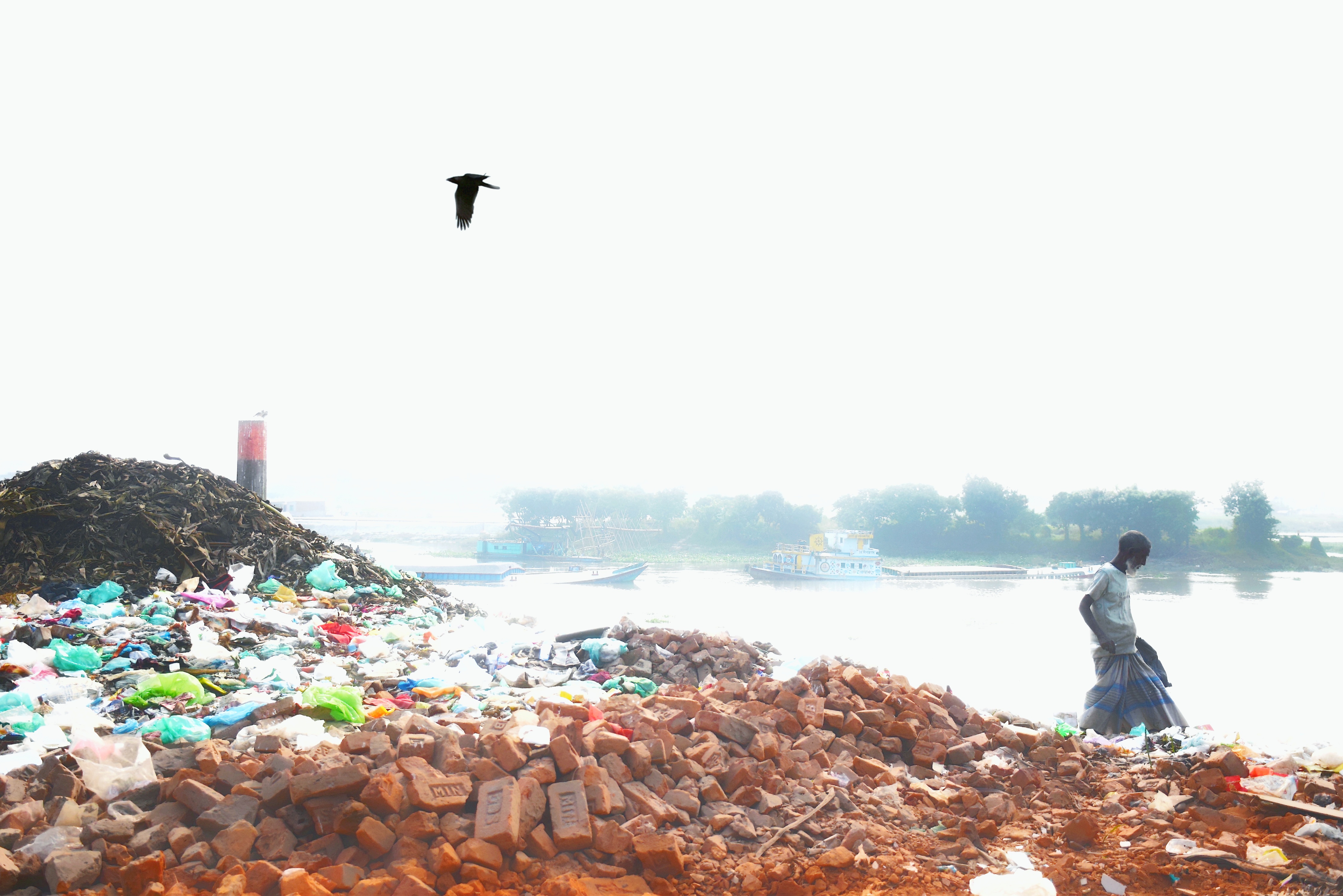
On waste, The Business Standard reported on 23 November 2025 that Dhaka generated nearly 7,500 tonnes of waste a day, of which only 37 per cent was collected formally; the rest spilled into drains, was burned in the open or piled up on unregulated dumpsites. Waste per person per day had risen from 0.575 kg in 2017-18 to 0.72 kg in 2019-20. Four major dumpsites ring the capital, at Amin Bazar, Matuail, Beribandh and Uttara.
In the same report the city corporation's chief waste management officer explained that Dhaka's waste had a calorific value of only 600 to 700, while electricity generation needed at least 1,500, making waste incineration environmentally problematic. The report also said Bangladesh produced 3 million tonnes of e-waste a year.
Dhaka also trailed in international comparisons of liveability. The Dhaka Tribune reported on 25 June 2025 that the city ranked 171st of 173 cities in the Economist Intelligence Unit's Global Liveability Index 2025, ahead only of Tripoli in Libya and Damascus in Syria. It had been 168th in 2024 and 166th in 2023. Its overall score was 41.7 out of 100: 45 for stability, 41.7 for healthcare, 40.5 for culture and environment, 66.7 for education and 26.8 for infrastructure.
City corporations run by administrators
According to Jagonews24, Asif Mahmud criticised the city corporation administrators, saying they should take effective steps to improve the environment during their current tenure rather than waiting for election pledges, because conservation is an ongoing process that cannot wait for any election.
In June 2026 Dhaka's city corporations had no elected mayors and were run by administrators appointed by the government. The Dhaka Tribune reported on 9 February 2026 that the Local Government Division had appointed additional secretary Surayya Akhtar Jahan as administrator of Dhaka North City Corporation (DNCC) by a gazette notification that day, replacing Mohammad Azaz, who had held the post since 12 February 2025. The appointment was made under Section 25A(1) of the Local Government (City Corporation) (Amendment) Ordinance, 2024, and the administrator exercises the powers and duties of the mayor. Decisions on city services such as waste, greening and cleaning therefore rested with the administrators.
World Environment Day 2026
World Environment Day is held every year on 5 June. According to a media advisory from the United Nations Environment Programme (UNEP), it is the largest global platform for environmental outreach, led by UNEP and held annually since 1973. The 2026 edition focused on climate action, with Azerbaijan as host and the main celebration in Baku. The advisory said many clean solutions in energy, transport, buildings and food systems were no longer niche and were becoming the new normal. Both the NCP's week-long programme and the 6 June meeting at the Prime Minister's Office were held around the day.
The NCP and its spokesperson
The National Citizen Party was founded on 28 February 2025. It emerged after the July 2024 uprising, launched by Students Against Discrimination and the Jatiya Nagorik Committee, with Nahid Islam as convener and Akhter Hossen as member secretary. The party was registered with the Election Commission on 17 November 2025.
Prothom Alo reported on 29 December 2025 that Asif Mahmud Shojib Bhuyain, a former adviser to the interim government, had joined the NCP that day as its spokesperson and head of its election management committee. The party said then that he would not contest the election but would work for its nominated candidates. He spoke in that role at the 6 June 2026 event.
Photo: Shmunmun / Wikimedia Commons (public domain)
Sources: Jagonews24, Bangla Tribune, Dhaka Times, The Daily Ittefaq, Bangladesh Forest Department (Forest Investment Programme, 2017), The Business Standard, Mongabay, bdnews24.com (IQAir World Air Quality Report), World Health Organization, Dhaka Tribune, United Nations Environment Programme, Prothom Alo, Wikipedia



Comments
(0)