
"Digital agriculture in ASEAN does not suffer from a lack of technology or willingness to act. It suffers from an underdeveloped delivery system." That is the finding of a new report from the Smallholder Economic Empowerment through Digital Solutions (SEEDS) project, run jointly by Grow Asia and the International Fund for Agricultural Development (IFAD) and funded by South Korea's Ministry of Agriculture, Food and Rural Affairs.
The report, co-authored with Erika Balzarelli of The Sustainable Smallholder, draws on four years of work in Cambodia, the Philippines and Vietnam to ask why farmers take up digital tools so unevenly.
Balzarelli told AgNavigator that digital public infrastructure is the starting point. "If there is no digital infrastructure, the rest of the layers, such as the innovation itself, cannot really be brought to the farmers and cannot be scaled," she said. Governments can lead, as India did, or the private sector can move first, as in Kenya, but a neutral body such as the ASEAN Secretariat, Grow Asia, IFAD or a ministry is needed to coordinate.
She said many agtech business models are built for younger, more digitally literate or better-off farmers, leaving most smallholders out. "If it's not farmer-centric, there is no product-market fit. There is no market. There is no investment," she said.
Frederique Glazener, regional lead of programmes at Grow Asia, said SEEDS workshops brought women, young and older farmers into the design of tools, and that pilots too often test whether a technology works but not whether farmers keep using it after the pilot ends.
The report calls for an end to "one-size-fits-all" digital services, training that fits young farmers, older farmers and women separately, and support through government extension services, which Balzarelli said have a reach that one-off pilots by NGOs or start-ups do not. The interview was reported by Amanda Lim for AgNavigator.
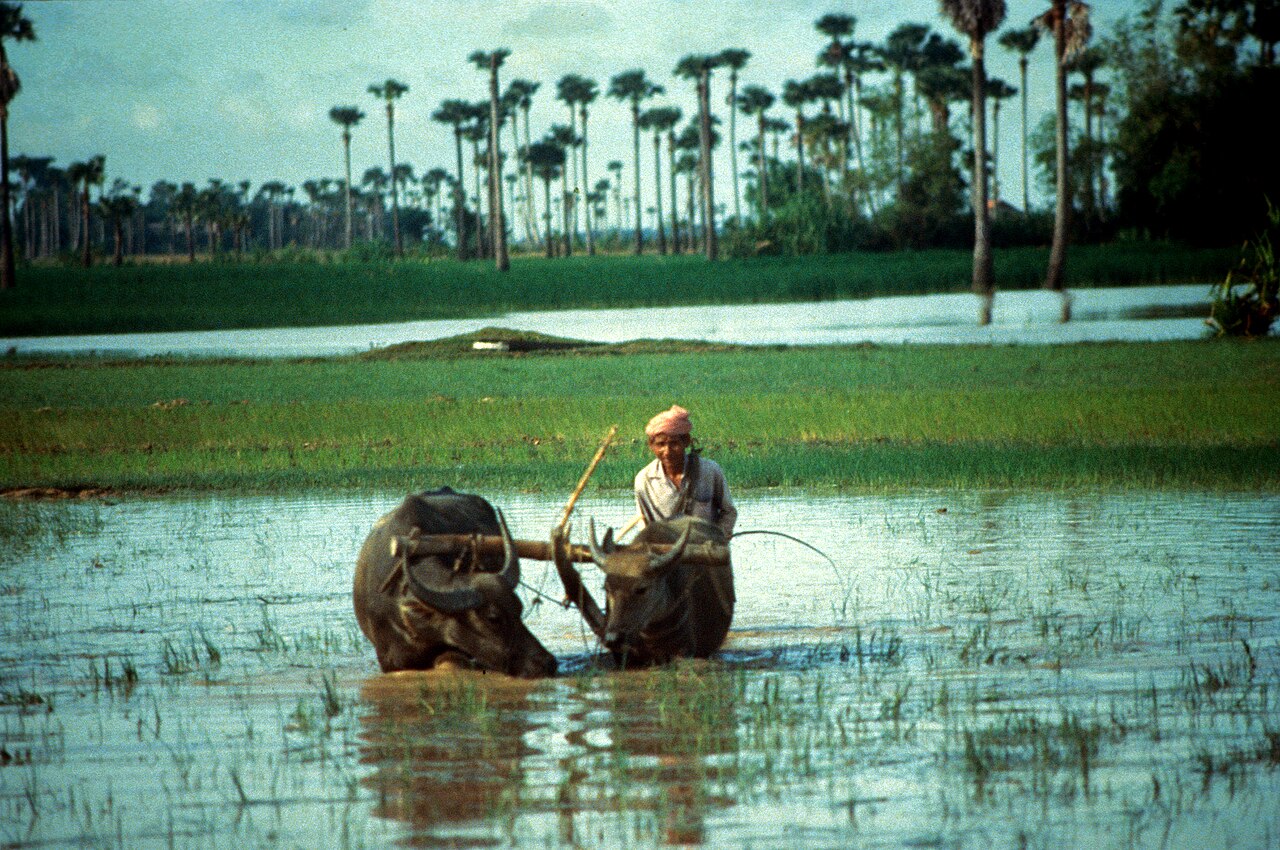
Photo: International Rice Research Institute / Wikimedia Commons (CC BY 2.0)
Source: AgNavigator



Comments
(0)