
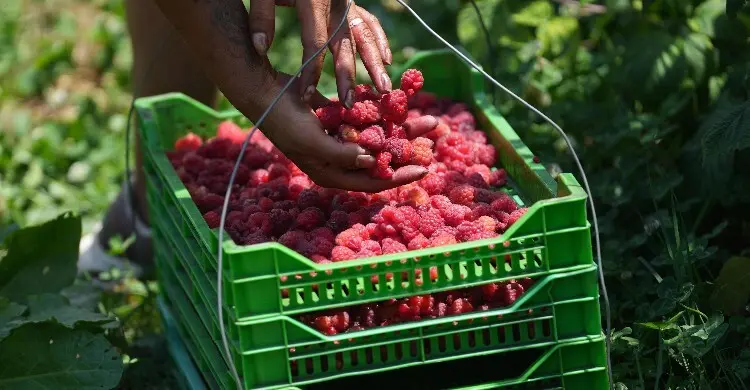
Arilje is a small town in Serbia, but it is now known around the world. It is called the "raspberry capital" of the Balkans, and the fame of its raspberries has spread beyond the country's borders.
Raspberries grown in and around Arilje are exported to distant countries, including the United States and Japan. Serbia is now one of the world's top three raspberry exporters, and Arilje supplies about 20 per cent of Serbia's total raspberry exports.
"We are born with raspberries, we live with them and we die with them," said Mileta Pilcevic, head of the local raspberry growers' association. "Arilje is unique in the world. You will not find such a huge amount of raspberries produced in such a small place anywhere else."
Grown and picked by hand
Arilje's hilly terrain and climate are very well suited to raspberries. Local farmers say their raspberries are grown without any chemicals and picked by hand.
Growers say regular care is needed to keep the taste, aroma and quality of top-grade raspberries, and a raspberry field takes at least two years to reach full production.
"Nothing can be done with machines or chemicals. Everything has to be done with care," Pilcevic said.
Most of Arilje's raspberry fields have been run by the same families for generations, producing an average of 15,000 to 20,000 tonnes a year.
When the harvest begins in early summer, large numbers of seasonal workers come to work there. Local growers say workers come not only from Serbia but also from India and other South Asian countries.
Local resident Nada Marinkovic said every job in the field, from weeding onwards, has to be done by hand. "Picking raspberries is not very hard, but you have to work in the scorching sun," she said.
Mostly exported frozen
About 90 per cent of Serbia's raspberries are exported frozen, and the rest are sold on the domestic market.
Frozen raspberries are used by the food processing industry in European countries, and there is also demand for them for jam, yoghurt, bakery products and the retail fruit market. Some growers also sell raspberries and natural fruit juice directly online.
Drought and prices
Serbia's raspberry output this year may be 20 to 30 per cent lower than normal, mainly because of last year's drought.
Growers say climate change is bringing more extreme weather, making raspberry farming uncertain, while volatile market prices have also become a major problem.
Pilcevic said the price set for raspberries is often not enough even to cover production costs, so far from making a profit, farmers are losing the capacity to cope with extra risk.
Arilje's farmers have blocked roads in protest over the situation in the past. "Our work is in the orchards, not on the streets. But if necessary, we will take to the streets again," Pilcevic said.
Source: Jagonews24. First published in Bengali on The Agro News.


Comments
(0)