
On 7 April 2026 Jagonews24 published a feature by contributor Khairul Bashar Ashik on what people can learn from ants. The writer called the ant one of the oldest and smallest creatures on Earth, a useful friend of the environment, and an example of discipline, foresight, sharing and unity. Several of the facts in the piece, such as the 250 ant species known from Bangladesh and the way two ants greet each other by smell and chemical signals, match the Banglapedia entry on ants written by entomologist Badrul Amin Bhuiya. This report keeps the writer's theme and sets out what ant science had established by April 2026. It also corrects some popular claims in the original that research does not support, among them that ants never sleep and that they have the largest brains among insects.
An ancient lineage
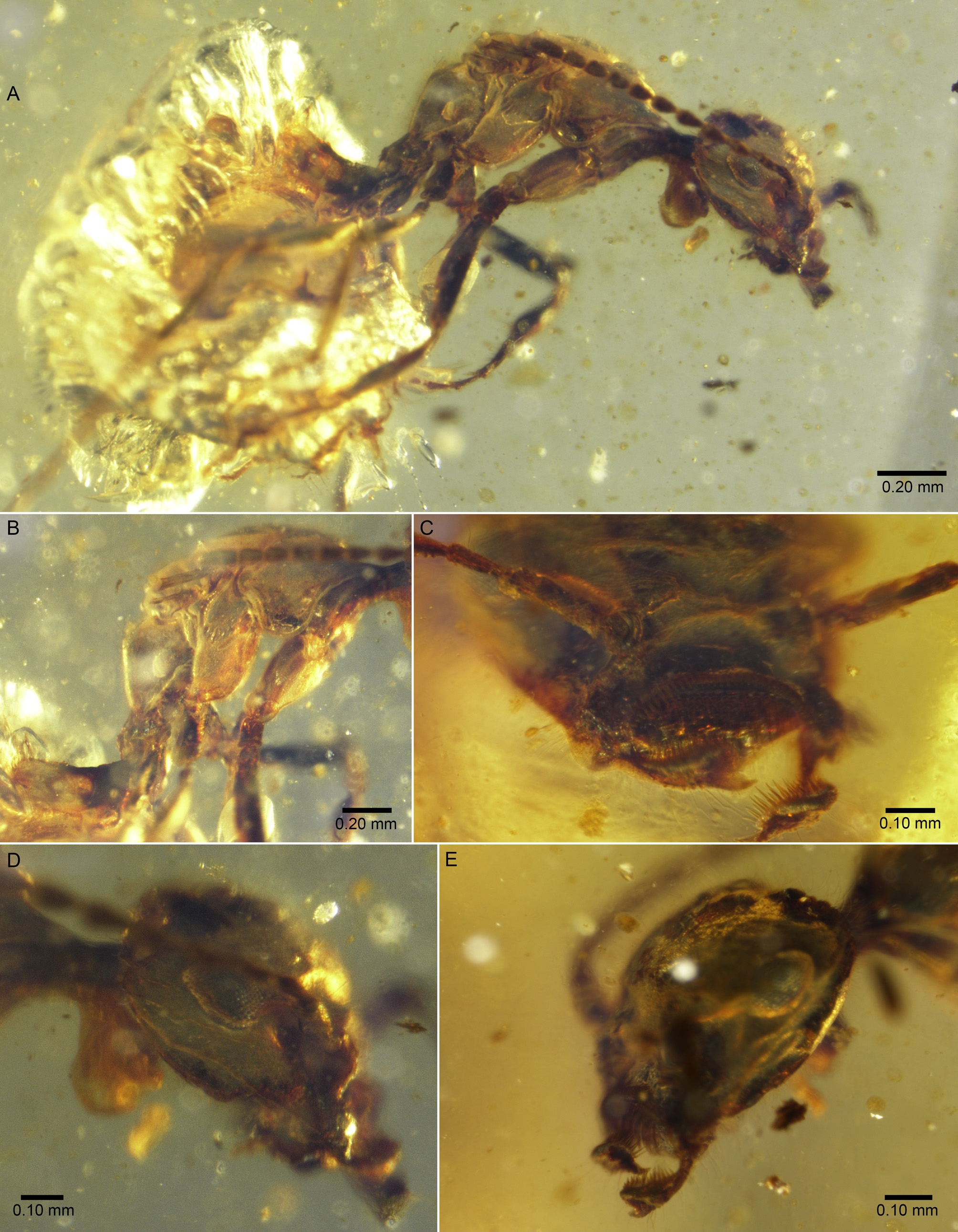
The writer said ants have lived on Earth since more than about 100 million years ago, and the fossil record bears this out. Ants are insects of the family Formicidae and belong, with wasps and bees, to the order Hymenoptera; they evolved from wasp-like (vespoid) ancestors in the Cretaceous period. According to the summary in the encyclopedia Wikipedia's article on ants (version of March 2026), the oldest ant fossils date to the mid-Cretaceous, around 113 to 100 million years ago, and belong to extinct early groups such as the hell ants (Haidomyrmecinae), the Sphecomyrminae and the Zigrasimeciinae. Modern subfamilies appeared towards the end of the Cretaceous, about 80 to 70 million years ago, and ants became ecologically dominant around 60 million years ago.
In April 2025 Lepeco and colleagues reported in the journal Current Biology a hell ant preserved as a rock impression in limestone of the Crato fossil deposit in north-eastern Brazil, from the Aptian age of the Early Cretaceous. They described it as the oldest known hell ant and wrote that the find "also represents the earliest undisputed ant known to science". Hell ants had until then been known from amber in France, Myanmar and Canada, and the authors said the Brazilian specimen showed the group had been widely distributed across the Cretaceous landmasses.
Studies of genes place the origin of ants earlier still. In 2006 Moreau and colleagues built a molecular family tree in the journal Science from 139 of the 288 described living ant genera, calibrated with 43 fossils. They found that most subfamilies of living ants arose much earlier than had been proposed, but began to diversify only in the Late Cretaceous to Early Eocene, the period that also saw the rise of flowering plants and of most plant-eating insects. A larger analysis by Moreau and Bell in the journal Evolution in 2013, covering 295 specimens from all 21 living subfamilies and 45 fossils, converged on an age of 139 to 158 million years for modern ants and suggested that the American tropics were important in their early diversification.
How many ants, and how many kinds
The most careful count of ants so far was published in the Proceedings of the National Academy of Sciences (PNAS) in September 2022 by Schultheiss, Guénard and colleagues. They compiled 489 studies from every continent, major biome and habitat, with 2,355 standard samples from 1,306 locations, taken either from leaf litter or with pitfall traps. They conservatively estimated more than 3 × 10^15 ground-dwelling ants and almost 20 × 10^15 ants in all, about 20 quadrillion. That corresponds to about 12 megatons of dry carbon, more than the combined biomass of wild birds and mammals and equal to about 20 per cent of human biomass. Ground-dwelling ants were most abundant in the tropics and subtropics; leaf-litter ants were densest in forests, while ants foraging on open ground were most numerous in dry regions. Earlier rough estimates by the ecologists Bert Hölldobler and Edward O. Wilson had put the global number at around 10^16, later revised to between 10^15 and 10^16.
The original said about 22,000 ant species have been identified. That figure is an estimate of the total, not a count of known species: the March 2026 version of the Wikipedia article states that more than 13,800 of an estimated 22,000 species have been described, and the PNAS study gives more than 15,700 named species and subspecies, with possibly as many still undescribed. Banglapedia's older entry gave about 8,000 described species, a figure long since overtaken.
For Bangladesh, Banglapedia says about 250 ant species are known, probably only a fraction of the country's ant fauna, and notes that little research has been done on the group. People know the familiar kinds by names such as lal pipra (red ant), kalo pipra (black ant), deyo pipra, bish pipra (stinging ant) and khude pipra (tiny ant). Most of the commonly seen species belong to the genera Aenictus, Anochetus, Camponotus, Cardiocondyla, Diacamma, Dorylus, Monomorium, Odontomachus, Pheidole and Tetramorium. Worldwide, ants have colonised almost every landmass; the only places without native ants are Antarctica and a few remote or inhospitable islands.
Inside the colony
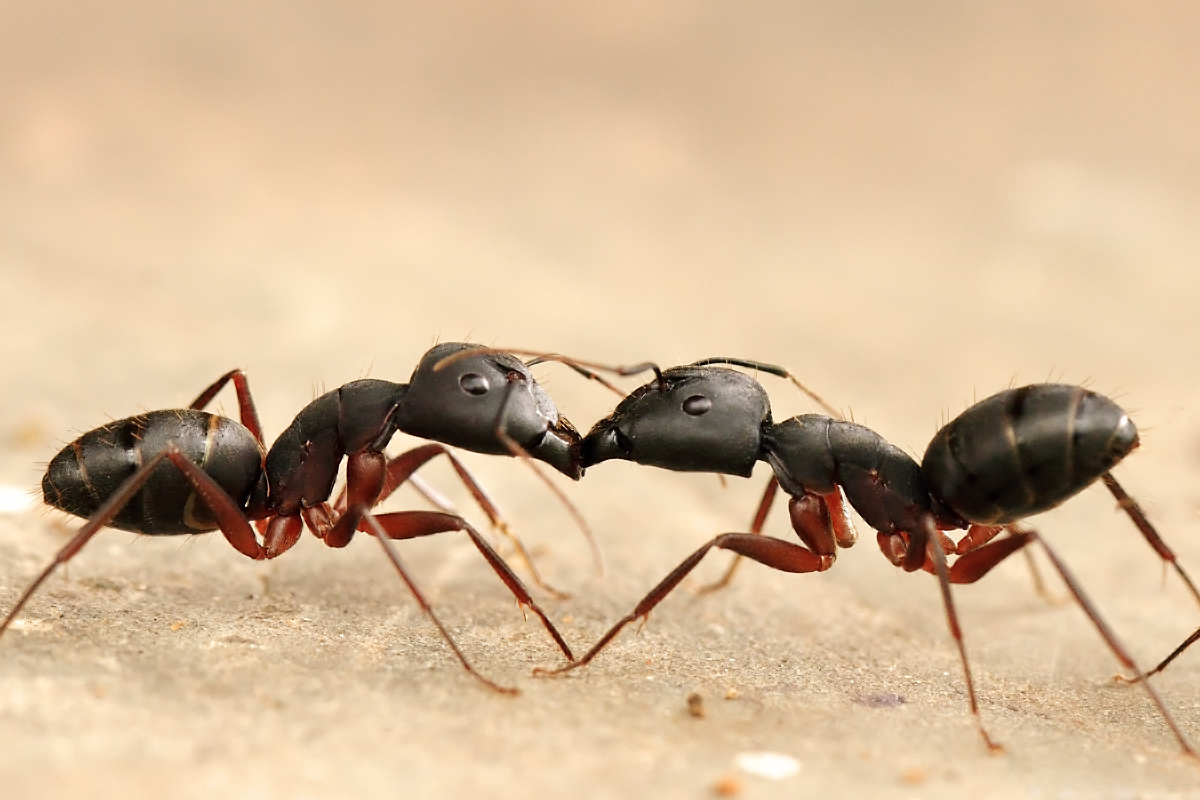
Banglapedia describes an ant colony as having anything from a few dozen to many thousands of members in three castes: queens, workers and males. A colony may have one or several queens, many female workers and a few males, and almost all workers are sterile females. Usually in spring, winged males and queens emerge and fly out together to mate. After mating, a young queen starts a new colony by laying eggs, which she goes on doing for the rest of her life, and her first brood consists almost entirely of female workers. The workers then take over gathering food, caring for the queen and the young, and enlarging and repairing the nest. Males mate with young queens and die soon afterwards. The largest workers, known as soldiers, have very big heads and jaws and defend the colony.
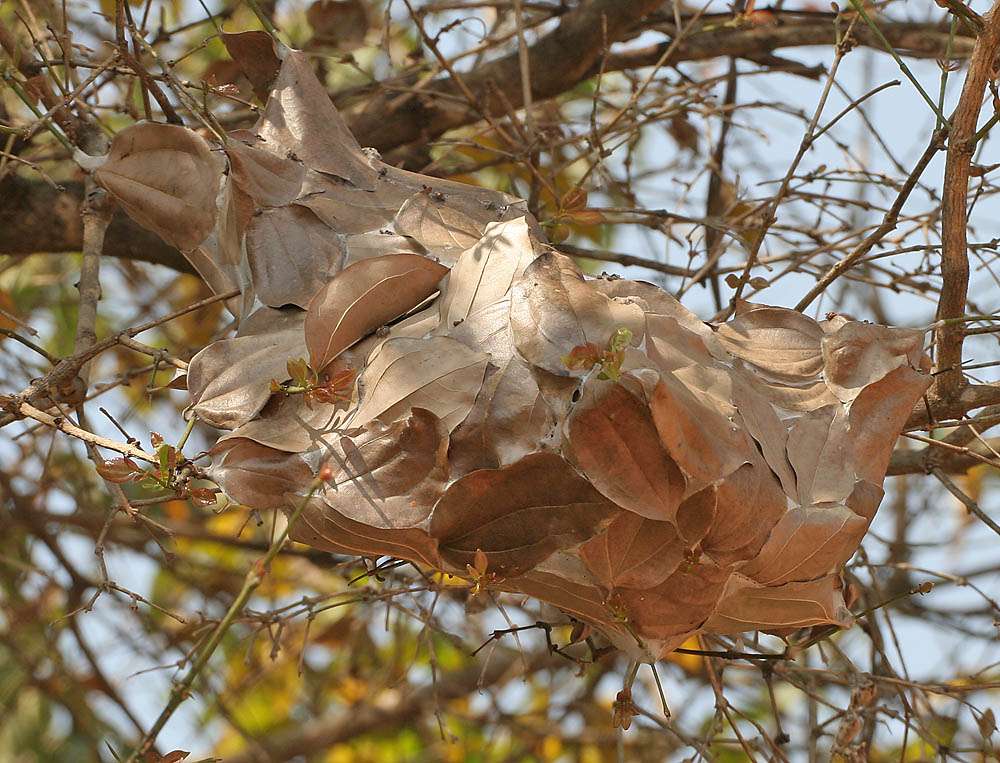
Ant colonies can be long-lived. According to Wikipedia's summary, queens can live for up to 30 years and workers from one to three years, while males survive only a few weeks; ant queens are estimated to live 100 times as long as solitary insects of a similar size. A new worker spends its first days caring for the queen and the young, then moves on to digging and other nest work, and later to defending the nest and foraging. Nests vary: some ants build underground, tropical weaver ants make nests of living leaves in trees, and others live under rocks or rotting logs or inside living plants.
The writer said an ant colony is sometimes called a super-organism, and that is the term biologists use. Colonies are described as superorganisms because the ants appear to operate as one unified entity, working together to support the colony. On diet, Banglapedia notes that ants are thought of as omnivores, though not every species eats everything: sugary foods such as nectar and fruit juice, dead animals and the sweet honeydew produced by plant-sucking insects are favourites.
Signals: smell, alarm and teaching
The original's description of how ants meet comes from Banglapedia: when two ants meet, they smell each other with their antennae or use chemical signals called pheromones, and many scientists think they use both touch and chemical cues. The writer's line that ants spread news of danger to the whole group in an instant also has a chemical basis. According to Wikipedia, a crushed ant gives off an alarm pheromone that sends nearby ants into an attack frenzy and draws more ants from farther away; some species even use "propaganda" pheromones to confuse enemy ants and set them fighting one another.
Ants can also pass on knowledge directly. In 2006 Franks and Richardson reported in the journal Nature that the ant Temnothorax albipennis uses a technique called tandem running, in which a knowledgeable ant leads a nestmate from the nest to food, with signals between the two controlling both the speed and the course of the run. They argued that this was an example of teaching, to their knowledge the first in a non-human animal to involve feedback in both directions between teacher and pupil, and that it could be the value of information, rather than the limit of brain size, that shaped the evolution of teaching.
The "second stomach": how ants share food
The writer said an ant has two stomachs, one for its own food and one for food it keeps for others, and that ants share food without condition. The idea is close to what biologists describe, though the organ is not a second stomach in the strict sense. An ant carries liquid food in its crop, often called the "social stomach", and passes it mouth to mouth to nestmates and larvae in a process called trophallaxis. Larvae are fed this way, and adults share food the same way; in some species a small pocket inside the mouth, the infrabuccal chamber, also stores food to pass on. In honeypot ants some young workers are fed until their abdomens swell.
Research has shown the exchange carries more than food. In 2016 LeBoeuf and colleagues reported in the journal eLife that the fluid passed between Florida carpenter ants (Camponotus floridanus) contains specific proteins, hydrocarbons, small RNA molecules (microRNAs) and juvenile hormone, a key regulator of development. When workers' food was supplemented with this hormone, the larvae they reared through trophallaxis were twice as likely to complete metamorphosis and became larger workers. The authors concluded that trophallaxis may serve as a channel of chemical communication through which the colony collectively steers how its young develop.
What research says about sleep, brains, strength and idleness
Several claims in the original are popular but do not match the scientific record.
- Sleep. The original said ants do not sleep. A study of the fire ant Solenopsis invicta by Cassill and colleagues in the Journal of Insect Behavior (2009) found the opposite. Workers averaged about 253 sleep episodes a day of about 1.1 minutes each, about 4.8 hours in all; queens averaged about 92 episodes of about 6 minutes, about 9.4 hours a day. In deep sleep the ants folded their antennae and did not respond when touched. Even so, about 80 per cent of the workforce was busy grooming, feeding or digging at any given time.
- Brains. The original said ants have the largest brains among insects and about 250,000 more brain cells than other animals. A 2021 study in Proceedings of the Royal Society B by Godfrey, Swartzlander and Gronenberg, which estimated brain cell numbers in 32 species of bees, wasps and ants, found instead that ants stand out from bees and wasps for having particularly small brains, by mass and by cell number. The figure of 250,000 extra cells could not be confirmed in any reliable source and is left out.
- Strength. The original said ants can carry up to 20 times their own weight. Ants do lift and carry loads that are heavy for their size, using their mouthparts, with the load passing through the neck joint. In laboratory tests published online in the Journal of Biomechanics in November 2013, Nguyen, Lilly and Castro found that the neck joint of the Allegheny mound ant (Formica exsectoides) could withstand about 5,000 times the ant's weight under a pulling (tensile) load. That is a measure of the joint's strength, not of the loads ants carry in daily life, and no general figure for all ants could be confirmed.
- Idleness. The original said no ant spends the day idle. Studies by Charbonneau, Dornhaus and colleagues found that most social insect colonies contain large numbers of highly inactive workers. In colonies of Temnothorax rugatulus, when the busiest workers were removed, previously inactive ones became active within a week, acting as a reserve labour force (PLOS ONE, 2017). A second study the same year found that inactive workers walked more slowly, stayed near the centre of the nest, were plumper and more likely to carry developing eggs, consistent with their being young and/or storing food for the colony.
- Leaders and winter stores. The original said every ant has a strong talent for leadership and that ants store food all year for winter. Researchers describe social insect colonies as self-organised systems (Charbonneau and colleagues, 2017), and in Banglapedia's account the queen's lifelong task is laying eggs. Ants are active all year round in the tropics; in cooler regions they pass the winter in a state of rest, with larvae in some temperate species entering a dormant state (diapause) and in others only the adults overwintering at reduced activity. Some species do store food: in South Africa black ants collect and store rooibos seeds in their nests in such quantities that people gather the seeds there.
Fertilised and unfertilised eggs
The original noted that fertilised eggs become females and unfertilised eggs become males. This is the sex-determination system called haplodiploidy, the usual pattern in ants: unfertilised eggs give rise to males, which carry one set of chromosomes, and fertilised eggs develop into females, which carry two. Workers cannot mate, but in a number of species they can lay unfertilised eggs that become fully fertile males.
The writer's "special cloning process" refers to thelytokous parthenogenesis, in which females develop from unfertilised eggs without any male. A 2022 study in Scientific Reports by Barros and colleagues states that this form of asexual reproduction is well documented in more than 20 ant species. One of them, the fungus-growing ant Mycocepurus smithii of Central and South America, was long known only from females; the same study reported the first males of the species, from a sexually reproducing population in the Brazilian state of Pará.
Friends and pests of the farm
The original ended with the ant's role in keeping nature in balance by eating harmful insects, a point taken from Banglapedia, which adds that ants are in turn important food for birds, frogs, lizards and many other animals, and that they can be both useful and harmful to farmers.
The useful side has a long history. In a 2008 review in Agricultural and Forest Entomology, Van Mele wrote that the weaver ant Oecophylla is the first written record of biological control, dating from the year 304; the use of weaver ants in citrus orchards in southern China is considered one of the oldest known applications of biological control. He counted fewer than 70 scientific publications on the ant as a biological control agent in Asia from the early 1970s onwards and fewer than 25 in Africa. In Africa research concentrated on export crops such as coconut and cocoa, while in Asia and Australia it focused on fruit and nut crops, and Van Mele expected rising demand for organic produce to raise its importance.
The harmful side often comes through partnerships with other insects. Aphids, mealybugs and scale insects secrete sugary honeydew as they feed on plant sap; many ants collect it, guard these insects from predators and even move them to new feeding spots. Mealybugs can become a serious pest of pineapples where ants protect them from their natural enemies. Some ants damage crops directly or by aiding sap-sucking pests, and some, such as the red imported fire ant of South America, have become invasive species in other parts of the world.
Below ground, ants shape the soil. The PNAS study notes that ants have been estimated to excavate up to 13 tonnes of soil per hectare a year and to raise local nutrient availability by an order of magnitude; they also disperse plant seeds (myrmecochory), live in partnership with sap-sucking insects and host many other organisms, acting both as predators and as prey.
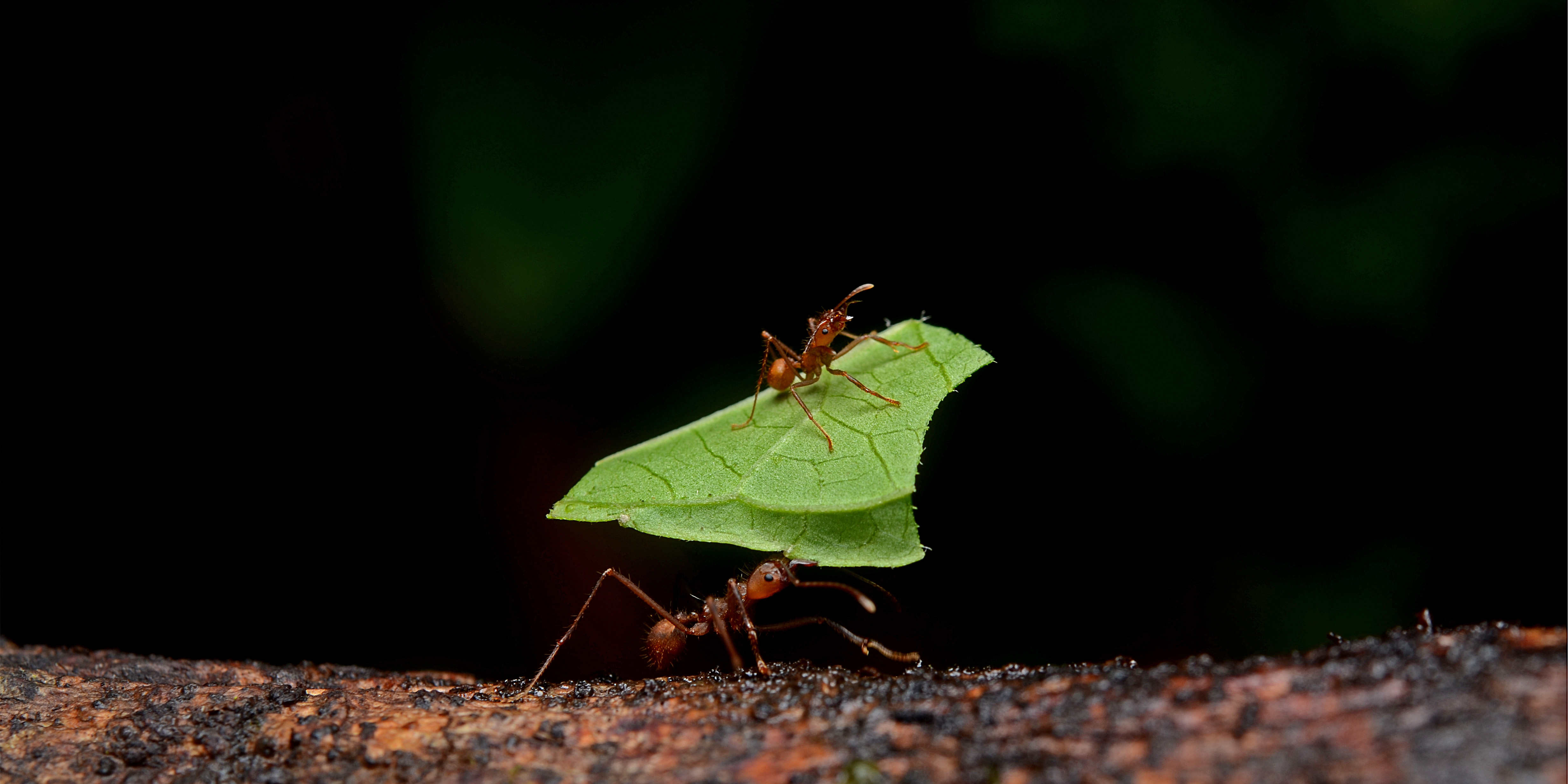
Some ants are farmers themselves. In a 2008 PNAS study, Schultz and Brady noted that agriculture is known to have evolved in only four animal groups: humans, bark beetles, termites and ants. They found that the fungus-growing ants began cultivating fungi about 50 million years ago in the American tropics, that five distinct farming systems arose from that start, and that the leaf-cutter ants, which appeared only about 8 to 12 million years ago, became the dominant plant-eaters of the New World tropics. Leaf-cutters do not eat the leaves they carry: they cut them into small pieces to feed a fungus garden, with the largest workers cutting stalks, smaller ones chewing the leaves and the smallest tending the fungus, and a colony stops collecting a leaf that proves toxic to its fungus.
The ant in scripture and fable
In the Jagonews24 piece, Khairul Bashar Ashik drew from the ant's life lessons of foresight, a fixed routine, divided work, care for one another and the right decision at the right time, qualities he credited for the survival of a creature whose line goes back millions of years. The research summarised above suggests one more: a colony keeps part of its workforce in reserve, and those resting ants step in when the busiest workers are lost.
Photo: J.M.Garg / Wikimedia Commons (CC BY-SA 4.0)
Sources: Jagonews24, Banglapedia (Asiatic Society of Bangladesh), Proceedings of the National Academy of Sciences (Schultheiss et al. 2022; Schultz and Brady 2008), Science (Moreau et al. 2006), Evolution (Moreau and Bell 2013), Current Biology (Lepeco et al. 2025), Nature (Franks and Richardson 2006), eLife (LeBoeuf et al. 2016), Journal of Insect Behavior (Cassill et al. 2009), Proceedings of the Royal Society B (Godfrey et al. 2021), Journal of Biomechanics (Nguyen et al. 2013), PLOS ONE and Integrative and Comparative Biology (Charbonneau et al. 2017), Scientific Reports (Barros et al. 2022), Agricultural and Forest Entomology (Van Mele 2008), Wikipedia



Comments
(0)