
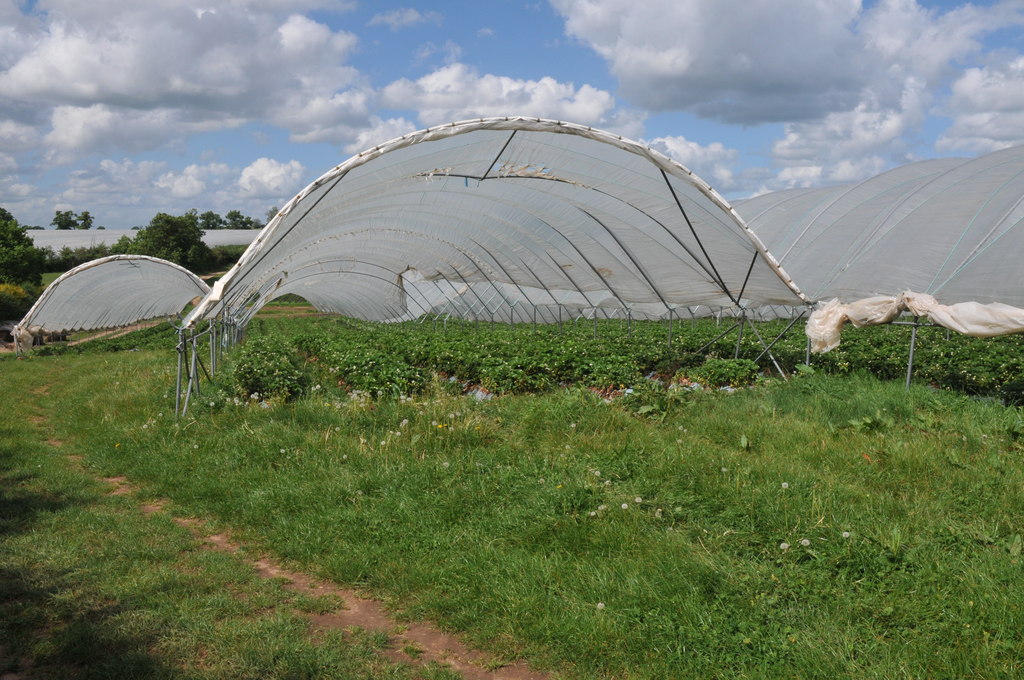
Antobot, a UK agricultural robotics startup, is aiming to deploy 300 autonomous robots in strawberry crops next year, as more growers grow comfortable with using UV-C light against powdery mildew and other fungal diseases, its vice president for commercial, Marc Jones, told AgFunderNews at the World Agri-Tech Innovation Summit in London.
Instead of spraying fungicides, the robots shine UV-C light on the plants, which damages the DNA of the pathogens so that they cannot replicate. Jones said the approach cuts labour and input costs and lets growers sell their fruit as produced without chemicals. Other companies, including Saga Robotics, TRIC Robotics and CleanLight, use the same technology.
"We're getting great results, big reductions in chemical spraying and also, interestingly, quite good increases in yield," Jones said, adding that part of the gain comes from less disease and part from a healthier canopy overall.
Founded in 2019 by Ke Lu and Howard Wu, Antobot now works in the UK, Spain, Portugal, the Netherlands, Canada and parts of Asia. It has sold directly to customers such as Driscoll's and Tiptree, but has signed distributor agreements in the UK and Spain, is looking at Canada and has set up a joint venture in Asia.
The company is also changing how it sells. Until last year it worked only on a robots-as-a-service basis, keeping responsibility for servicing and daily operation. From next year most customers will buy and run the machines themselves, Jones said, with capital equipment grants in markets such as the UK and Spain making the purchase easier.
The reasons growers buy differ by market. In the UK, retailer and consumer concern about pesticide residues drives demand; in Asia, growers turn to the robots because existing methods are failing to control disease; Spain sees both pressures. In Canada, many strawberry growers farm only two or three hectares and cannot justify the spraying equipment used on large UK farms.
Early deployments taught the company that autonomy needs changes in daily farm routines as well as reliable hardware: tractors blocking routes, locked gates and changed access codes all stop a robot. Antobot has moved to swappable batteries and a simpler suspension, and some growers now run more than ten machines, letting one person supervise several at once. It has also built scouting modules that count fruit and measure its size and ripeness to forecast yields.
Antobot has so far funded itself through grants, a small seed round led by Intron Technology Holdings and its own revenue, and is now seeking growth capital for its next stage of expansion.
Photo: Philip Halling / Wikimedia Commons (CC BY-SA 2.0)
Source: AgFunderNews

Comments
(0)