
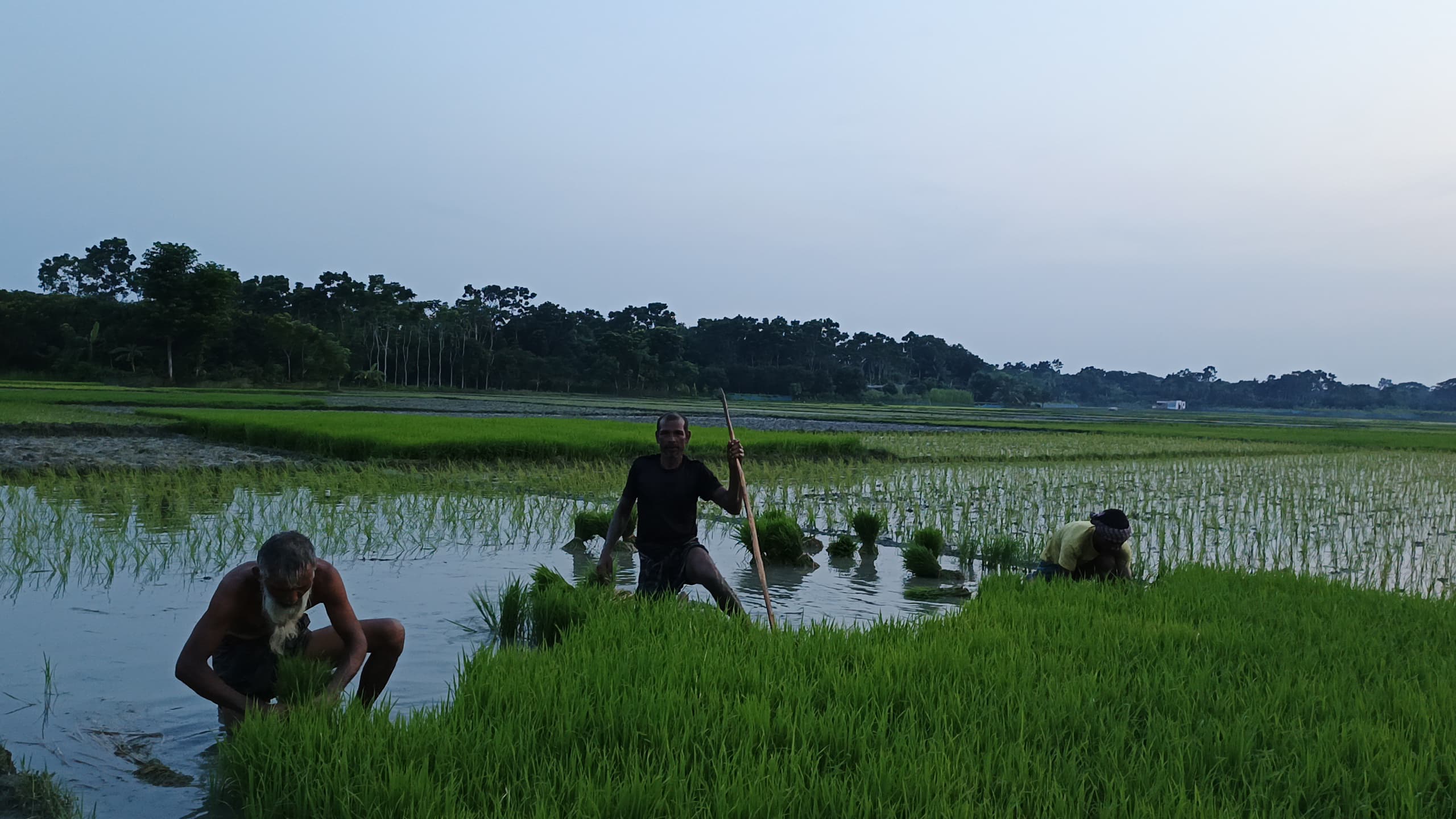
Bangladesh Ansar and Village Defence Party (Ansar-VDP) distributed free Aman rice seedlings to 400 farmers in Cumilla and Feni districts on Saturday 14 September 2024, less than a month after the flash flood that began on 20 August had destroyed their crops and seedbeds. The force's director general, Major General Abdul Motaleb Sajjad Mahmud, handed over the seedlings at three places in a single day: the ground of Lalbagh Rawshan Ashraf High School in Cumilla Sadar Dakshin upazila, the Fulgazi upazila complex and the ground of Parshuram Pilot High School in Feni, Jagonews24 reported that evening.
Seedlings handed out at three places
The day began around midday at the school ground in Lalbagh, Cumilla Sadar Dakshin, where 100 flood-hit farmers of that upazila received seedlings. The director general then went to the Fulgazi upazila complex in Feni, where 200 farmers received seedlings, and from there to the Parshuram Pilot High School ground, where seedlings went to 100 farmers of Parshuram upazila. Jugantor, which reported the Cumilla handover the same afternoon, said the seedlings were given free of charge and that the upazila nirbahi officer and the upazila agriculture officer of Sadar Dakshin were present.
The overall management of collecting the seedlings was in the hands of Ashish Kumar Bhattacharya, director and Cumilla range commander of the force. Speaking at the Cumilla handover, he said that the timely distribution of seedlings to the relatively low-income farmers of the flood-hit area would bring at least some relief in the coming Aman season, Jugantor reported.
Seedbeds raised in Brahmanbaria
The seedlings did not come from the flooded districts themselves. According to the force, as the floodwater receded, farmers were struggling because they had no land on which to raise seedbeds. The Ansar therefore raised seedbeds through a coordinated effort in Brahmanbaria district, grew the seedlings there and then distributed them among farmers in the two affected districts. In all, the force said, 100 acres of land had been brought under Aman cultivation in this way. Jagonews24 reported this account in the director general's words; Jugantor attributed the same account to the force's district commandant.
Jugantor also reported that the force planned to bring more farmers under its rehabilitation work in phases, and that, to help them get a good harvest, it would later distribute inputs ranging from fertiliser and pesticide to materials for growing vegetables.
Brahmanbaria lies to the north of Cumilla. Banglapedia describes it as a district of 1,881.20 square kilometres, bounded by Kishoreganj and Habiganj to the north, Cumilla to the south and Habiganj and the Indian state of Tripura to the east, with the Meghna and the Titas among its main rivers. It was part of greater Comilla until it became a separate district in 1984, and agriculture is the main source of income for 51.62 percent of its households according to the 2011 census figures Banglapedia cites. Brahmanbaria was among the 11 districts the government counted as flood-affected in August 2024, but its losses were far smaller than those of its southern neighbours: by 3 September the disaster management ministry had recorded one death there, against 28 in Feni and 19 in Cumilla.
Houses and the force's work after the flood
The director general said the sudden flood had left a great many people in the Cumilla and Feni region homeless. As part of its rehabilitation work, he said, the Ansar and VDP would build houses for the homeless and would soon begin supplying house-building materials to those affected.
He described the Ansar and VDP as the country's largest public-facing disciplined force, and said its volunteer members, spread through villages across the country, were serving the public in many areas of the post-flood rehabilitation process.
The force is older than Bangladesh itself. According to Banglapedia, the Ansar was formed under the Ansar Act 1948, passed by the East Bengal Legislative Assembly after the partition of 1947, when the government of East Pakistan wanted a voluntary force to help maintain internal law and order. It was under the National Service Board until 1972 and was brought under the Ministry of Home Affairs in 1973; a separate civil service cadre, BCS (Ansar), was created in 1980. Ansar battalions were raised in 1976 as part of the combined Ansar and VDP, and in 1995 Parliament passed three laws covering its main parts: the Ansar Bahini Act, the Battalion Ansar Act and the Village Defence Party Act.
Among the duties those laws gave the force, Banglapedia lists helping to maintain public order and social security and taking part in programmes for the country's socio-economic development; the battalions were also given a role in disaster management, and the village defence parties the task of assisting welfare activities that improve the socio-economic condition of the country. Each village VDP is made up of 64 members, 32 men and 32 women. The organisation has its headquarters in Dhaka, a training academy at Shafipur in Gazipur district, and range, district and upazila offices; Banglapedia notes that about half of its volunteer members are women and that it runs some 40 kinds of vocational and self-employment training courses through the year.
The August flood in Feni and Cumilla
The flood the farmers were recovering from began on 20 August 2024. Prothom Alo reported that on that day water from upstream started to pour into Feni from Nij Kalikapur village, in Mirzanagar union of Parshuram upazila on the Indian border, and that the embankments of the Muhuri, Kahua and Silonia rivers broke in at least 15 places. Village after village went under five to six feet of water. The Feni district administration put the number of people affected at 10 lakh (one million), and 29 people died in the district, the paper reported on 9 September.
Across the east of the country the disaster management and relief ministry had counted 71 deaths in 11 districts by 3 September: 19 in Cumilla, six in Chattogram, 28 in Feni, nine in Noakhali, three in Cox's Bazar and one each in Brahmanbaria, Khagrachhari, Moulvibazar and Lakshmipur, UNB reported. The ministry put the number of affected people at 5,024,202 in 504 municipalities and unions, with 582,155 families still stranded in 68 upazilas. At that point 285,996 people and 31,203 domestic animals were sheltering in 3,612 shelter centres, and 469 medical teams were working in the flood areas.
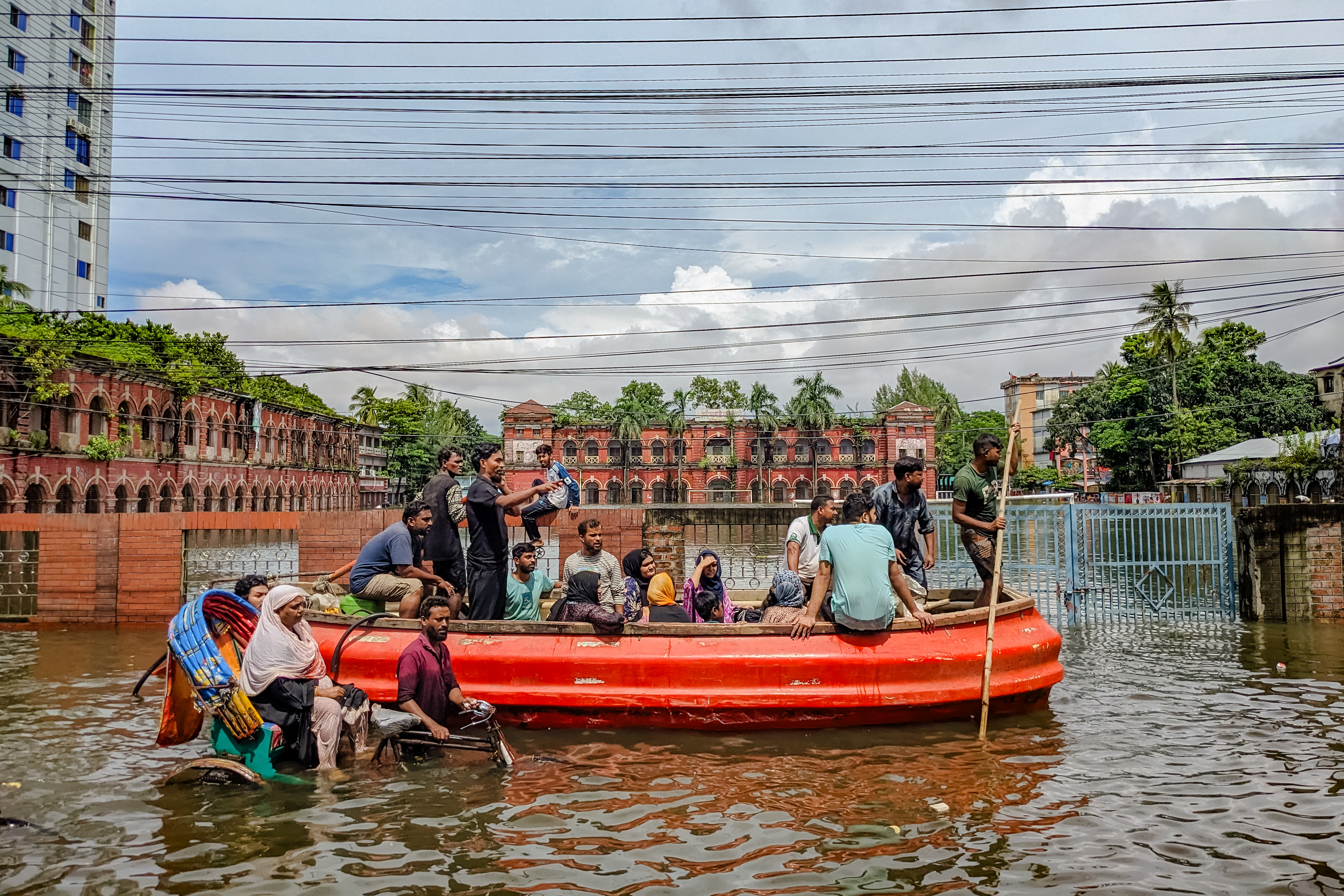
When the water went down, Feni's farmers found a new problem. Prothom Alo reported on 9 September that about 250 hectares of land in Parshuram and Fulgazi were buried under several feet of sand. The Parshuram upazila agriculture office said about 225 hectares in 11 villages of that upazila had become unfit for cultivation, 90 hectares of it in West Alka village alone. Farmers asked the government to clear the sand quickly, or else to let the owners of the buried land sell it. One Parshuram farmer told the paper that replanting his Aman field with fresh seedlings would cost him Tk 20,000 for each kani (20 decimals) of land.
What the flood did to the Aman crop
Feni was the worst hit. The district office of the Department of Agricultural Extension (DAE) told Prothom Alo that crops worth Tk 451.20 crore had been lost in the district's six upazilas and that more than two lakh farmers had been affected. In all, 30,552 hectares of cropland had been damaged, which the DAE office said was 79.69 percent of the district's cropland. Completely destroyed were 1,865 hectares of Aman seedbeds, 26,000 hectares of Aman, 1,854 hectares of Aus and 525 hectares of autumn vegetables, and 69 hectares of orchards, 7 hectares of ginger, 16 hectares of turmeric and 16 hectares of sugarcane were also damaged.
Nationally, the agriculture ministry's figures released on Thursday 5 September, reported by bdnews24.com and The Financial Express, put the damage to farming from the August flood at Tk 33.46 billion across 23 districts in the east of the country. More than 200,000 hectares of cropland had been damaged and 372,733 hectares affected. The damaged land included 141,609 hectares of transplanted (Ropa) Aman, 14,908 hectares of Ropa Aman seedbeds, 38,689 hectares of Aus and 11,290 hectares of vegetables.
The loss of the seedbeds is what made ready seedlings so valuable. A farmer whose transplanted field has been destroyed can replant only with young seedlings, and those have to be raised in a seedbed first. Agronomists told The Daily Star in mid-September that even after the water fell, not all farmers in the flooded districts had saplings suitable to grow and give a good yield.
A race against the transplanting calendar
By 11 September, farmers across the country had transplanted rain-fed Aman rice on 52.10 lakh hectares, 91 percent of the target set by the DAE, The Daily Star reported on 12 September. Agronomists told the paper that the optimum time for Aman planting that season was over, although farmers in the southern belt transplant different varieties until the third week of September. Floodwater had still not receded from cropland in Feni, Noakhali and Cumilla, they said, and it might take more than a week to go.
The head of the agronomy division at the Bangladesh Rice Research Institute (BRRI) told the paper that the flood had been unexpected and unusual and that farmers in the region had not been prepared. Farmers had already transplanted their seedlings before it came, he said, and a high demand for seed of late varieties had been beyond the institute's calculation.
In late August the US Department of Agriculture (USDA) had forecast that rice area and production in Bangladesh might fall because of the floods. Citing its rapid assessment, it said the flood had damaged 2 lakh hectares of land under Aman seedlings. Aman can usually be transplanted until 15 September, the USDA said, and if the water receded and farmers received enough seed to prepare seedbeds by 31 August, some 10 to 15 percent of the Aman area could be replanted by that date.
The DAE's director general told The Daily Star that growers in some parts of the country transplant Aman until 20 September, and that at the current pace he expected the target to be met. The DAE had provided seed to 80,000 farmers in the flood-affected areas to cultivate 80,000 bighas, and seedlings for another 4,500 bighas, while BRRI and other research agencies had also supplied seedlings; the government had taken up a Tk 194 crore scheme to support farmers who had lost crops in the flood. The agriculture ministry said on 5 September that it would give free Ropa Aman seed and fertiliser, together with Tk 136.6 million in cash aid, to 80,000 small and marginal farmers in nine districts, and Tk 2.28 billion to 150,000 farmers in 22 districts to grow early winter vegetables.
The head of BRRI's plant breeding division said farmers do not leave land unused. There are some photoperiod-sensitive rice varieties, he told the paper, and if farmers had prepared seedbeds of those varieties their land would not remain fallow, though yields would be low.
How late Aman is planted after a flood
The DAE's advisories for flood-hit districts, published through its agro-meteorological information service (BAMIS), set out how Aman can still be grown after the water goes down. Seedbeds should be raised on high land, or as floating seedbeds where the water has not drained, and on upland plots seedbeds can be raised on a community basis; seedlings should be transplanted only after the floodwater has receded from the main field. Raising seedlings on land the water did not reach, as the Ansar did in Brahmanbaria, follows the same idea.
Timing decides the variety. The DAE's 2020 post-flood advisory said short-duration varieties such as BRRI dhan33, BRRI dhan56, BRRI dhan57, BRRI dhan62, BRRI dhan71 and BRRI dhan75 could be transplanted up to 25 August after the water receded. Photoperiod-sensitive late varieties developed by BRRI, such as BR5, BR22, BR23, BRRI dhan34 and BRRI dhan46, could have seedlings in the seedbed by 15 August and be transplanted until 15 September, and the local varieties Nizershail and Gainja could be planted by 15 September. The advisory gave further steps for late planting:
- Plant a few more seedlings in each hill (four to five) and plant them closer together, at 20 by 15 centimetres.
- Where an Aman field escaped the flood and the plants are 30 to 40 days old, leave two or three tillers in each hill and carefully lift the rest with their roots to transplant at once in other fields.
- Cut the leaf tips of seedlings before transplanting, because stem borer eggs are laid there.
- Flood silt makes the land fertile; with late planting, apply two-thirds of the recommended urea, TSP, MOP and gypsum at land preparation and the remaining third of the urea within 20 to 25 days of transplanting.
- Watch for stem borer, leaf roller and rice hispa, which may attack paddy after a flood, and use integrated pest management such as hand netting, perching and light traps; ask the upazila agriculture officer before using any pesticide.
Aman, the monsoon rice
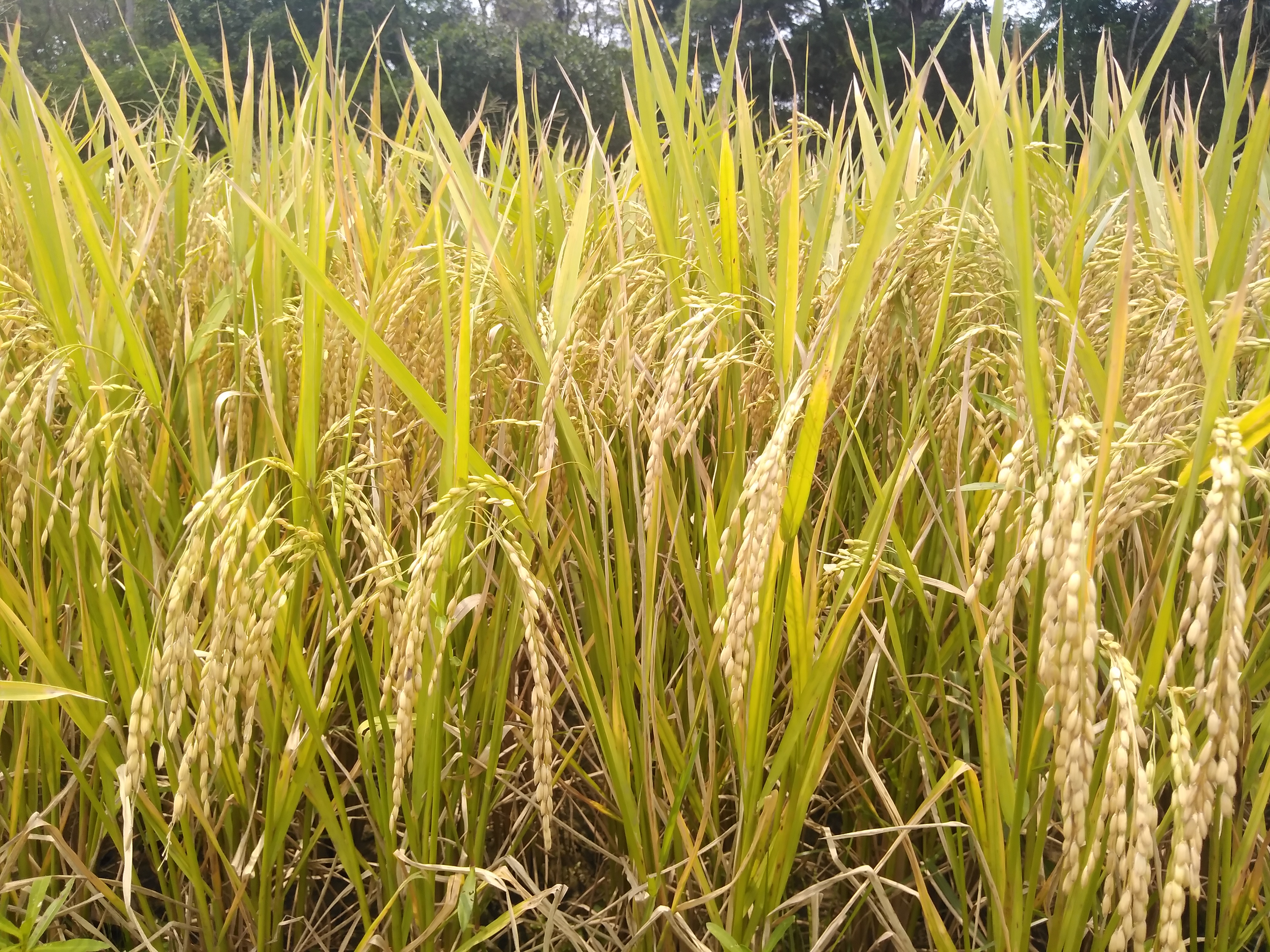
Rice is grown in Bangladesh throughout the year in three seasons, Aus, Aman and Boro. Banglapedia notes that transplanted Aman is the most important of these by area, occupying about 46 percent of the country's rice land in 2009-10, and that it is grown throughout Bangladesh, while broadcast Aman is grown mostly in the south and southeast. Aman is the country's second biggest rice crop by production: according to The Daily Star, it grew by 8 percent year on year to 1.66 crore tonnes in the fiscal year 2023-24, roughly over 40 percent of the total estimated rice production of more than 4 crore tonnes.
The three upazilas that received seedlings
Cumilla Sadar Dakshin upazila was formed on 4 April 2005 from six unions of Comilla Adarsha Sadar upazila and four of Laksham upazila. Banglapedia gives its area as 136.61 square kilometres, bounded by Comilla Adarsha Sadar to the north, Laksham, Chauddagram and Nangalkot to the south, Tripura to the east and Barura to the west, with the Dakatia and the Little Feni as its main rivers. At the 2011 census it had 258,278 people; agriculture was the main source of income for 51.19 percent of households, 38.89 percent were landless, and its main crops are paddy, wheat, sugarcane and vegetables.
Fulgazi (Phulgazi) upazila of Feni covers 102.19 square kilometres between Parshuram to the north and Feni Sadar and Chhagalnaiya to the south, with Tripura on its east and west. The Muhuri, Silonia and Kahua are its main rivers. It became a thana in 1975 and an upazila on 27 March 2002, and at the 2011 census it had 119,558 people. Agriculture was the main source of income for 55.47 percent of households, and its main crops include paddy, jute, potato, sugarcane, chilli and vegetables.
Parshuram, the northernmost upazila of Feni, covers 95.76 square kilometres and is bounded by Tripura on the north, east and west and by Fulgazi on the south. It had 101,062 people at the 2011 census. Parshuram thana was formed on 7 May 1879 and became an upazila in 1983. Its main rivers are the Silonia, the Kahua and the Muhuri.
The Muhuri is a transboundary river. It rises in the Lushai hills of Tripura and enters Bangladesh through Parshuram after flowing through the hilly regions of India, Banglapedia says, and is wild in nature and often causes flash floods. It is only 150 to 200 metres wide, widening towards the sea, and in the dry season it is shallow enough to cross on foot; it falls into the Bay of Bengal after dividing Feni from Chattogram district.
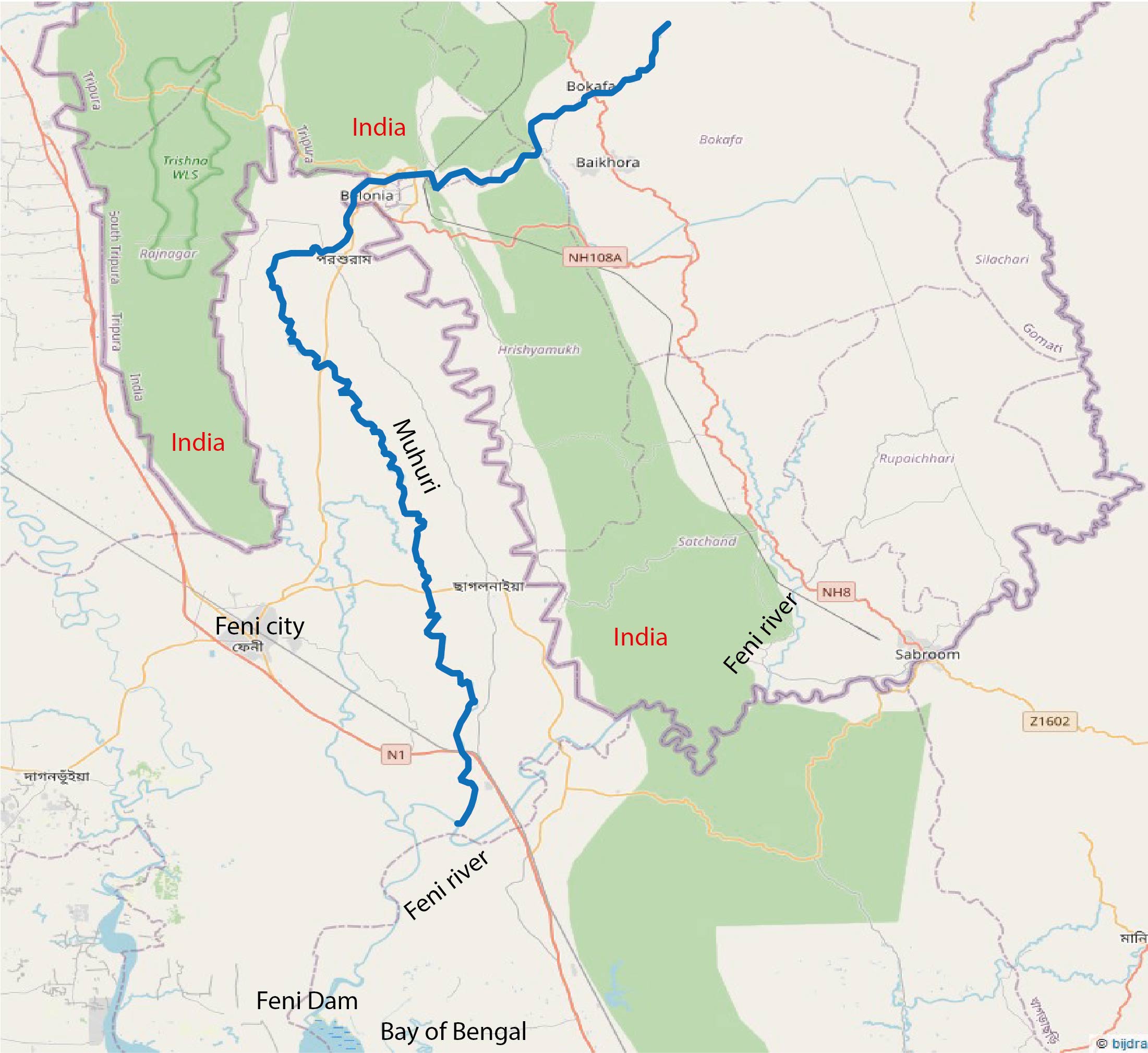
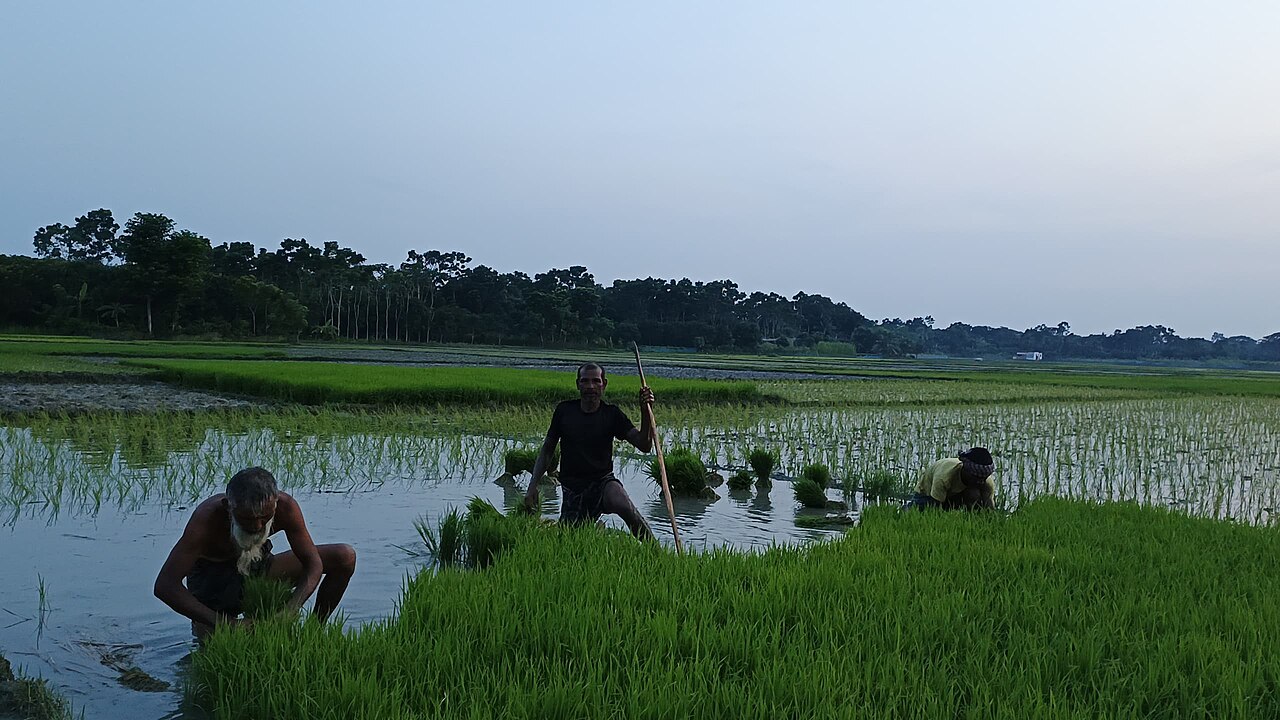
Photo: MdRamjanAliWiki / Wikimedia Commons (CC BY 4.0). The top picture shows farmers lifting rice seedlings from a seedbed for transplanting in rural Bangladesh, as background.
Sources: Jagonews24 (14 September 2024), Jugantor (14 September 2024), Prothom Alo (9 September 2024), UNB via Prothom Alo English (3 September 2024), bdnews24.com via The Financial Express (7 September 2024), The Daily Star (12 September 2024), Department of Agricultural Extension, BAMIS post-flood agromet advisory (11 August 2020), Banglapedia
Comments
(0)