
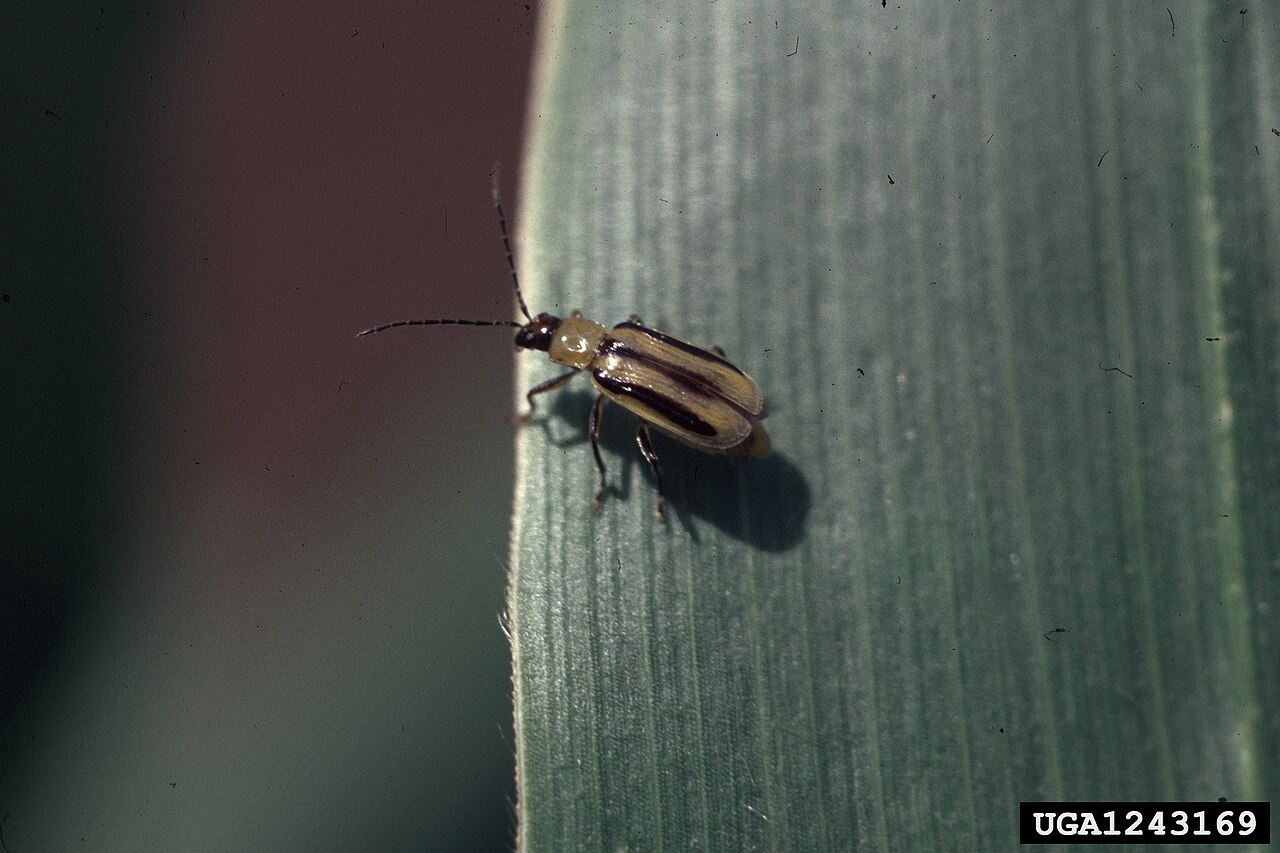
Corn and soybean growers in the United States will have three new pest-control tools over the next three years, according to company representatives who spoke at the Farm Progress Show in Iowa: a liquid corn insecticide that is already federally registered, the first transgenic trait against soybean cyst nematode, and a soybean weed-control platform that brings a corn herbicide family into soybeans.
The first is Duro LQ, a liquid corn insecticide from Amvac that has received federal registration. It combines two modes of action, bifenthrin (a Group 3A insecticide) and abamectin (a Group 6 insecticide, nematicide and miticide), and gives consistent control of corn rootworm while also suppressing nematodes, said Wen Carter, Amvac product manager. Its rootworm control is comparable to the company's Index insecticide, Carter said, but without a closed handling system, and it protects roots as corn grows from the V4 to V6 stages. Company testing found no antagonism when it is mixed with liquid fertiliser.
The second is Nemasphere, BASF's transgenic trait for soybean cyst nematode (SCN), which the company says is on track for commercial release in 2028, pending regulatory approval. It will be stacked with the Enlist E3 herbicide-tolerance trait, and with one of the two native resistance sources growers already rely on, PI 88788 or Peking, so that resistance management is built into every variety. "The Nemasphere trait will be stacked with each native trait, either PI 88788 or Peking, so there will be a durable built-in solution," said Mike McCarville, BASF trait development manager.
The third is Syngenta's Enlist E3 soybeans with Expance trait technology, aimed at a 2029 launch, again pending approval. Expance adds tolerance to three Group 27 (HPPD-inhibitor) active ingredients that are now used pre-emergence in corn: mesotrione (Callisto), bicyclopyrone (Acuron and Acuron GT) and isoxaflutole (Balance Flexx). Combined with the Enlist E3 tolerance to glyphosate, glufosinate and 2,4-D choline, the platform targets waterhemp, Palmer amaranth, kochia and marestail.
"Having new active ingredients in soybeans will give farmers more options in weed control," said Jared Benson, head of Syngenta's soybean portfolio and trade strategy for North America. The soybeans will be sold through Syngenta's Golden Harvest and NK Seed brands and licensed to independent seed companies through Greenleaf Genetics.
The three announcements matter because each of the target pests has been wearing down the tools growers use against it: rootworm populations have adapted to Bt corn traits, most SCN populations now reproduce on PI 88788 varieties, and the pigweeds resist several herbicide groups. Reported by Gil Gullickson for Farm Progress.
Photo: Whitney Cranshaw, Colorado State University / Wikimedia Commons (CC BY 3.0)
Source: Farm Progress

Comments
(0)