
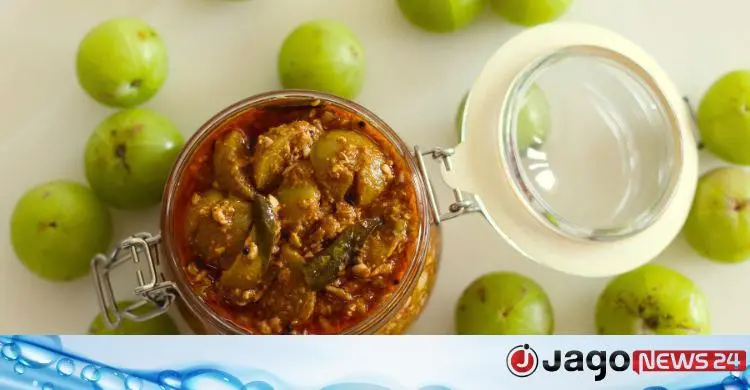
Winter brings a rush of amla (Indian gooseberry) pickle-making in households, some of it spicy, some sweet and sour. But does eating amla as a pickle really provide its vitamin C, or is the nutrient lost in cooking and storage?
Amla is one of the richest natural sources of vitamin C. But the vitamin C in raw amla is sensitive to heat, meaning part of it is destroyed by cooking at high temperatures. If amla is boiled or kept on the stove for a long time while making pickle, the amount of vitamin C can fall; this is scientifically established.
Light processing keeps some of the vitamin
That is not the whole story. According to experts, the vitamin C in amla is relatively stable because the fruit's natural antioxidants give it some protection. So with light processing, such as cutting raw amla and mixing it with salt, oil and spices, the vitamin C is not completely lost, and the body still gets some of it from such a pickle.
But if the amla is thoroughly boiled, cooked for a long time with sugar or jaggery, or stored for months, the vitamin C can fall considerably. It breaks down even faster when exposed to sunlight and air.
Watch the salt
Another important factor is the oil and salt in pickle. Oil helps the body absorb some nutrients, but too much salt can raise the risk of high blood pressure. So it is wiser to treat amla pickle as a supporting food rather than as a source of vitamin C.
In short, it is not true that amla pickle provides no vitamin C at all. But pickle does not provide as much as raw or lightly processed amla. For a regular supply of vitamin C, raw amla, amla chutney or pickle made with little heat are the better options.
The information draws on the Harvard T.H. Chan School of Public Health, the National Institute of Nutrition (India) and the Journal of Food Science and Nutrition.
Source: Jagonews24. First published in Bengali on The Agro News.

Comments
(0)