
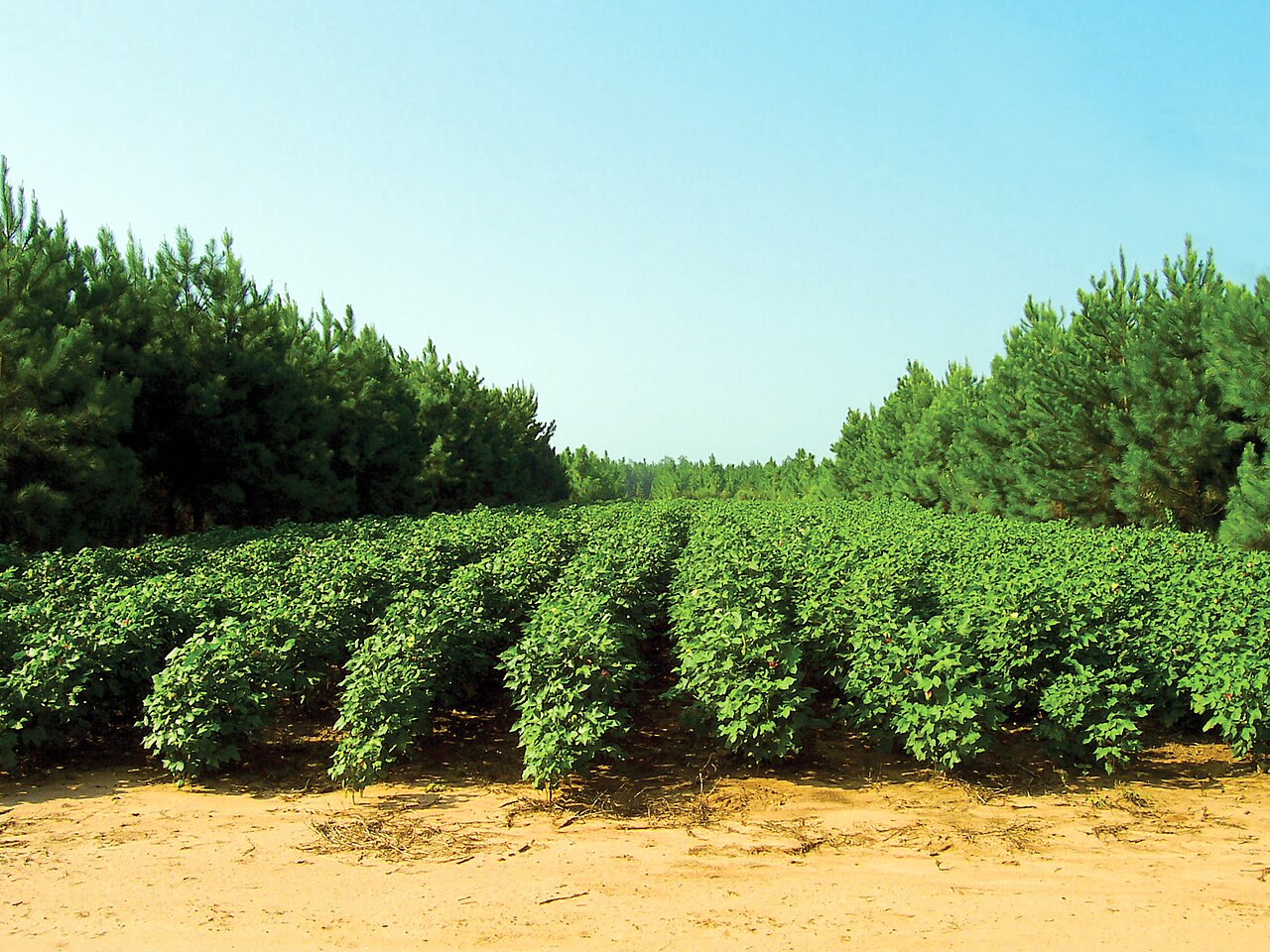
Farmers who grow cereals between rows of trees can protect their harvest by matching the crop to the age of the trees, a study led by the University of Göttingen in Germany has found. Winter crops grown beside fast-growing poplars yielded about as much as crops in open fields throughout the tree cycle, while spring crops lost ground as the trees grew and cast more shade.
The system, alley cropping, puts crops such as wheat, barley and rye in the strips between tree rows. It can improve soil, cut wind erosion, support wildlife and store more carbon, but trees also compete with crops for water, light and nutrients. The researchers measured yields at different distances from poplar rows for six years at four German sites, with the trees grown as short-rotation coppice, cut close to the ground every three to nine years and left to regrow.
Once the poplars were five years old or more, spring crop yields were 10% to 35% lower than in treeless fields, with the biggest losses within four metres of the trees, mainly because shade cut the light. Winter crops behaved differently: their yields stayed level with open fields across the nine years of tree growth studied. The findings are published in Agronomy for Sustainable Development.
The practical advice is to put spring crops in the first three years after the trees are harvested, when the regrowth casts little shade, and to grow winter crops throughout. "Farmers can counteract the negative effects that the shade from trees has on crops by growing spring crops only during the first three years following the harvest of trees," said Dr Sarah Choe, who did the work for her PhD.
Trees also help crops further away. "They can protect against high wind and this reduces moisture loss from the crop growing a bit further away from the trees," said Professor Edzo Veldkamp of Göttingen's Faculty of Forest Sciences and Forest Ecology, adding that this can sometimes make up for losses close to the rows.
Wood output rose too: yearly production was three times higher after the second tree harvest than in the earlier periods. With the right choice of winter or spring crops, Choe said, alley cropping can out-produce open farmland, provided farmers plan the crop rotation and the tree rotation together.
Photo: Shibu Jose, National Agroforestry Center / Wikimedia Commons (CC BY 2.0)
Source: Seed World Europe

Comments
(0)