
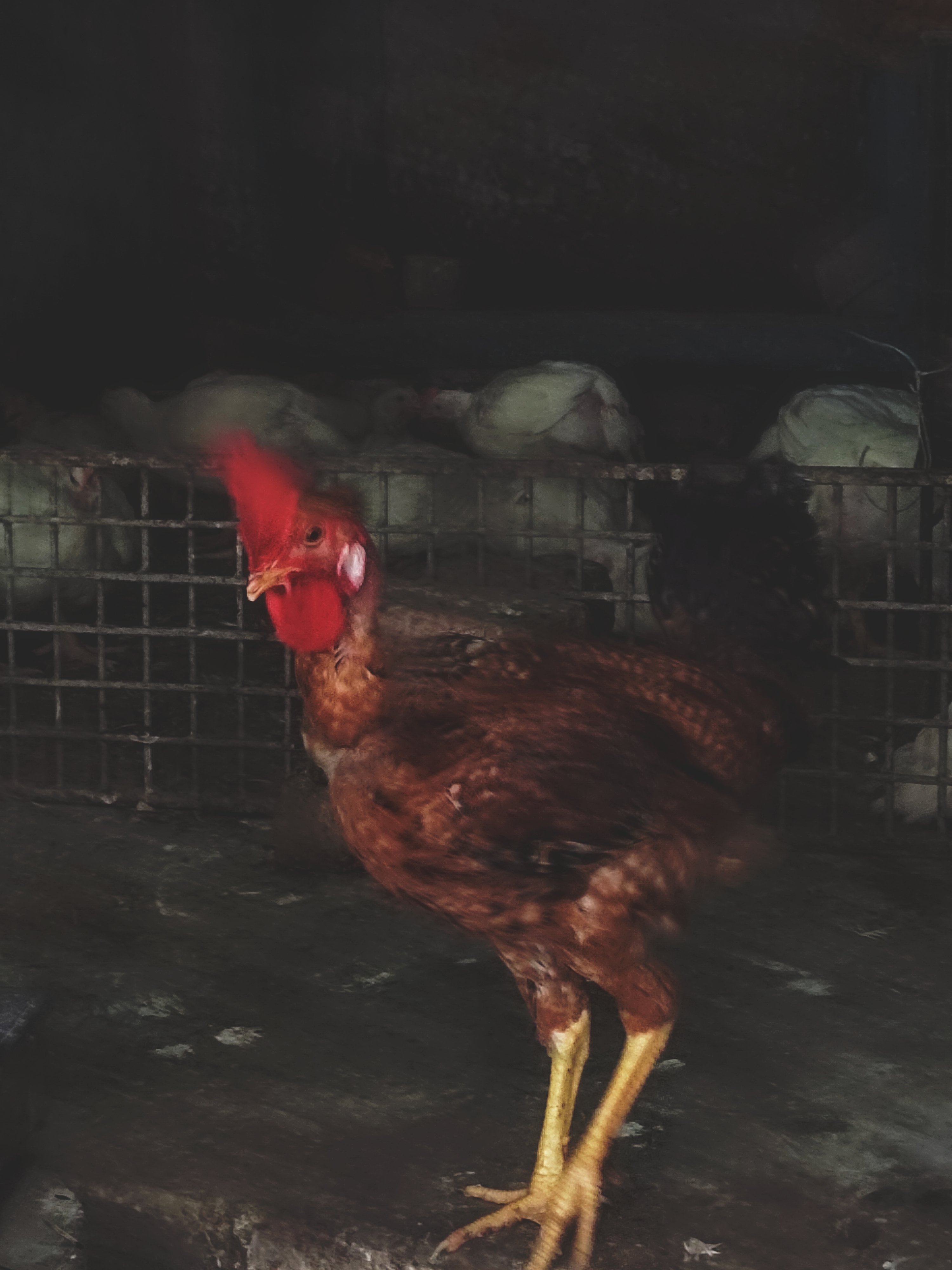
Ismail Hossain Tuku, a poultry farmer from Jamalganj in Akkelpur upazila of Joypurhat district, started out in 2000 with 5,000 Sonali chicks in three sheds and by October 2025 had eight farms in three-storey and six-storey buildings, the news portal Jagonews24 reported on 26 October 2025. In the report, by the portal's Joypurhat district correspondent, Tuku said 120 employees work on those farms. Two farmers who said they started with his chicks, two of his employees and the Akkelpur upazila livestock officer also spoke to the portal. The portal gives the output of the farms as more than one lakh (100,000) chickens.
From three sheds in 2000 to eight farms
According to the report, Tuku has kept to one type of bird for the whole of that time. "I started the farm with Sonali chickens from the beginning, and it is still Sonali chickens," he said. He gave the size of his workforce and his flock in the same statement: "In all, 120 employees work on the eight farms. The farms now have 30,000 Sonali chicks, 20,000 pullets and 50,000 laying birds."
He also named the businesses he has: "We also have several businesses, including SSB Poultry and Hatchery Complex, Rafid Agro Industries and Rifad Agro Industries." The report gives no turnover, profit, sale price or feed figures for any of them, and it does not say whether the eggs of the 50,000 laying birds are sold for hatching or for the table. The headline of the original spoke of jobs for more than a hundred people; the number 120 is Tuku's own.
The stock figures and the number of employees in the report are the farmer's own account. The report does not mention any separate count or record behind them. Its one outside comment on his farming comes from the upazila livestock officer, quoted further down.
Farmers who say they started with his chicks
The report's main theme is that the farm's reach goes beyond its own payroll. Ayub Ali, a farmer from Rukindipur village in Akkelpur upazila, said he had been in another trade. "I started a farm with 500 Sonali chicks from Ismail Hossain Tuku bhai," he said. "Now I have three farms where I raise 15,000-20,000 chickens. Tuku bhai helped me a lot in setting up the farm. I am now a successful farmer, and eight employees work regularly on my farm."
Nurnabi, a farmer from Shahapur village in Joypurhat Sadar upazila, described buying on credit. "I was unemployed. I started a farm by taking chicks on credit from Tuku bhai and paid him back by selling the chickens. That is how I increased the number of farms," he said. He added that seeing Tuku's farm had inspired him.
Raju Ahmed and Golam Morshed, two of Tuku's employees, said they had worked on his farm for eight years. "What we earn there keeps our families going well," they said.
Dr Amirul Islam, the Akkelpur upazila livestock officer, called Tuku a successful farmer in Joypurhat and in Akkelpur upazila. "Following his example and with training from him, many people have succeeded in raising chickens," the officer said. "We regularly monitor his farms and others and always give them advice."
What a Sonali chicken is
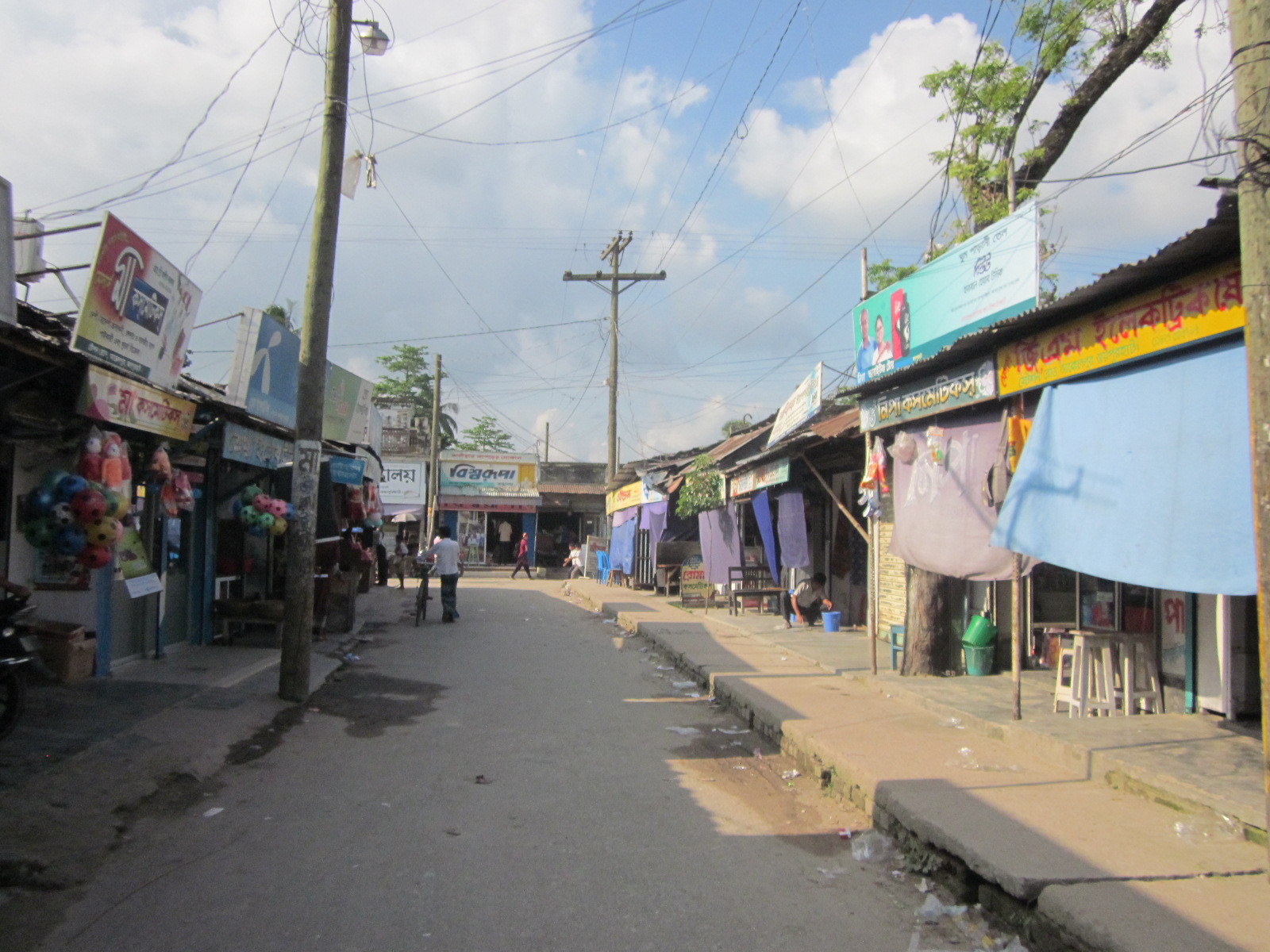
Sonali is not a native breed but a planned cross. An FAO working paper of 2015 describes it as a cross-breed of Rhode Island Red cocks and Fayoumi hens that looks much like local chickens. A paper in Livestock Research for Rural Development in 1997 explained the name: the cross was called Sonali, meaning golden in Bengali. Earlier work had found the Rhode Island Red male and Fayoumi female to be the most successful pairing, the authors said, and the main drawback of the Fayoumi as a parent was its low egg yield.
That 1997 trial placed 1,272 pullets with 297 landless women across three agro-ecological zones and compared eight breed combinations in a semi-scavenging system, in which birds forage around the homestead by day and are sheltered at night. Rhode Island Red x Fayoumi came out with the highest egg production, the lowest mortality and the highest profit per hen. No combination reached its genetic potential, and location mattered more than breed or season.
The FAO paper says Sonali birds are well adapted to the country's conditions and need less care than other breeds, which made them easier for women and children to rear. It adds a caution for anyone reading the name on a commercial chick: government farms keep pure Rhode Island Red and Fayoumi lines but cannot meet the demand, and commercial hatcheries do not keep those pure lines. The birds that small and medium farmers rear are therefore crosses of Rhode Island Red male and Sonali female, or Sonali male and Sonali female, and their performance varies from farm to farm.
Jamalganj and the Joypurhat poultry belt
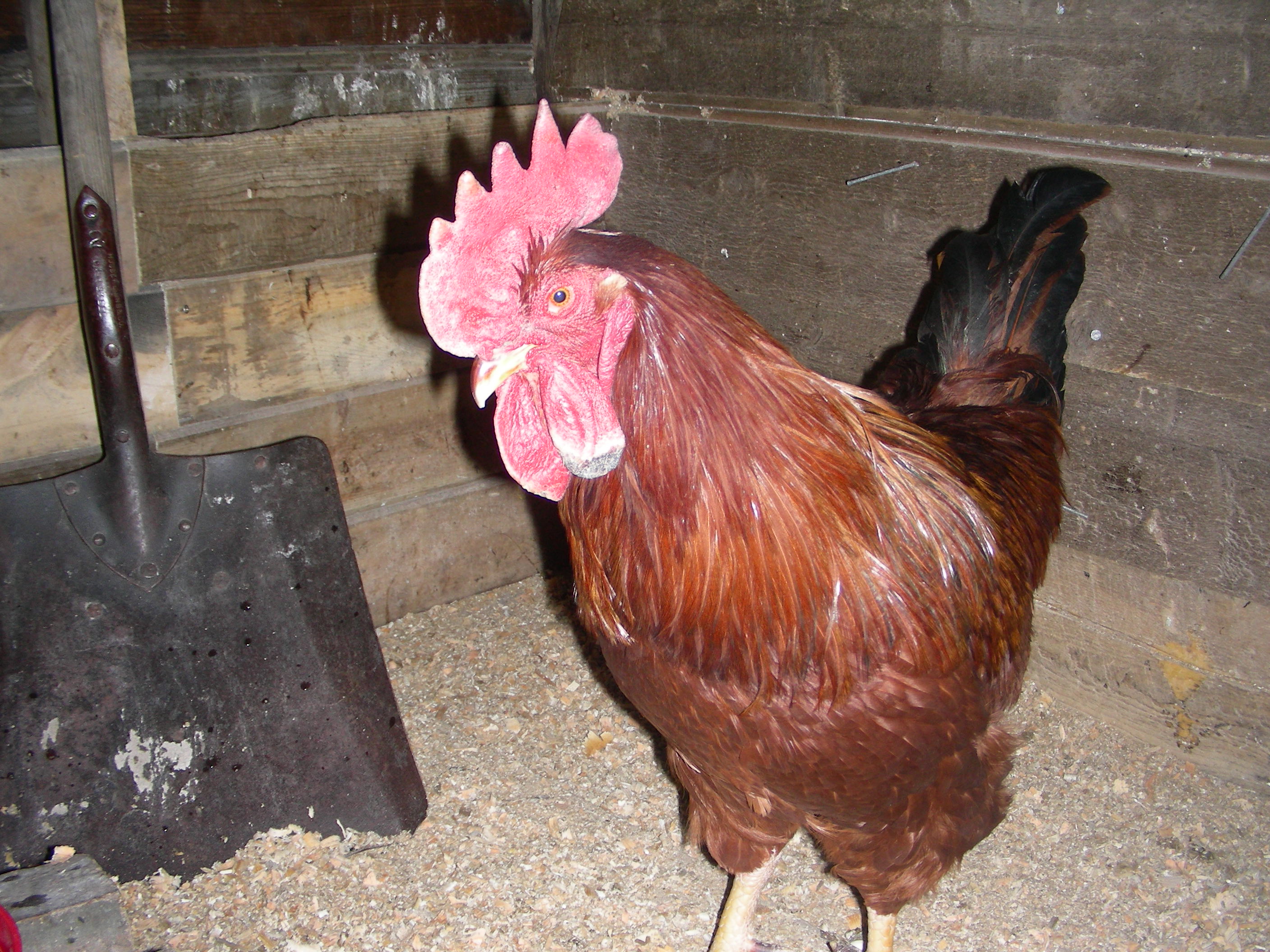
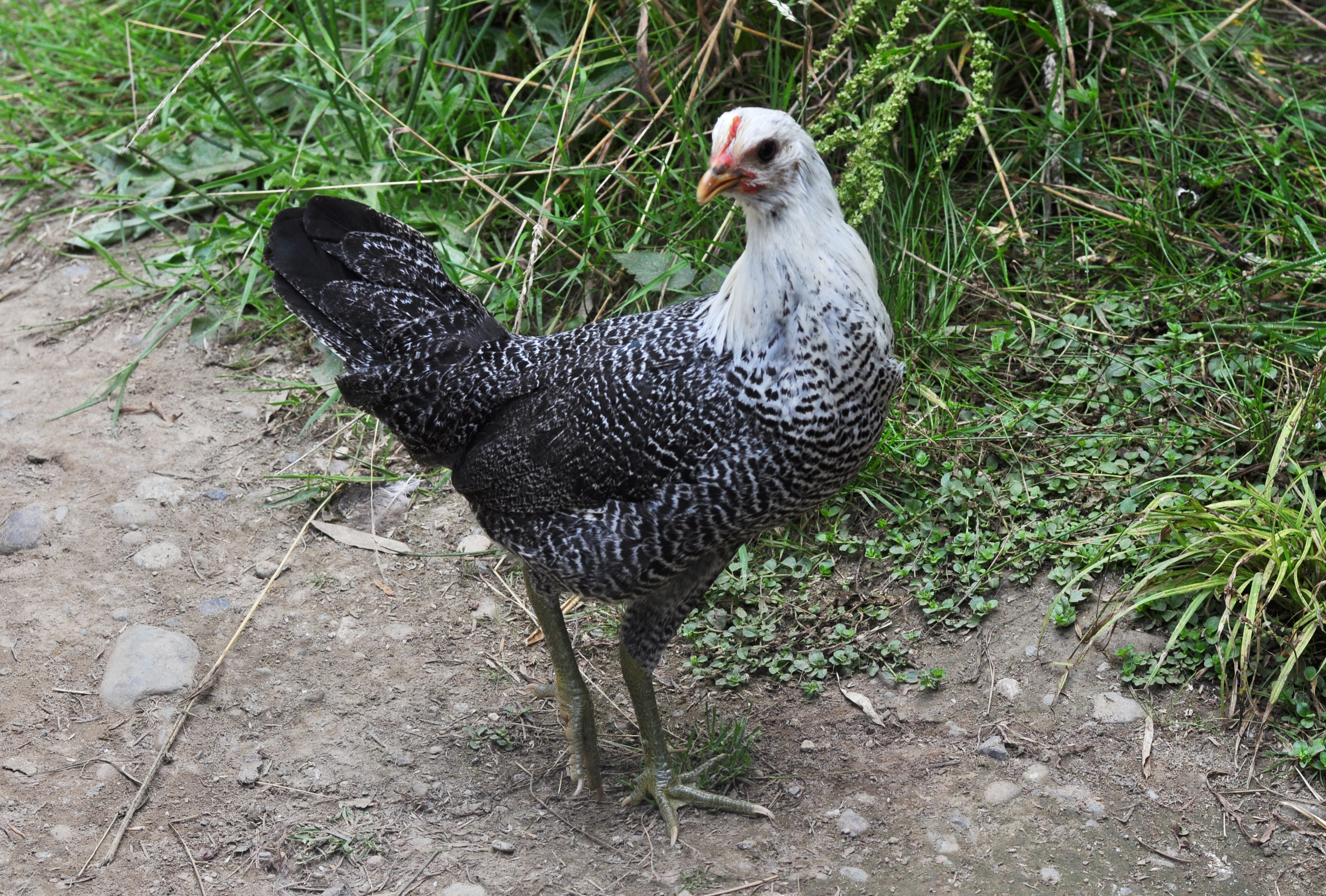
Akkelpur is one of the five upazilas of Joypurhat in the Rajshahi division. Banglapedia, the national encyclopedia, puts its area at about 154.94 square kilometres and its population in the 2011 census at 137,619, with agriculture the main source of income for 66.08 percent of people. Paddy, jute, wheat, mustard, potato, onion, garlic and vegetables are its main crops, and the Tulsi Ganga, Chiri and Nagar are its rivers. The encyclopedia lists 56 poultry farms and 16 dairies in the upazila.
Jamalganj has a long link with poultry, though published accounts of it differ. Prothom Alo, citing Department of Livestock Services officials in October 2023, said a farm was set up at Jamalganj in 1937 to meet British soldiers' demand for chicken and eggs, and described it as the first chicken farm on the territory of Bangladesh. The Business Standard said in August 2024 that the industry took shape in 1973 on an 11-acre government farm at Jamalganj, which it called the start of Sonali breed development.
Accounts of where the bird itself was first bred differ as well. The Daily Star said in September 2021 that it was first bred about 21 years earlier at a chicken breeding development farm under the livestock department in Joypurhat. Prothom Alo said in May 2025 that the Sonali was developed in Joypurhat. bdnews24.com said in May 2024 that the breed was developed at the government's central poultry farm at Mirpur in Dhaka. The FAO paper says only that the Sonali was introduced in northern Bangladesh in 1996-2000 through livestock development projects.
Counts of the district's poultry business differ just as widely, and each should be read as the estimate of its source and year:
- October 2010, The Financial Express: about 10,000 farms raising roughly 3 million chickens, and eight hatcheries including a government one; the district livestock office put meat output at about 10,000 tonnes against local demand of 1,900 tonnes.
- September 2021, The Daily Star: 11,570 meat farms and 360 layer farms, 52 incubator factories hatching 8.50 crore chicks a year, 11 feed factories, about 1.25 lakh tonnes of meat a year against local demand of 6,000 tonnes, and 39 crore eggs against local demand of 9.88 crore.
- August 2024, The Business Standard, citing the district livestock office: about 11,000 poultry farms and 80 hatcheries, with chick demand of 4.5 crore a year against production of 8.5 crore.
- November 2024, a story on the Palli Karma-Sahayak Foundation's rural enterprise project site: 7,340 farms housing nearly 1.75 crore chickens, 89,000 tonnes of meat a year against district demand of 42,000 tonnes, and 47 hatcheries.
- May 2025, Prothom Alo, citing the district livestock office: more than 10,000 farms, and 53 hatcheries producing about 8 crore day-old chicks a year; hatchery owners counted 58 working hatcheries.
How the Sonali spread across Bangladesh
The FAO paper traces the bird's rise to rural poverty programmes. Attempts between the 1960s and the 1980s to improve village poultry through cockerel exchanges and the distribution of hatching eggs met limited success. In the late 1980s BRAC, with the Department of Livestock Services, designed a poultry model for poor rural women built on model breeders, mini-hatcheries, chick breeders, poultry rearers, poultry workers, feed sellers and egg collectors. Between 1992 and 2001, donor-funded smallholder and participatory livestock projects involved nearly 1 million women and emphasised Sonali birds.
A 2014 paper in the same research journal, by Sumy, Khan and Islam, set out how the chain worked: chick rearers raised birds for about eight weeks before they were sold as pullets. In the 1997 paper, the Directorate of Livestock Services supplied parent stock to breeders who kept flocks of 25 hens, and each rearer raised up to 250 chicks in confinement until they were eight weeks old. The Jagonews24 report does not connect Tuku's farms to those projects.
Market demand then took over. FAO says small and marginal farmers began rearing Sonali commercially in response to demand for coloured birds, and that government farms could not supply enough chicks, which led to private hatcheries. In 2010 about 150.9 million Sonali day-old chicks were produced, about 35 percent of the country's commercial broiler and layer production, and more than 60 hatcheries and about 900 parent stock farms were supplying them, according to figures from 2011 cited in the paper.
A Netherlands Enterprise Agency study of May 2020, prepared by Larive International and LightCastle Partners, estimated 250 million Sonali birds a year in 2019, behind 525 million broilers and ahead of 74 million layers and layer Sonali and 50 million Deshi birds. It said Sonali's share of poultry meat consumption rose from about 20 percent in 2018 to 23 percent in 2019, and it placed Sonali chick rearing mainly in Bogra, Joypurhat, Natore and near Rajshahi. It reported more than 100 Sonali hatcheries in Bogra. Consumers, it said, preferred Sonali because they perceived it as safer and fresher than broiler meat; that is a finding about perception, not a health finding.
Chicks, pullets and layers: what the three stock figures mean
Tuku's flock figures name three stages of a chicken's life. Chicks are the youngest birds. Pullets are young hens before they begin to lay, and layers are hens in lay. In a survey of 500 farms in Joypurhat, Mymensingh/Gazipur, Bogra and Naogaon carried out in 2012 and reported by FAO in 2015, Sonali hens on intensive farms first laid at an average of 21.8 weeks and reached peak production at 31.1 weeks, while egg production began to fall at 44.8 weeks. Commercial layers first laid at 20.7 weeks and did not begin to decline until 67.3 weeks.
The FAO survey found that about 81 percent of intensive Sonali farms reared birds for meat and about 19 percent mainly for hatching eggs. Hatching eggs sold for almost twice the price of commercial table eggs, and FAO judged Sonali birds less suitable for producing table eggs. The average intensive Sonali meat flock was 1,442.7 birds, ranging from 840 to 2,200, and the average egg flock 1,207.5, ranging from 490 to 1,800. The numbers Tuku gives, spread over eight farms, are far larger than the flocks in that sample, though the survey dates from 2012.
On meat, the survey put the average slaughter weight of intensive Sonali birds at 0.85 kg at 12 weeks, against 1.64 kg at 31 days for commercial broilers. A trial published in Veterinary and Animal Science in November 2022, by Islam, Haque and Nishibori, recorded a feed conversion ratio of 3.01 for Sonali against 1.55 for broilers and a production cost of Tk 201.68 per kilogram of live weight against Tk 103.69. At the sale prices it assumed, Tk 220 and Tk 120 a kilogram, Sonali showed a net profit of Tk 18.32 a kilogram against Tk 16.31 for broilers, a difference the authors did not find statistically significant. The Netherlands study recorded consumer prices in 2019 of Tk 250-270 a kilogram of live weight for Sonali and Tk 130-150 for broilers.
What the poultry jobs look like
The eight staff Ayub Ali mentions and the 120 Tuku mentions fit a pattern FAO described. Commercial farms, including intensive Sonali, broiler and layer farms, hired more labour, while semi-scavenging Sonali and local-bird keepers relied mainly on the family. The work included gathering birds for sale, cleaning sheds, feeding, veterinary care, tending chicks and egg production tasks. On intensive Sonali meat farms, family labour averaged 250.8 minutes a day and hired labour 308.1; on Sonali egg farms the figures were 181.6 and 274.7.
How many people the district's poultry business employs is another contested number. The Financial Express said in 2010 that about 1.1 million residents of the district worked in it directly or indirectly. The Daily Star wrote of around 2.5 lakh youths in 2021, Prothom Alo of about 2.5 lakh people in 2025, and the Palli Karma-Sahayak Foundation's project site of about 200,000 people in 2024, mostly women.
Credit, prices and a hard stretch for Joypurhat hatcheries
Nurnabi's start, with chicks on credit paid back after sales, is a practice other reports touch on. In the FAO survey most farmers financed their business from their own resources: 80.2 percent of Sonali meat farm responses and 73.7 percent of Sonali egg farm responses. Prothom Alo reported in May 2025 that chicks, feed and medicine could no longer be had on credit as they once were, one of several reasons it gave for weak demand.
Those were difficult months for the district's chick sellers. Prothom Alo reported that a Sonali chick costing Tk 18 to produce was selling for Tk 5, and that when chicks found no buyer they were sometimes given away free. Small farms had been closing after several years of losses, buyers feared losing chicks in the heat, and feed and medicine had become dearer. The manager of one poultry farm told the paper that the profit of Tk 3-4 a chick had become a loss of Tk 12-13. The district livestock officer told the paper the price would not last.
A similar slide had been reported the previous August. The Business Standard found Sonali day-old chicks at Tk 16 at Chawk Sutrapur, the Bogura poultry market where most Jamalganj chicks go, on 21 August 2024, falling to Tk 11 on 24 August and recovering to Tk 14 on 26 August, while hatchery owners and traders put the cost of raising a chick from an egg at about Tk 20. Earlier still, The Daily Star reported in 2021 that at least 2,000 small or marginal Joypurhat farms had closed for good during the Covid-19 pandemic and that the sector had lost Tk 300 crore.
Disease and official oversight on poultry farms
The officer's remark about regular monitoring touches on a known weak point of the sector. A peer-reviewed study in Veterinary Sciences in 2024, by Khalil and colleagues, examined 1,690 Sonali cases recorded in a web-based system in Bogura in 2020-2021. Newcastle disease was the most common diagnosis, at 19.5 percent, followed by Marek's disease at 9.8 percent, coccidiosis at 7.4 percent and necrotic enteritis at 4.7 percent. Grower birds accounted for 69 percent of cases, and diagnoses were presumptive, based on history, signs and post-mortem findings by registered veterinarians. The authors called disease surveillance and control weak and antimicrobial use heavy.
The FAO survey listed Gumboro, mycoplasma infections, coccidiosis, Newcastle disease, fowl pox and fowl cholera as the most common diseases of layers and Sonali in its study areas, and it called avian influenza one of the most important challenges. In Joypurhat, it recorded mortality over the production cycle of 4.6 percent on Sonali meat farms and 2.6 percent on Sonali egg farms. It concluded that improved biosecurity and proper vaccination were needed in all production systems. An earlier field study, by Biswas and colleagues in 2006, found that 58 percent of 471 semi-scavenging Sonali chickens in two southern districts carried protective antibody levels against Newcastle disease. Vaccine choice and schedules are a matter for the upazila livestock office, which is the first point of contact for farmers.
Formally, a commercial farm has obligations to the state. A January 2024 policy brief from the GCRF One Health Poultry Hub says that under the Animal Disease Act 2005 anyone farming commercially with more than 1,000 birds must apply to the Department of Livestock Services for registration, and that difficulties with the process make farmers reluctant to deal with the government. The Netherlands study said in 2020 that rules were formally in place but enforcement capacity was lacking. The Jagonews24 report does not address the registration or biosecurity status of the farms it describes.
Photo: Tanvir Rahat / Wikimedia Commons (CC BY-SA 4.0). The top picture shows a chicken on a chicken farm in Bangladesh, as background; it is not from Ismail Hossain Tuku's farms.
Sources: Jagonews24, FAO, Netherlands Enterprise Agency, The Daily Star, The Financial Express, The Business Standard, Prothom Alo, bdnews24.com, Palli Karma-Sahayak Foundation, Banglapedia, Livestock Research for Rural Development, Veterinary Sciences, Veterinary and Animal Science, GCRF One Health Poultry Hub.
Comments
(0)