
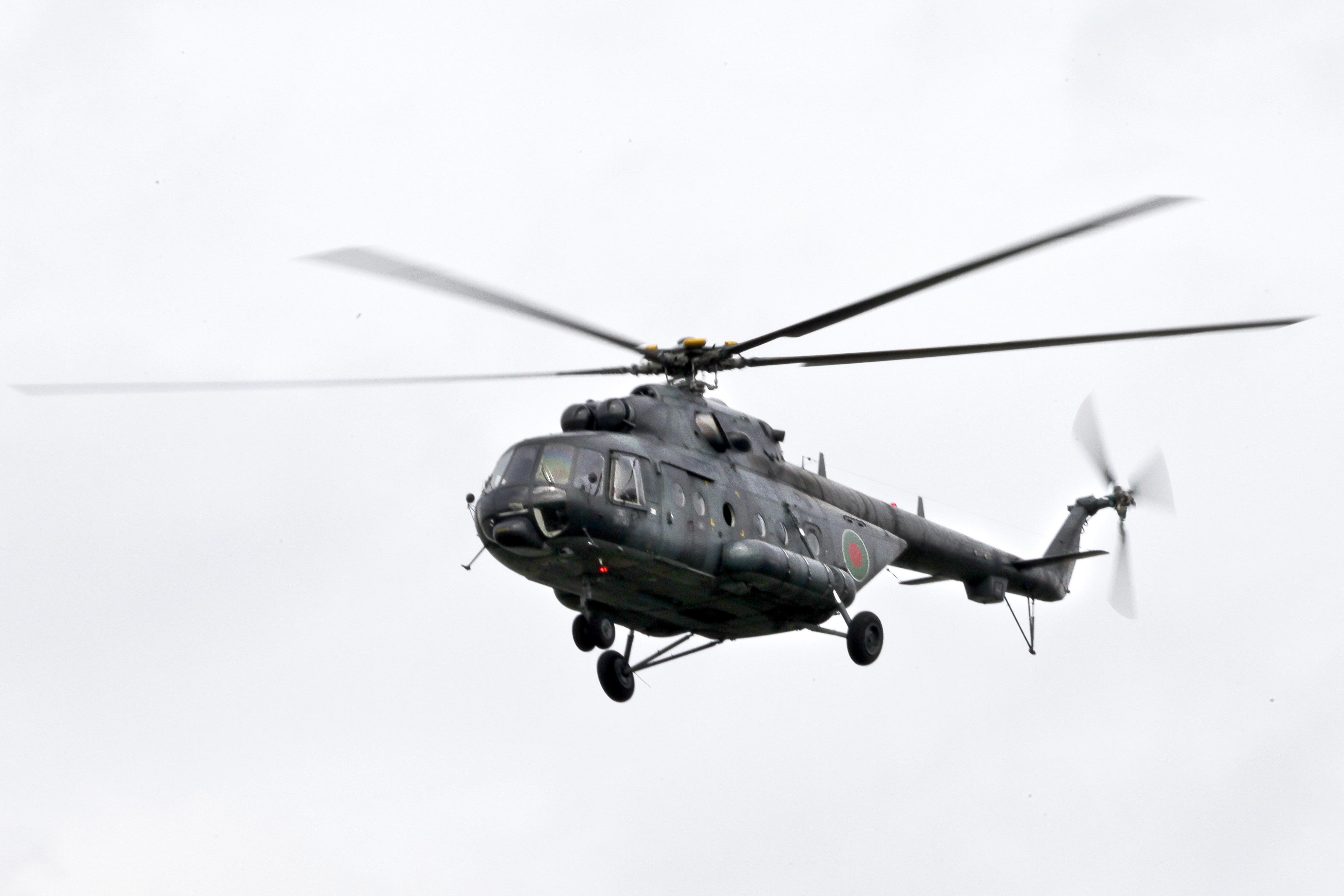
On 16 June 2026 the Bangladesh Air Force said it planned to sow trees from the air: under its Tree Plantation Programme 2026, its helicopters would drop seed balls (balls of soil packed with seeds) over parts of the coastal region and remote areas of the Chattogram Hill Tracts. The Inter-Services Public Relations Directorate (ISPR) announced the plan in a press release that day, which Jagonews24, the state news agency BSS and other outlets carried.
According to ISPR, Prime Minister Tarique Rahman had inaugurated the nationwide drive to plant 250 million trees in five years on 13 June, and the Air Force was holding its own programme as part of that effort to increase the country's tree resources and protect its environmental balance. The BSS report also named tackling the adverse effects of climate change as one of the aims.
Launch at Air Headquarters in Dhaka Cantonment
Chief of Air Staff Air Chief Marshal Hasan Mahmood Khan opened the programme on Tuesday, 16 June, by planting a sapling at Air Headquarters in Dhaka Cantonment. The Air Force said it would plant saplings of fruit, timber and medicinal trees under the programme.
Principal staff officers of Air Headquarters took part by planting saplings of different species, and directors and senior officers of Air Headquarters were present. The press release said tree planting had also been arranged at the Air Force's bases and units and at all schools and colleges run by the Air Force.
ISPR said that, under the Air Chief's direction, Air Force helicopters would drop seed balls at various places in the coastal region and in remote parts of the Chattogram Hill Tracts to support afforestation. It added that Air Force helicopters had dropped seed balls over remote coastal areas before. The published reports did not say when the drops would take place, exactly where, how many seed balls would be used or which tree species they would carry.
The national drive for 250 million trees in five years
The national programme the Air Force joined had been launched three days earlier, on Saturday, 13 June. According to BSS and Dhaka Times reports of that day, the Prime Minister planted a garjan sapling in the Malumghat reserved forest at Dulahazara in Cox's Bazar to open the drive. Environment, Forest and Climate Change Minister Abdul Awal Mintu, Home Minister Salahuddin Ahmad and other cabinet members planted saplings of 11 tree species in all. The environment minister chaired the event.
The two reports said that planting 250 million trees nationwide over five years had been an election pledge of the BNP. The environment and forest ministry was to carry out the programme in phases across different regions over five years; in the first phase, about 15 million saplings were to be planted in 149 upazilas of 49 districts.
In preparation, the Prime Minister chaired a meeting at the Prime Minister's Office in Tejgaon on 6 June on the launch of the campaign and on World Environment Day activities, The Daily Observer reported. The meeting also discussed climate messages for the different implementation stages of the campaign.
An Observer editorial of 8 June said the Prime Minister had stressed planting species that suit local soil and environmental conditions, since the coastal belt of Cox's Bazar, the floodplains of central Bangladesh and the hills of the Chattogram Hill Tracts each need something different. The paper argued that tree-planting campaigns in Bangladesh had long been measured by the number of saplings handed out rather than the number that survive and mature, and that without long-term monitoring, community participation and proper care even a drive of this size risked becoming a symbolic exercise.
What a seed ball is and how it is made
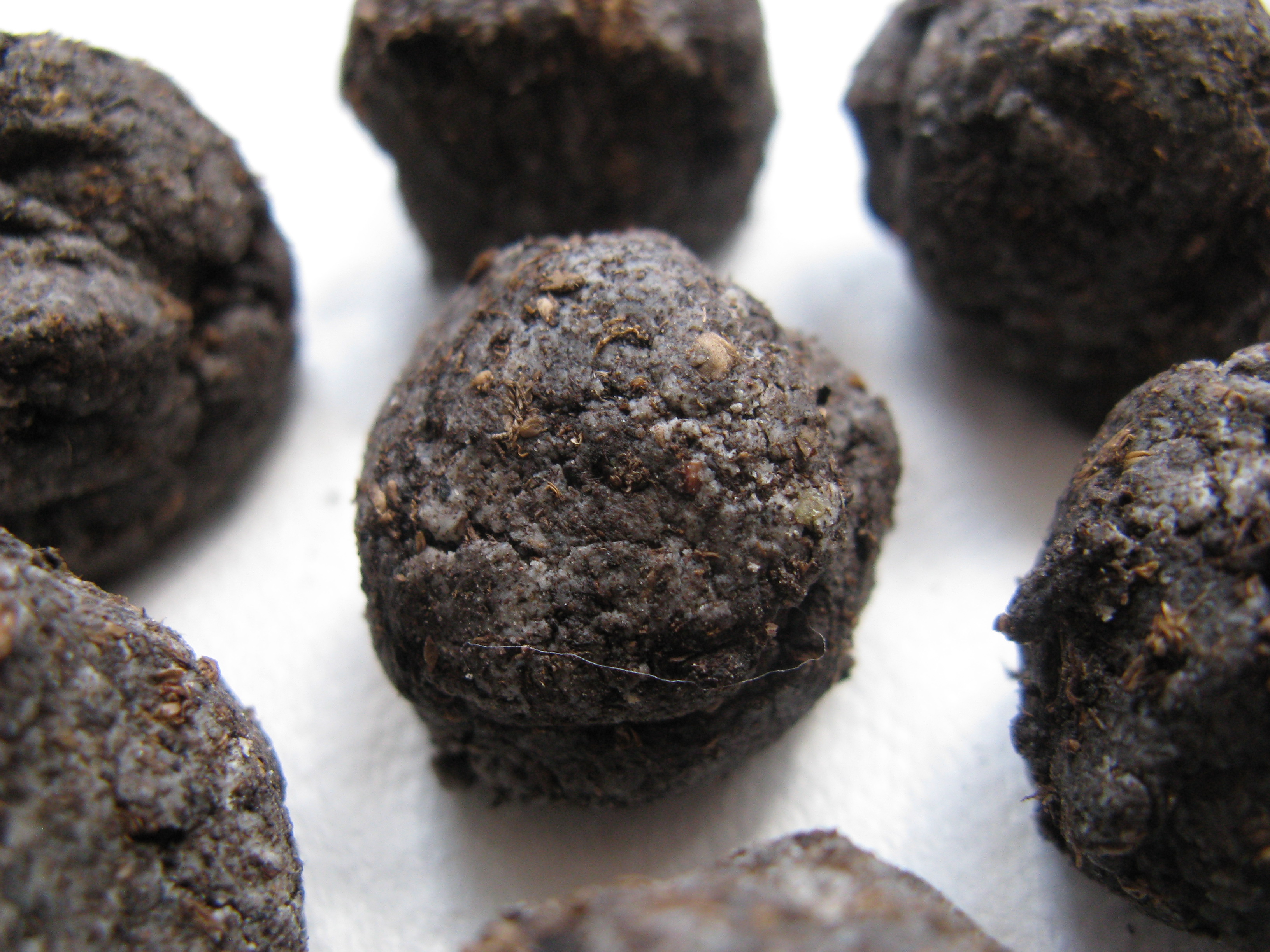
A seed ball is a seed, or several, rolled inside a small ball of clay and other material to help it germinate. According to the Wikipedia article on seed balls, a typical mix is about five parts red clay to one part seeds by volume, formed into balls 10 to 80 millimetres across. Humus, compost, cotton fibre or liquefied paper may be added for extra protection and to support soil microbes. The finished balls are left to dry for 24 to 48 hours before they are used.
The article notes that one modern reason for using seed balls in aerial seeding is to keep the seeds from being eaten by animals. Introducing plants by throwing or dropping seed balls is known as seed bombing.
The Japanese natural-farming pioneer Masanobu Fukuoka rediscovered and systematised the method during the Second World War, while working as a plant scientist on the island of Shikoku; he was looking for ways to grow more food without taking land away from traditional rice fields. In Japanese the balls are called nendo dango, literally clay balls. In 1973 Liz Christy of the Green Guerillas group in New York began throwing seed-and-fertiliser packages onto vacant city lots to green them, a practice regarded as the start of modern guerrilla gardening.
Sowing from the air: strengths and limits
Aerial seeding means sowing seed mechanically from a drone, plane or helicopter; used for forests, it is called aerial reforestation. It is used to restore vegetation after fires, to sow cover crops and to reach ground that conventional methods cannot. According to Wikipedia's article on the technique, early aerial reforestation trials were made in Honolulu after forest fires in the 1930s but largely failed because the seed was poorly dispersed. Surplus military aircraft after the Second World War let the practice spread quickly: by 1946 more than 500 acres in Oregon had been sown from the air with Douglas fir and cedar.
Research by the United States Department of Agriculture (USDA), cited in the article, lists the main advantages as covering a large area in the least time and reaching places that are otherwise hard to get to, such as steep slopes, remote watersheds and wet ground. The method is particularly useful in mountainous or isolated areas with little infrastructure, and protection forests on steep terrain and remote watersheds are named among the sites it suits best.
The drawbacks are real. Aerial seeding needs 25 to 50 per cent more seed than drilled seeding to achieve the same result, because seed lying exposed on the surface is eaten by birds, insects and rodents. The top half-inch to one inch of soil needs to be moist within ten days of sowing, and seeds usually have to land on mineral soil rather than on established vegetation or undecomposed litter. On steep, smooth, bare slopes rain can wash the seed away, and light, chaffy seed drifts off target. Seeds that animals like to eat have little chance unless they are pelletised. The article adds that more research is needed to judge how aerial methods perform against other ways of reforesting.
Other air forces in the region have used helicopters for the same work. A Sri Lanka Air Force release of 30 October 2019 said its Mi-17 helicopters dropped 67,000 seed bombs over the Lahugala forests in the Ampara area in two missions, carrying seeds of five native trees including aralu, kon and tamarind, working with the country's Forest Department, the University of Peradeniya and a private company. A Sri Lankan defence ministry report of 24 November 2021 said that in a sixth wave a Mi-17 dropped about 65,000 seed bombs over 70 acres of a government forest reserve, timed to coincide with monsoon rains to help germination.
The first helicopter seed-ball drops in 2020
Bangladesh's first seed balls dropped from helicopters fell in September 2020. ISPR said at the time that the Air Force, in coordination with the Forest Department, had taken up an afforestation programme for remote coastal areas and the Chattogram Hill Tracts, and that seed balls were dropped from helicopters over coastal areas on 20 and 21 September. It described this as the first time seeds had been spread from the air by helicopter over remote coastal areas of the country.
The seeds had been collected from Patuakhali on 3 September 2020 and processed into seed balls at Air Headquarters. Two Mi-series helicopters then dropped them over the coastal areas of Domar Char in Noakhali. ISPR said the chosen sites were inaccessible and unsuitable for road travel, which is why helicopters were used, and expressed the hope that the forests grown from the programme would become a lifeline for coastal people and help reduce the damage from natural disasters.
The Financial Express, in an editorial of 27 September 2020, called the venture a new style of reforestation for Bangladesh. It wrote that vast stretches of coast had been stripped of trees by cyclones and repeated tidal surges, and that the Kuakata beach, once lined with coconut and tamarisk trees but not included in the project, now looked bare. The paper said the first phase focused especially on remote, largely inaccessible islets in Noakhali, and that the forests of the Chattogram Hill Tracts were being thinned by illegal loggers and brick-kiln owners. Experts, it said, stress follow-up surveillance after the yearly planting campaigns and awareness among local people, and trees grown from seed dropped from the air would need the same inspection and tending.
A long history of coastal afforestation
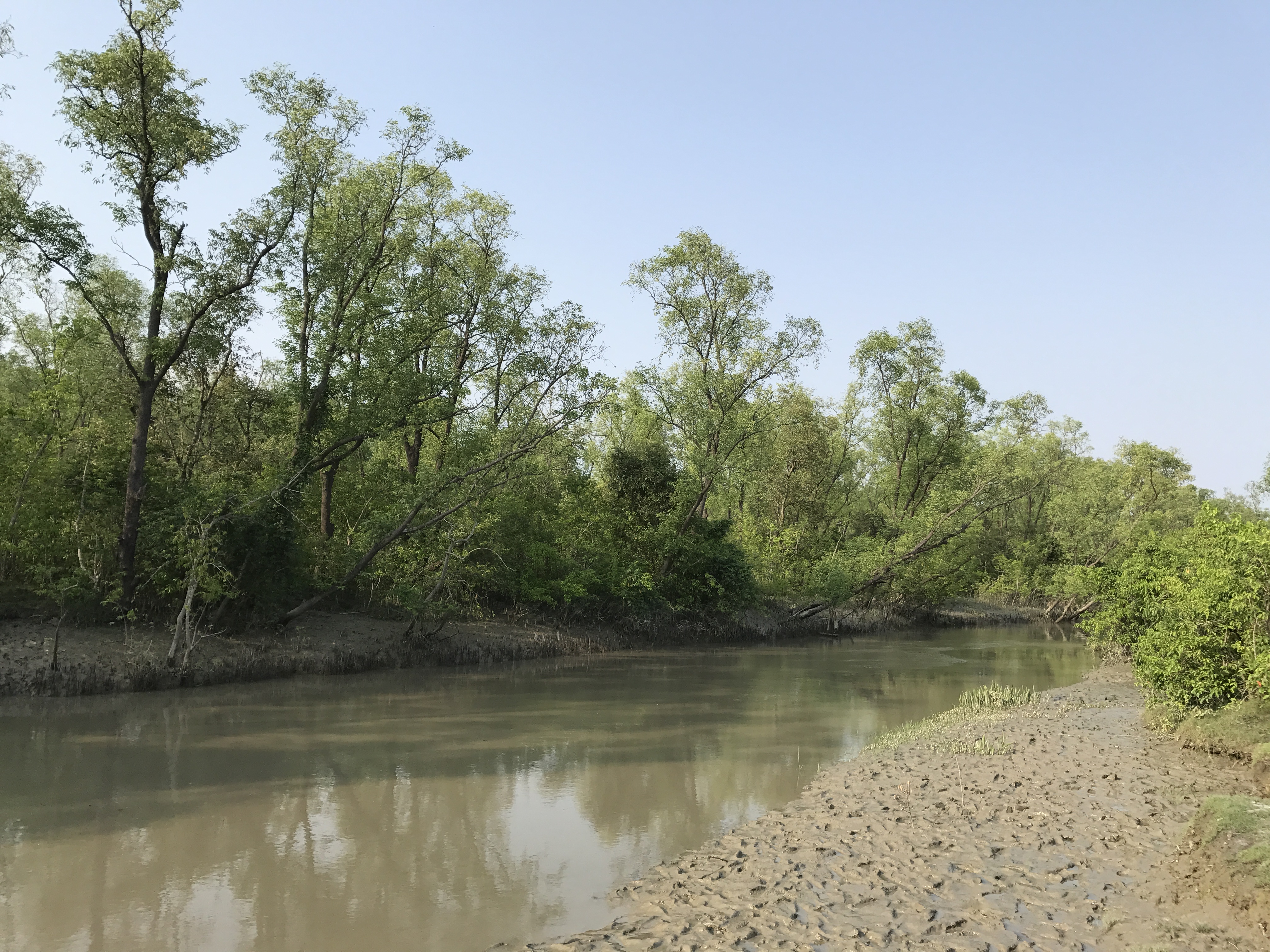
Planting trees on the coast is not new for Bangladesh. According to Banglapedia's article on coastal plantation, mangrove afforestation began in 1966, with World Bank assistance, along barren shorelines and offshore islands, and about 130,000 hectares have been planted. The article says these plantations reduce the loss of life and property from cyclones and tidal surges as well as providing jobs and wood. The country's shoreline is about 700 kilometres long.
Many mangrove species have been planted on newly accreted land, among them keora, baen, gewa, kankra, sundari and golpata, but keora (Sonneratia apetala) has proved the most successful: it makes up about 94.4 per cent of successful mangrove plantations and baen (Avicennia officinalis) about 4.8 per cent, with baen doing well mainly on the eastern coast. Keora is planted as seedlings, while baen seed is dibbled straight into the mud. Once new land rises above the water, seedlings about 0.6 metres tall are carried to the site by boat and planted during the monsoon, before the grass grows thick, at neap tides so that tidewater does not stand on the site for long.
The article also sets out the plantations' problems. Insect attack on keora is common all along the coast, with infestation estimated at about 52 per cent, the main pest being the bee-hole borer, a moth larva. Single-species planting, a lack of natural regeneration and the difficulty of establishing a second crop are further problems; mixed plantations and underplanting beneath maturing keora are suggested as remedies.
Domar Char, where the 2020 seed balls fell, lies in Noakhali district. Banglapedia describes the district as covering 3,685.87 square kilometres, bounded on the south by the Meghna estuary and the Bay of Bengal, with the Sandwip and Hatiya channels its notable waterways. The 2011 census counted 3,108,083 people there, and agriculture is the district's largest source of income.
The remote hills and forests of the Chattogram Hill Tracts
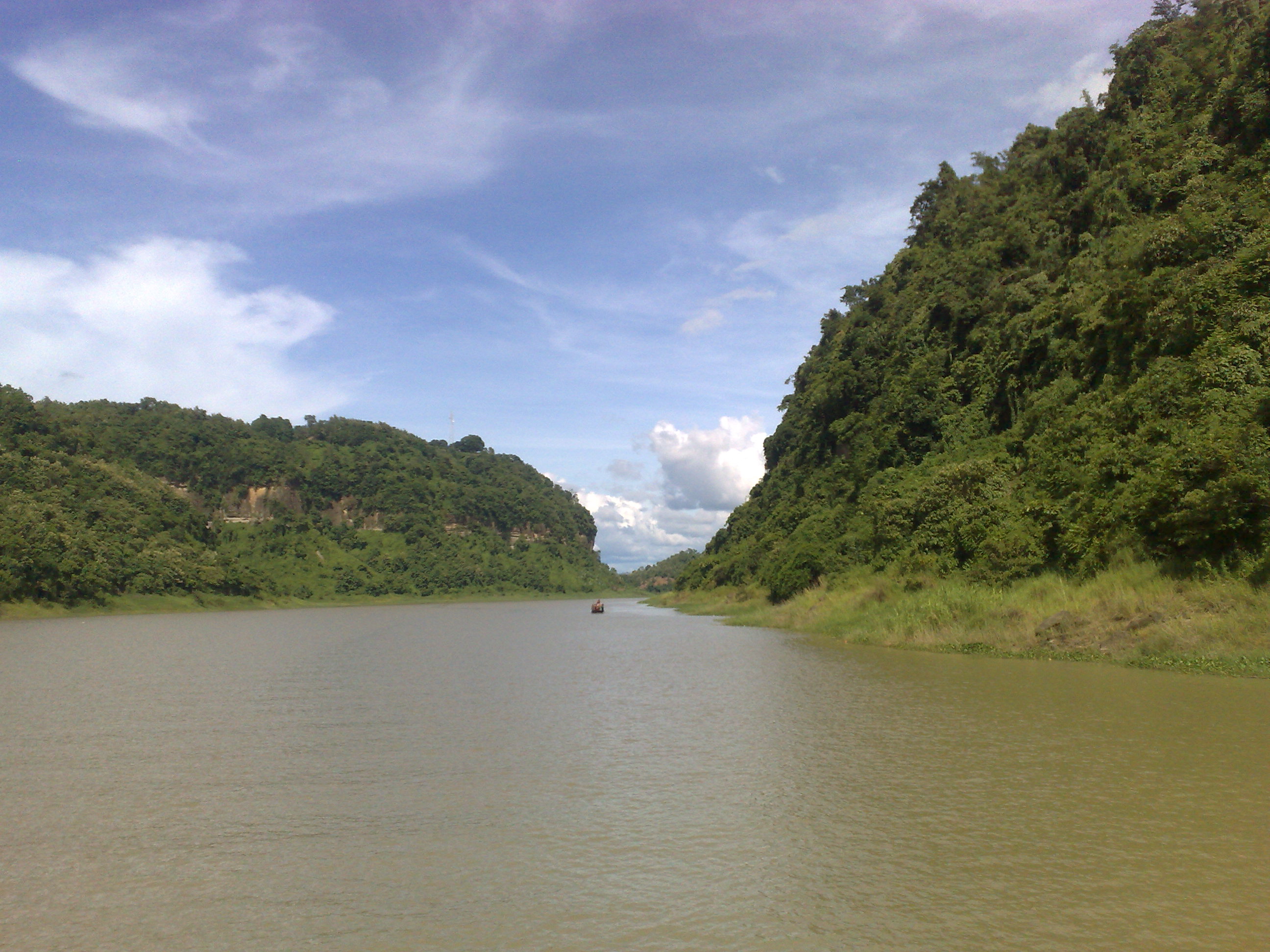
The second area named in the Air Force plan is the Chattogram Hill Tracts. Banglapedia describes it as the only extensive hill area in Bangladesh, about 13,184 square kilometres or roughly one-tenth of the country, divided in the early 1980s into the three districts of Rangamati, Khagrachhari and Bandarban. Its major rivers are the Karnaphuli, Sangu, Matamuhuri and Feni.
The ranges rise steeply, most with scarps, cliffs and waterfalls on their western side. Annual rainfall reaches 2,540 to 3,810 millimetres in the south and west, and the monsoon runs from June to October. The hill soils are yellowish-brown to reddish-brown loams and very strongly acidic. Hills, rivers and cliffs are covered with dense bamboo, tall trees and creepers, in vegetation ranging from semi-evergreen to tropical evergreen and dominated by tall trees of the dipterocarp family, to which garjan belongs.
A 2021 paper in the journal Forest Ecosystems on the results of the Bangladesh Forest Inventory found that hill forest is the largest forest type by area, at 4.6 per cent of the country. The hill zone had the largest number of tree species recorded, including at least two species listed as endangered or critically endangered on the IUCN Red List, and households there get about 70 per cent of their timber, bamboo, firewood and leaves from nearby forest.
In the same inventory, more than half of the sample plots that field teams could not measure at all were out of reach because of hazards such as steep slopes, and the authors noted that inaccessibility had left gaps in ground information for the south-eastern hill region. These are the kinds of hills, hard to reach on foot, where the Air Force planned to deliver seed from the air.
Bangladesh's forest and tree cover in figures
The Bangladesh Forest Inventory was carried out by the Forest Department under the Ministry of Environment, Forest and Climate Change: field teams visited 1,781 plots, 6,400 households were surveyed and a national land cover map for 2015 was produced. According to the Forest Ecosystems paper, forest under the FAO definition covered 1,884,019 hectares in 2015, or 12.8 per cent of the country's total area; counting land area only, excluding rivers, the figure was 14.1 per cent. After hill forest, the largest forest types were shrubs with scattered trees (4.2 per cent) and mangrove forest (2.7 per cent).
The paper reported a net decrease in tree cover of 3.4 per cent nationally between 2000 and 2015. Trees outside forests, including those around rural homesteads, held 66 per cent of the country's total biomass. The Forest Department owned almost 9.4 per cent of the land, and about 32 per cent of forest area was affected by natural disturbances, most commonly landslides, erosion and cyclones.
The household survey found that only 1.3 per cent of respondents had received support for sustainable tree and forest management from any organisation, mostly free seedlings and training in tree planting. In 2017-18, 43 per cent of households bought their own seedlings, and an estimated 64 per cent of the population was involved in collecting primary tree and forest products.
The Air Force and its yearly planting programmes
The Bangladesh Air Force was formally established on 28 September 1971, during the Liberation War. Its first combat unit, Kilo Flight, made up of a modified Dakota, a Twin Otter and an Alouette III helicopter, went into action on 3 December 1971 with an attack on the oil depot in Chattogram. The force's headquarters is in Dhaka Cantonment, and its helicopters are regularly used in humanitarian work such as flood relief.
The Air Force holds its own tree plantation programme each year in line with the national one. According to ISPR releases, the 2019 programme opened on 20 June with a sapling planted at Air Headquarters, while bases and units planted herbal, fruit, shade and timber trees; the 2021 programme opened on 15 June; and the 2023 programme opened on 20 June with saplings planted beside the lake next to the old Tejgaon airport runway.
Dhaka Tribune reported on 30 June 2025 that Air Chief Marshal Hasan Mahmood Khan opened that year's programme in line with the National Tree Plantation Programme 2025 and its slogan 'Porikolpito Bonayon Kori, Sobuj Bangladesh Gori' (plan afforestation, build a green Bangladesh), with fruit, ornamental or forestry and medicinal saplings planted at all bases and units. None of those launch announcements mentioned sowing seed from helicopters; the 2026 programme added the seed-ball drops to the usual sapling planting.
Photo: Faisal Akram / Wikimedia Commons (CC BY-SA 2.0)
Sources: Jagonews24 (16 June 2026), BSS (13 and 16 June 2026), Dhaka Times (13 June 2026), The Daily Observer (6 and 8 June 2026), ISPR (releases of 2019, 2020, 2021 and 2023), The Financial Express (27 September 2020), Dhaka Tribune (30 June 2025), Banglapedia (Coastal Plantation, Chittagong Hill Tracts, Noakhali District), Forest Ecosystems (2021), Sri Lanka Air Force (30 October 2019), Sri Lanka Ministry of Defence (24 November 2021), Wikipedia (Seed ball, Aerial seeding, Bangladesh Air Force)



Comments
(0)