
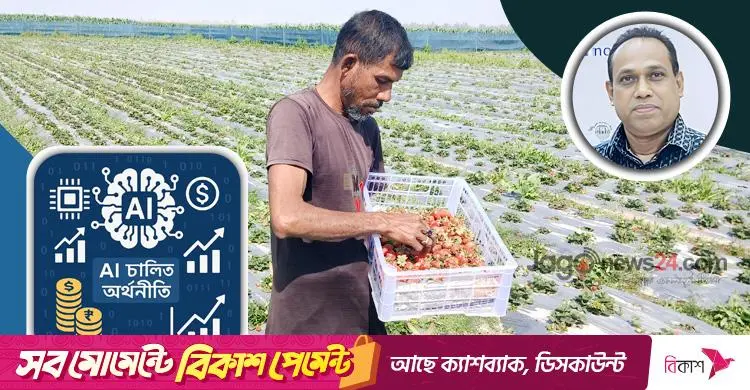
Artificial intelligence (AI) is no longer the stuff of science fiction. It is now part of reality and has begun to reshape economies around the world. AI is revolutionising manufacturing, health, agriculture, education, services and business, and its impact is showing directly in the economy. For developing countries including Bangladesh it opens a door of opportunity. This article looks at how AI can strengthen the economy, and at its benefits, challenges and future direction.
Efficiency and profit in manufacturing
Using AI in manufacturing is cutting waste of time, money and labour. With robotic automation and machine learning models, industries are moving into production faster and improving product quality. "Smart factories" are now a reality: AI analyses data to improve machine performance, predict problems and help plan repairs in advance. This keeps production continuous, which creates an uninterrupted flow in the economy.
A revolution in agriculture
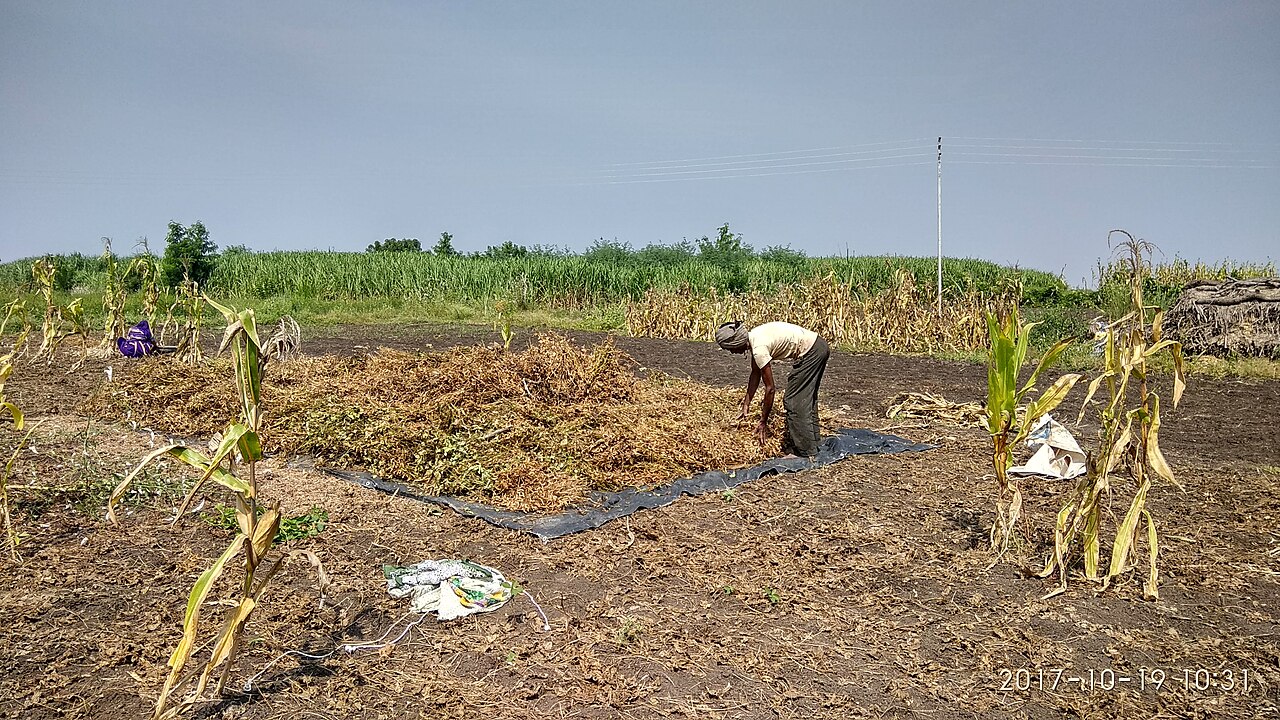
Bangladesh's economy depends on agriculture. Smart agriculture can be built here by applying AI, the internet of things (IoT) and big data: monitoring land with drones, sowing crops according to weather forecasts, and guiding fertiliser use through soil analysis. This raises yields, saves time and money, makes it easier to identify and deal with pests and diseases, and benefits farmers. Using technology secures farmers' finances, which has an effect on overall GDP.
Technology in agriculture and education
The use of technology in agriculture and education has started a groundbreaking change:
- Drone and satellite technology: used to monitor crop growth, detect pest attacks and apply pesticides. Mapping land makes fertiliser and water use more precise.
- Smart irrigation: automatic sensors allow land to be irrigated according to its water needs, saving water.
- Digital farm advice: through mobile apps or SMS, farmers get weather forecasts and information on fertiliser application and sowing times.
- IoT and sensor technology: measuring soil, moisture, temperature, pH and so on helps with suitable crop management.
- Artificial intelligence: used for production forecasts, pesticide management, market analysis and more.
- Online education and digital classrooms: e-learning platforms such as Zoom, Google Classroom and Moodle have made distance learning easier, and students in rural areas now receive quality education online.
- Digital content and multimedia: videos, animation and interactive quizzes have made learning more engaging and easier to understand.
- AI and chatbot support: students can ask questions at any time and AI gives helpful answers, along with language translation and writing help.
- Learning analysis and tracking: analysing students' progress identifies weaknesses so that training can be tailored.
- Virtual and augmented reality: technology gives hands-on experience in geometry, microbiology, history and other subjects.
Lower costs and better care in health
AI in healthcare has made diagnosis, treatment planning and patient monitoring much easier and more accurate. Image analysis allows complex diseases such as cancer or heart disease to be detected quickly. Robotic surgery and telemedicine have widened the reach and raised the quality of health services. This increases productivity, reduces waste and saves money. A healthy population is the foundation of a strong economy.
Automation and security in banking and finance
AI has made financial transactions in banking and finance safer, faster and less risky. Fraud-detection algorithms identify fraud. AI is also used in credit rating, loan management and customer service. Fintech companies are attracting a new generation of customers with automated transactions, chatbot services and investment analysis, which is increasing investment and speeding up economic growth.
Education and skilled human resources
AI is also bringing huge change to education. Personalised lessons according to students' needs, identification of weaknesses and virtual teaching assistants are playing a role. Both teachers and students save valuable time and effort through AI. When a skilled, tech-savvy workforce is created, it joins productive sectors and contributes to national income.
Statistics and decision-making
Accurate and quick decision-making has become easier with AI. By analysing large volumes of data, AI can indicate future trends, analyse markets and calculate demand and supply. It is an effective tool for entrepreneurs, businesses and government alike. This "data-driven economy" is becoming the main foundation of the future.
Jobs and new sectors
Many think AI will take away people's jobs. In reality, new technology creates new kinds of work, such as data analyst, machine learning engineer, AI trainer and robotic maintenance specialist. If the government and private organisations take up training and reskilling initiatives, employment will grow and the economy will become more dynamic.
Bangladesh's potential and preparation
Through implementing Digital Bangladesh, the country has already laid the foundation of a technology-based economy. AI has been treated as one of the pillars of the goal of building a Smart Bangladesh by 2025. With talented young people, rapid progress in the IT sector and the interest of entrepreneurs, Bangladesh is ready to take advantage of AI. For this, however, it will need a national strategy, AI in the education curriculum, infrastructure development and stronger cyber security.
Challenges and cautions
There are also challenges in using AI: threats to data privacy and security, inequality in employment and a skills crisis, the risk of dependence on technology, and the possibility that low-income people are left out of technology. To tackle these, the government must play a responsible role and ensure that policies are drawn up and implemented.
AI can undoubtedly make the economy many times stronger. It increases production, reduces costs, creates jobs and speeds up the service sector. But without its proper use, suitable policies and skilled human resources, it can also become a source of confusion. All countries, including Bangladesh, must therefore adopt AI as a supporting force for economic development, so that human welfare and economic stability move forward together.
Source: Jagonews24. First published in Bengali on The Agro News.

Comments
(0)