
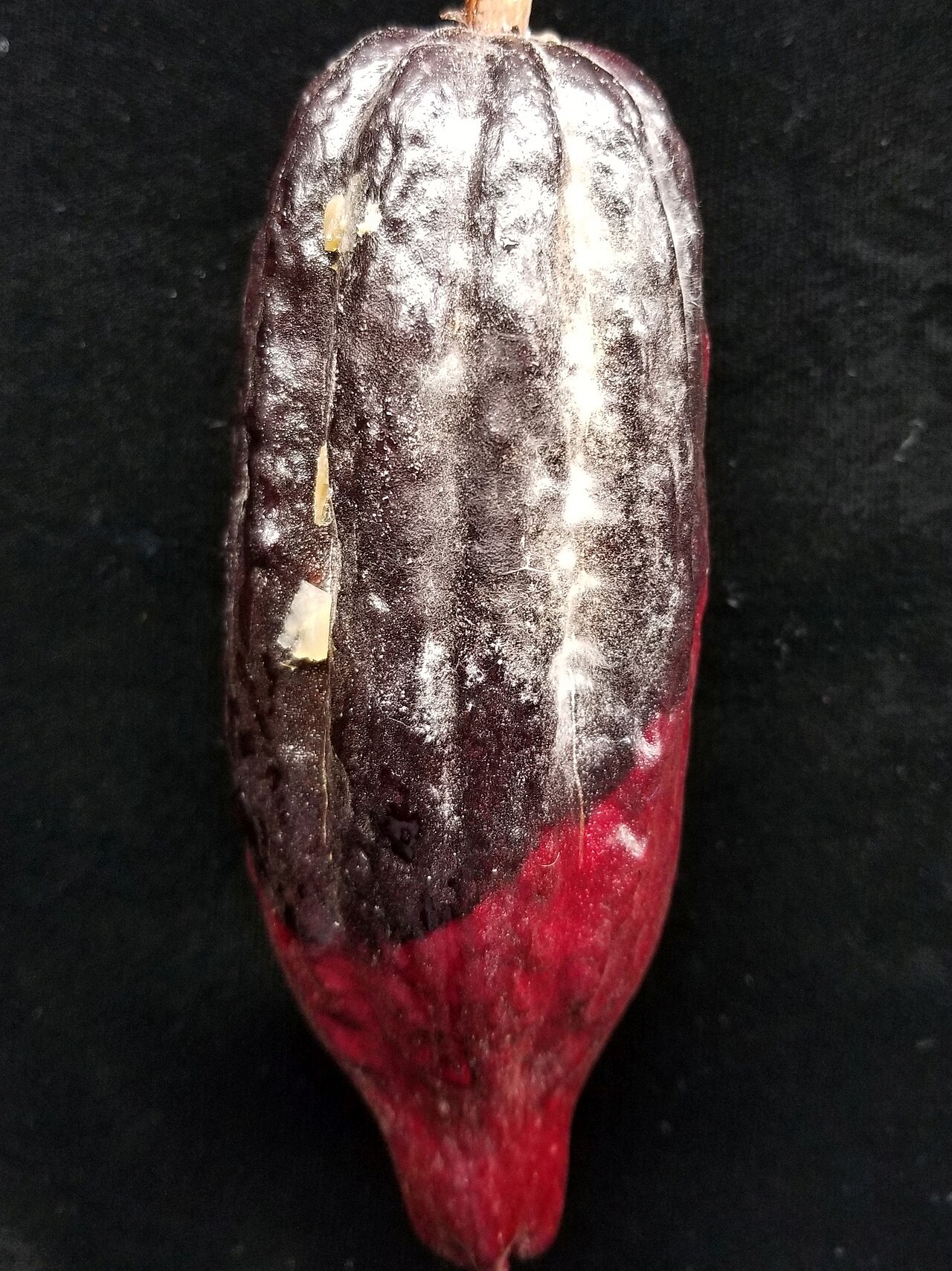
AgroNetica, a US subsidiary of the Israeli gene-editing company BetterSeeds, is preparing to commercialise cacao trees edited to resist black pod disease, as the El Nino threatens next season's harvest in West Africa, chief executive Ido Margalit told AgNavigator.
Black pod, caused by the Phytophthora mould, destroys 20% to 30% of the world's cacao, according to the company. In controlled disease assays by researchers at Penn State University's Department of Plant Science, AgroNetica's gene-edited cacao, which carries no foreign DNA, suffered 42% less damage after Phytophthora infection.
BetterSeeds, founded in 2017, developed a second-generation CRISPR technique that silences genes in a plant to bring out useful traits. Besides disease resistance, AgroNetica plans cacao traits that reduce the uptake of heavy metals and remove caffeine in certain varieties; another subsidiary works on hypoallergenic peanuts.
Margalit said West Africa grows 70% of the world's cacao and forecasts already point to a 30% to 40% fall in yield next season. The chocolate industry, he said, has not fully recovered from the shortfall of two years ago.
Four major chocolate companies are now interested, he said. At first they wanted proof that the technology worked and were unsure about European rules on genetically modified organisms. The company now has saplings, propagation material from which millions of trees can be grown, and Margalit said the EU voted about three months ago for rules similar to those in Canada, India, China and the United States: a crop edited without inserted genetic material is reviewed within weeks, needs no label and is treated as conventionally bred.
BetterSeeds and its subsidiaries have raised $24 million so far. Margalit said the next round aims for at least around $15 million, enough to reach first revenue, and he hopes income will fund the company by 2028. The company plans to take the technology to other crops and regions.
The report was written by Ryan Daily for AgNavigator.
Photo: Scot Nelson / Wikimedia Commons (CC0)
Source: AgNavigator

Comments
(0)