
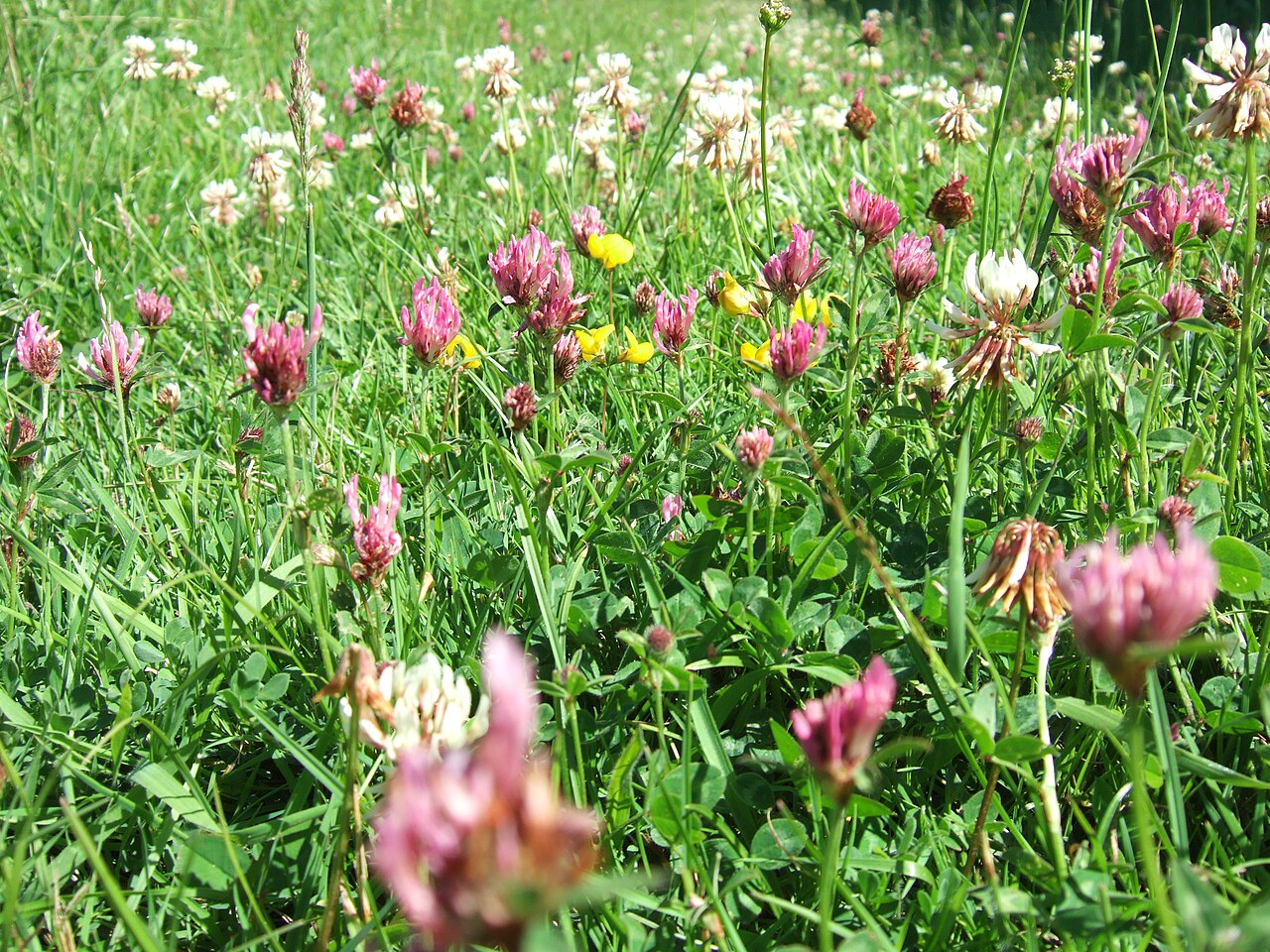
The Agri-Food and Biosciences Institute (AFBI) has begun a three-year study, Forage-S, on how mixes of grasses and alternative forages — white and red clover, chicory and plantain — perform on Northern Ireland farms compared with perennial ryegrass monocultures, Agriland reports.
The work covers eight sites, including upland and lowland farms in counties Fermanagh, Derry, Antrim and Down, AFBI's Hillsborough research farm, and the College of Agriculture, Food & Rural Enterprise's Greenmount and Glenwherry hill farm. It is run with CAFRE and AgriSearch, funded by the Department of Agriculture, Environment and Rural Affairs, and led by Dr David Patterson and Dr Aurélie Aubry.
The replicated trials will measure establishment, biomass yield, herbage quality and persistency, and how soil type, weather and management affect them. The data will be fed into AFBI's GrazeGro growth-prediction model to give "geographically explicit predictions" of alternative-forage output and quality, and the results will be presented to farmers.
Patterson said red clover can fix up to 200 kg of nitrogen a hectare a year from the air and produce up to 15 tonnes of dry matter a hectare over up to four silage cuts, with animal performance comparable to other swards and better soil structure. Its drawbacks are poor persistency, difficulty ensiling and grazing, and the need for a four-year break before red clover is sown in the same field again.
The report was written by Richard Halleron for Agriland.
Photo: Rowan Adams / Wikimedia Commons (CC BY-SA 4.0)
Source: Agriland
Comments
(0)