
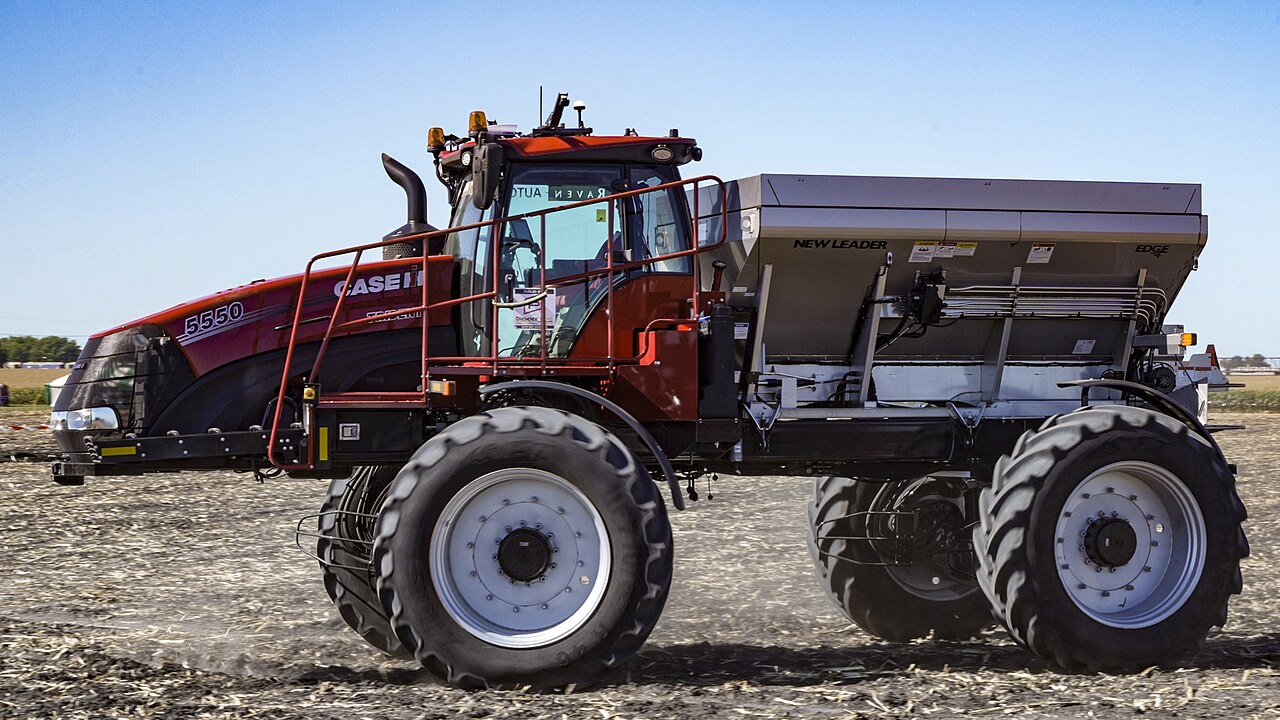
The Association of Equipment Manufacturers (AEM), the North American trade body for makers of farm and construction machinery, has released a whitepaper arguing that artificial intelligence is becoming a foundational part of agricultural equipment rather than an add-on.
The paper, titled AI in Agriculture Equipment: Supporting Productivity, Efficiency, and Decision-Making Through Technology, was developed by AEM's Ag Technology Leadership Group and describes how AI is being built directly into machines and the systems that run them. It is published on AEM's Insights page.
It sorts that integration into three levels. Assist-level AI supports the operator, who stays in control, through guidance systems, implement control and automated machine functions. Advise-level AI analyses large volumes of machine and operational data to offer recommendations and decision support. Act-level AI lets the machine carry out tasks with more autonomy, including targeted spray applications and autonomous field operations.
Beyond the definitions, the whitepaper looks at what is needed to use these capabilities safely. It points to the industry's work on standards, safety frameworks, interoperability and governance, and to uses it says are already paying off in the field: decision support for operators, predictive maintenance, data-driven continuous improvement, precision spraying and autonomous equipment operation.
"AI technology is proving to help farmers in their efforts to be productive and competitive, especially as operational challenges continue to intensify for the ag industry," said Austin Gellings, AEM's senior director of agricultural services, who oversees the group that wrote the paper. He added that, deployed responsibly and within appropriate frameworks, AI strengthens resilience at farm level.
Seth Zentner, precision farming and systems engineer at the AEM member company CLAAS, Inc. and chair of the Ag Technology Leadership Group, said AI-enabled equipment is expected to play a growing role as demand for food rises and farmers are pushed to do more with fewer resources, turning data into action and helping them respond to changing conditions in real time.
For growers and the dealers who sell and service their machines, the three-level framework is a practical way to judge what a given tractor, sprayer or implement actually does on its own and how much still depends on the operator.
Photo: USDA / Wikimedia Commons (Public domain)
Source: Precision Farming Dealer
Comments
(0)