
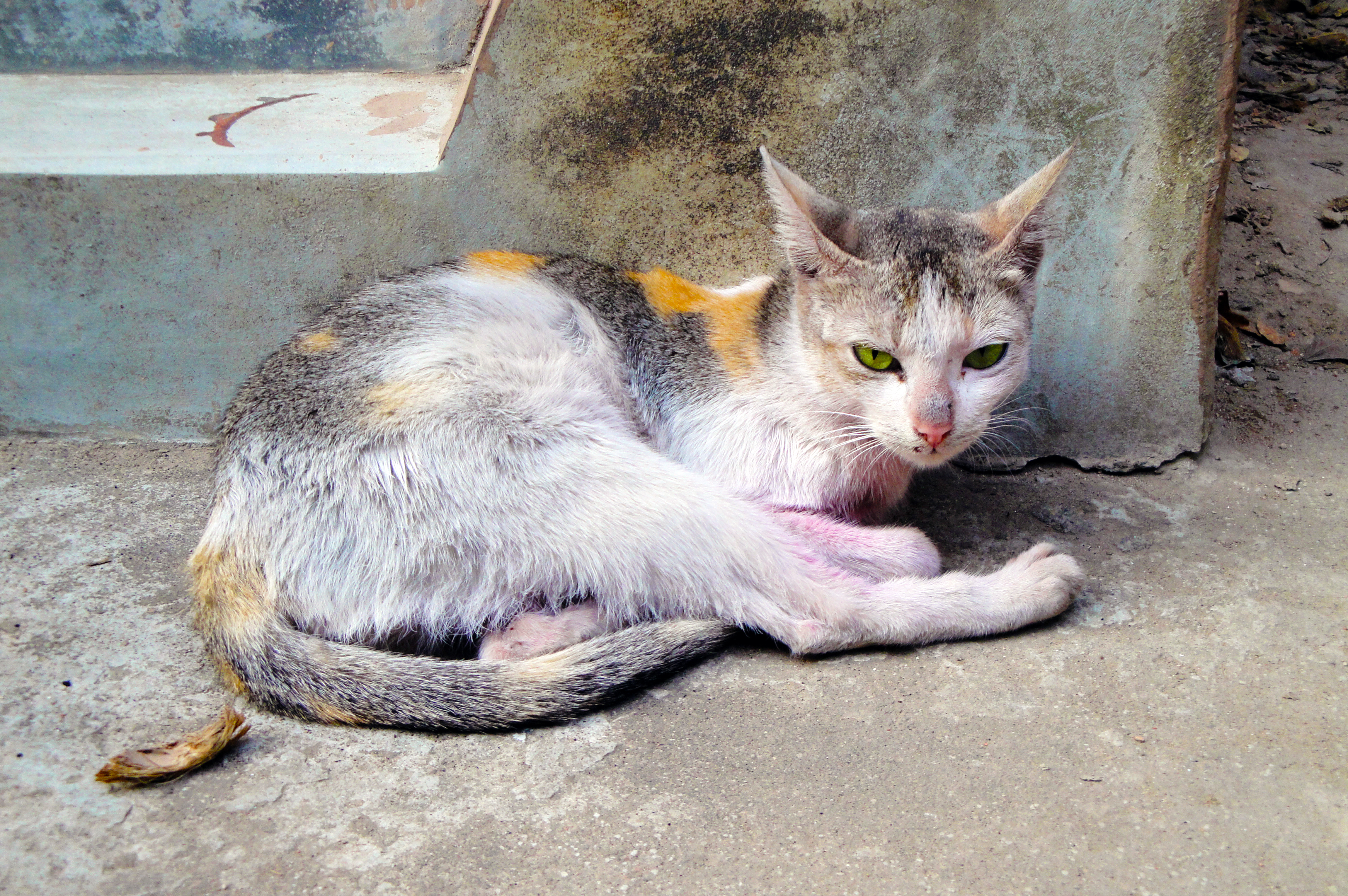
A member of the Bangladesh Animal Welfare Association filed a written complaint at Adamdighi police station in Bogura district on Wednesday, 5 November 2025, against a woman whom he accused of killing a cat by cutting its throat because the animal had eaten fish in her house. Jagonews24 and Prothom Alo reported the complaint the next morning, 6 November. The officer-in-charge of the police station said the cat's body had been recovered and taken to the station and that the matter was being investigated, and the upazila livestock officer said the body had been sent for a post-mortem.
The incident took place in the Dattabaria cluster village (guchchhagram) of Adamdighi upazila, according to the complaint. Both reports describe what happened as the complainant and the neighbours alleged it; neither carried a response from the accused woman, and no finding by the police or a court had been made when they were published.
What the complaint alleges
Emran Hossain, a member of the Bangladesh Animal Welfare Association, was the complainant. According to his written complaint as Jagonews24 reported it, a cat had entered the home of a 26-year-old woman, whom the paper named as Bulbuli, in the Dattabaria cluster village a few days earlier and had eaten fish. Prothom Alo said the fish the cat ate was cooked fish.
The complaint says that when the cat went into the house a second time, on Tuesday, 4 November, the woman caught it in anger and killed it by cutting its throat with a boti, the curved kitchen blade used in Bangladeshi homes. Jagonews24 reported that the complaint also alleges she cut open the animal's chest and then threw the body into a paddy field beside the house. The two reports differ on the time: Jagonews24 said the cat came back on Tuesday afternoon, while Prothom Alo said it was Tuesday night.
Both papers said the complaint was a written one, submitted at Adamdighi police station on Wednesday. Prothom Alo described it as lodged on behalf of the Bangladesh Animal Welfare Association after the matter became known locally.
The neighbours who found the cat
A neighbour, Shamsunnahar Mina, learned what had happened and brought the cat's body to her house, according to the complaint. She kept it in a cork-sheet box with ice to preserve it and informed the police. Prothom Alo reported that she recovered the body on Wednesday morning, and described her as the wife of Isahak Ali.
Her husband, Isahak, told Jagonews24 that the family had come to his in-laws' home in the village on a visit a month earlier and had brought six pet cats with them. The cat that was killed used to stay with those cats, he said. After it was killed on Tuesday, he said, he reported the matter to the Bangladesh Animal Welfare Association. Prothom Alo carried the same account from Shamsunnahar Mina herself: a month earlier she had gone to her father's home and brought six pet cats, and the cat that was killed used to live with them.
Jagonews24 reported that a video showing the dead cat lying where it had been left after it was killed spread on social media, and that many people who saw it expressed anger and disgust and demanded punishment.
What the police and the livestock office said
SM Mostafizur Rahman, officer-in-charge (OC) of Adamdighi police station, told Jagonews24 that the complaint had been received, that the cat's body had been recovered and taken to the police station, and that an investigation was under way. He told Prothom Alo that if the allegation was found to be true, legal action would be taken against the woman involved.
Benzir Ahmed, the Adamdighi upazila livestock officer, told Jagonews24 that the incident was very tragic, and both papers reported him as saying that the cat's body had been sent to the morgue for a post-mortem. A post-mortem matters in a case like this: in July 2025 the founder of an animal welfare foundation told The Daily Star's Bangla edition that, under the law, a dead animal has to be taken to a veterinarian, who carries out an autopsy and certifies that the death was unnatural, before a case can go forward.
Prothom Alo reported the livestock officer as saying that the law in force provides for two years' imprisonment, a fine of Tk 50,000 or both for cruelty to an animal or for helping in it. Jagonews24 gave the same figures and added that the law is rarely used and that few cases have been filed under it. The official text of the law, set out below, assigns those particular penalties to some offences and lighter ones to others.

What the Animal Welfare Act 2019 says
The law on cruelty to animals in force on the date was the Animal Welfare Act 2019 (Act No. 12 of 2019), dated 10 July 2019. It repealed the Cruelty to Animals Act 1920. Its preamble says it was made because animal welfare must be ensured by preventing cruelty to animals, showing kindness and keeping animals responsibly, and to raise social awareness for that purpose. The Act says its provisions prevail over anything to the contrary in any other law.
The Act defines an animal to include all mammals except humans, birds, reptiles, aquatic animals other than fish, and any other animal the government declares by gazette notification, so a domestic cat is covered. It defines an owner as the lawful owner of an animal, and a keeper as anyone who, with or without the owner's consent, voluntarily or on the authority's order, has an animal in their possession or care for a period. An ownerless animal is one with no owner or claimant, or whose owner or keeper cannot be found after reasonable inquiry. Section 4 makes every owner or keeper responsible for treating an animal with welfare and humanity and for refraining from cruelty without reasonable cause.
Section 6 lists acts that count as unnecessary cruelty. They include an act or omission that makes an animal ill; overworking an animal or beating it unnecessarily; denying it the food and water it needs; tying or confining it so that it cannot stand, sit or lie down naturally; beating or striking an animal with a sharp metal object to control it; releasing a sick animal into a locality, or releasing one there to cause its death; inciting animals to fight or using them as bait; and deliberately giving an animal a harmful substance. The government may add other acts by gazette notification. Committing such cruelty, or helping someone commit it, is an offence under section 6(3).
Section 6(4) also lists acts that are not treated as unnecessary cruelty. Among them are acts done in good faith to protect the animal itself or another person or animal from a threat to life; the painless, humane killing, by the government or a body it approves and following World Organisation for Animal Health standards, of an animal confirmed to have rabies or another incurable infectious disease; slaughter for food or religious sacrifice according to a person's own religious rites; work in recognised teaching or research institutions; and measures taken under the wildlife law.
Three other provisions deal with killing and harming animals. Section 7 says no ownerless animal may be killed or removed except for reasons the Act sets out, and that killing an ownerless animal is an offence. Section 10(1) makes it an offence to remove any sensitive tissue from an animal's body, cut off a limb or alter its physical structure with the aim of harming it, or to attempt or help in such an act; section 10(2) allows procedures such as dehorning, castration or tail docking only on a veterinary surgeon's written permission. Section 11(1) makes it an offence knowingly to feed an animal poisonous or harmful medicine or food, or to apply poison to its body, where this causes death, permanent disability or loss of normal function.
Penalties, and who can take a case to court
Section 16 sets two levels of penalty. A person who commits or helps to commit an offence under section 6(3) (unnecessary cruelty), section 7(2) (killing an ownerless animal), or several other provisions on transport, pet breeding, performing animals and obstructing inspections faces simple imprisonment of up to six months, a fine of up to Tk 10,000, or both. An offence under section 10(1) (mutilation) or section 11(1) (poisoning) carries simple imprisonment of up to two years, a fine of up to Tk 50,000, or both. Which of these provisions, if any, applied to the events in Adamdighi was a matter for the authority and the courts; the reports of 6 November recorded only that a complaint had been lodged and an investigation begun.
The Act gives the decisive role to the livestock service. Section 18 says that no court shall take up an offence under the Act for trial except on a written complaint by the authority, which section 2 defines as the Director General of the Department of Livestock Services or a veterinary surgeon of the department empowered by him. Section 19 makes all offences under the Act non-cognisable and bailable. Section 20 says the offences can be tried by a mobile court once they are included in the schedule of the Mobile Court Act 2009.
The authority also has powers to protect animals. Under section 14, if an animal appears to be in a critical condition, or someone reports that it is, the authority may act to relieve it, direct the owner or keeper to do so, or seek help from the police station, the fire service and the local authority to rescue it. Section 15 lets the authority seize an animal that is the victim of an offence under the Act and send it to a government veterinary hospital or the local authority for treatment and care.
A separate, older law also deals with harm to animals. The Penal Code 1860 treats killing, poisoning, maiming or rendering useless an animal as a form of mischief. Under section 428, mischief of this kind against an animal worth ten taka or more is punishable with imprisonment of either description for up to two years, a fine, or both. Section 429 sets imprisonment of up to five years, a fine, or both where the animal is an elephant, camel, horse, mule, buffalo, bull, cow or ox, whatever its value, or any other animal worth fifty taka or more.
How the law had worked in practice
The reports' remark that the 2019 law was seldom used echoed what lawyers and campaigners had said in the months before. On 30 July 2025 The Daily Star's Bangla edition examined the law after a dog was tied to a tree and beaten to death in Bakerganj, Barishal, that week. Four people were involved, according to the paper; a mobile court led by the upazila assistant commissioner (land) fined one of them, a 42-year-old labourer, Tk 5,000, and released the other three, who were minors, on a bond into their guardians' custody. No criminal case was filed.
The same report recalled two earlier cases. In February 2025 a man kicked a cat to death in a residential building in Mohammadpur, Dhaka, and a court sentenced him to six months in prison. In November 2024 at least ten dogs and cats were alleged to have been killed with poisoned food in the Japan Garden area of Mohammadpur, and, the paper said, the accused were punished after a case was filed. Prothom Alo had reported on 23 November 2024 that three ownerless dogs and a cat died there the night before; an animal welfare foundation called it a killing and lodged a complaint at Adabar police station, and the officer-in-charge said police had told the people concerned that poisoning an ownerless dog or cat was an offence and had asked the foundation to file a case in court.
A Supreme Court lawyer told The Daily Star that public awareness of the Animal Welfare Act was very low and that its enforcement was complicated. Because its offences are non-cognisable, she said, the police cannot arrest without a warrant or investigate without a court's permission; and although section 20 allows trial by mobile court, the Act had not yet been added to the mobile court law's schedule, while the old Cruelty to Animals Act had been. The founder of the Obhoyaronno-Bangladesh Animal Welfare Foundation told the paper that the law was not effective for punishment, that there was no separate unit or force to enforce it, that many cruelty cases were settled without trial, and that the cases then being brought over cruelty to animals were being punished under the Penal Code.
The domestic cat
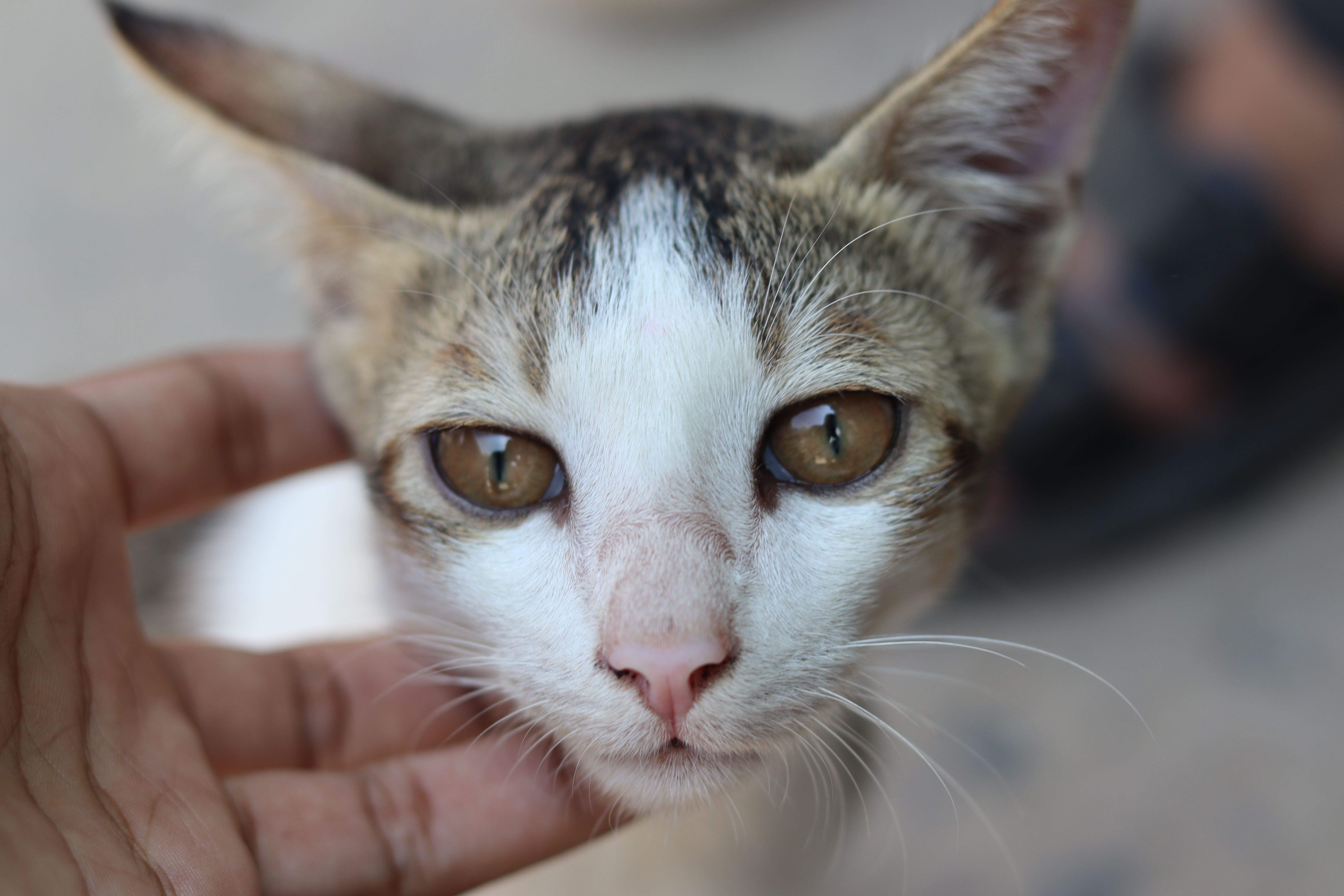
According to Banglapedia, cats belong to the family Felidae in the order Carnivora, a group of about 34 species of typically solitary, flesh-eating predators. Their teeth are built for stabbing and cutting and their claws for gripping prey; they feed on a variety of small to large vertebrates, mostly mammals and birds, and are good climbers. Cats walk on their toes, with well-haired pads that let them stalk silently, and their large forward-facing eyes give them good binocular vision. They see well in daylight and their eyes are highly adapted for night vision; they have acute hearing, with large mobile ears that detect high-frequency sounds, and long, stiff whiskers that are sensitive to touch.
Banglapedia says the domestic cat is a domesticated form of the African wildcat, which is still widely distributed over Africa and south-western Asia and interbreeds freely with domestic cats, and that from Egypt the domestic cat spread slowly into the rest of the world. A genetic study of 979 domestic cats and their wild relatives, published in Science in 2007, found that cats were domesticated in the Near East, probably at the time agricultural villages were developing in the Fertile Crescent, and that domestic cats descend from at least five founders from across that region, whose descendants were carried around the world by people.
Bangladesh also has eight wild cat species, Banglapedia notes, from the tiger to the jungle cat and the fishing cat, six of which face different kinds of threats The domestic cat kept in village homes is a different animal from these wild species.
Internationally, the World Organisation for Animal Health (WOAH), whose standards the 2019 Act cites, bases its work on the welfare of land animals on the 'Five Freedoms', developed in 1965 to describe the conditions animals should experience when under human control: freedom from hunger, malnutrition and thirst; from fear and distress; from heat stress or physical discomfort; from pain, injury and disease; and freedom to express normal patterns of behaviour. WOAH's Global Animal Welfare Strategy was presented in December 2016 and adopted by all its members in 2017.
Adamdighi and Bogura
Adamdighi is an upazila of Bogura district in Rajshahi division. According to Banglapedia, it covers 168.83 square kilometres and is bounded by Akkelpur and Dhupchanchia upazilas to the north, Raninagar upazila to the south, Kahaloo and Nandigram upazilas to the east and Naogaon Sadar upazila to the west. Its population in the 2011 census was 195,186. Adamdighi Thana was formed in 1821 and became an upazila on 14 September 1983. Santahar, a railway junction, lies within the upazila.
Banglapedia lists paddy, potato, wheat, mustard and vegetables as the upazila's main crops, and mango, jackfruit and papaya as its main fruits, with paddy and potato its main exports. It records 32 fish hatcheries, 75 dairies and 33 poultry farms, and 596 rice mills. The Nagar and Iramati rivers and Raktadaha beel are its notable water bodies. The paddy field where, according to the complaint, the cat's body was thrown is typical of the land around the upazila's villages.
Bogura district, of which Adamdighi was one of the original thanas when the district was established in 1821, covers 2,898.68 square kilometres, according to Banglapedia, with a population of 3,400,874 in the 2011 census. Its main rivers include the Karatoya, Jamuna, Nagar, Bangali and Ichamati.

The bodies involved
The complainant's organisation, the Bangladesh Animal Welfare Association, is one of several animal welfare groups working in Bangladesh; the earlier cases in Dhaka were taken up by others, such as the People for Animal Welfare Foundation in the Japan Garden case. Such groups report cases, lodge complaints and press for action, but under section 18 of the 2019 Act a court can take up an offence under that law only on the written complaint of the authority within the government's livestock service.
That service is the Department of Livestock Services (DLS). According to Banglapedia, the department provides veterinary coverage, development and extension services for livestock and poultry. Its work began in 1893 with the Civil Veterinary Department of the British government, when the Bengal Veterinary Institute and a veterinary hospital were also set up; after the partition of India it was reorganised as the Directorate of Animal Husbandry, East Pakistan, and in 1960 it was renamed the Directorate of Livestock Services. It is led by a Director General, the authority named in the Animal Welfare Act, and its head office is at Pasusampad Bhaban, Krishi Khamar Sarak, Farmgate, Dhaka. At upazila level the department is represented by officers such as the Adamdighi upazila livestock officer, who sent the cat's body for a post-mortem.
Photo: Moheen Reeyad / Wikimedia Commons (CC BY-SA 4.0)
Sources: Jagonews24 (6 November 2025), Prothom Alo (6 November 2025), The Daily Star Bangla (30 July 2025), Prothom Alo (23 November 2024), Animal Welfare Act 2019 and Penal Code 1860 (Laws of Bangladesh, Legislative and Parliamentary Affairs Division), Banglapedia (Adamdighi Upazila, Bogra District, Cat, Department of Livestock Services), Science (Driscoll et al., 2007), World Organisation for Animal Health


Comments
(0)