
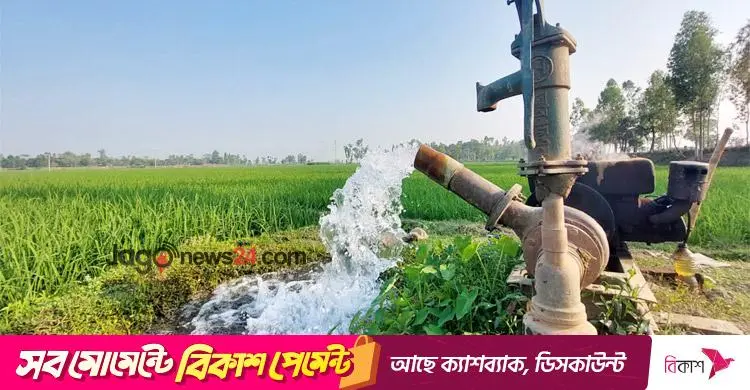
"Water is another name for life" is not just a saying; it is perhaps the greatest reality on Earth. From our bodies to nature, agriculture and industry, water lies at the root of everything. Yet the shortage of pure water grows more severe by the day. World Water Day is observed every year on 22 March to make people aware of the importance of tackling this crisis and what should be done.
How World Water Day began
The idea of observing World Water Day was first proposed at the United Nations Conference on Environment and Development held in Rio de Janeiro, Brazil, in 1992. Since 1993 the day has been observed worldwide at the UN's call. Each year, programmes on water conservation, safe water supply and management are held around the world under a particular theme.
The theme of World Water Day 2025 is "Glacier Preservation", which stresses tackling the effects of climate change and securing a future of safe water. The theme reminds us that faster and more effective action is needed to ensure safe water and counter the adverse effects of climate change.
A global shortage of pure water
About 2.2 billion people worldwide still lack access to safe water. A study by UNICEF and the World Health Organization found that as of 2023, about 26% of the world's population did not have access to pure water. Many countries in South Asia, Africa and the Middle East face severe shortages of drinking water. Water tables in cities are falling, and natural reservoirs are being ruined by industry and polluted waste. Climate change and unplanned urbanisation are making the crisis worse.
Bangladesh's water crisis: where is the problem?
Although Bangladesh is a riverine country, its drinking water crisis is becoming steadily more serious. Some 41 per cent of the population still lacks access to safe water. Among the causes:
- Arsenic contamination: groundwater in many rural areas is badly contaminated with arsenic. Under international standards, more than 10 micrograms of arsenic per litre is harmful to health, but in many areas the level exceeds 50 micrograms.
- River pollution: industrial waste, plastic and sewage problems have badly polluted the country's main rivers. The water of the Buriganga, Shitalakshya, Karnaphuli and Balu rivers has become almost unusable.
- Urban water shortage: water tables are falling fast in the capital Dhaka and other big cities. By WASA's reckoning, Dhaka's residents need about 240 crore litres of water a day, but often this cannot be supplied.
- Drought: in the north-west of the country, especially Rajshahi and Chapainawabganj, drought is making water shortages severe.
What we must do to ensure safe water
Tackling the water crisis needs action at every level, from the individual to the state.
At the individual level, we must stop wasting water unnecessarily, pay attention to storing and using rainwater, and treat used water so that it can be reused.
Government action should include enforcing strict laws to stop river pollution, increasing the use of research and technology for sustainable water management, and installing more deep tube wells to ensure safe water is readily available in rural areas.
Social awareness is also an important way to stop wasting water. Public awareness must be raised, and it is important to teach the right way to use water in educational institutions.
We must remember that because of climate change, urbanisation and population growth, the demand for safe water is rising while supply is falling. Our responsibility is to take care in conserving and managing water. Keeping in mind the truth of "a drop of water, a drop of life", we must all understand the value of water and take responsibility for building a healthy future.
On World Water Day, let us pledge to be responsible in conserving safe water, to stop wasting it and to build a safe and healthy environment for future generations.
Source: Jagonews24. First published in Bengali on The Agro News.


Comments
(0)