
Women working in agriculture must be recognised by the state as farmers, and their direct contribution must be valued seriously. At the same time, every government programme that supports farmers must have a quota for women farmers.
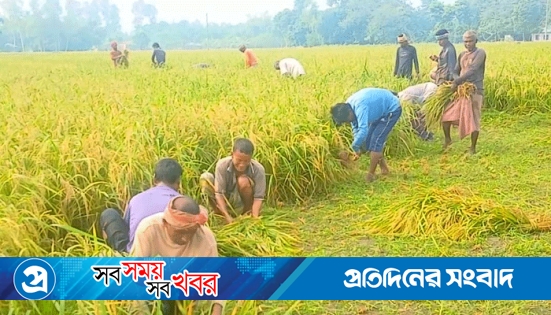
8 March is the day set by the United Nations to celebrate women's rights and dignity. In Bangladesh 88 per cent of rural women are directly or indirectly involved in farming, so in the Bangladeshi context the most relevant thing on the eve of Women's Day is to talk about rural women, their contribution and their struggle.
Women are, in fact, the main heroes of Bangladesh's agriculture and food security. Women's Day events and discussions must therefore not be confined to urban middle-class women but reach rural women, and we must honour the heroic women fighters of our food struggle. On International Women's Day we express solidarity with women of many occupations, including farmers, workers, fishers and domestic workers, against the continuing exploitation and oppression of capitalist and patriarchal systems in the fight for food.
The scale of women's work
The contribution of women farmers to Bangladesh's social and economic development needs no fresh debate. It does more than secure food: food security is an essential strand of human security and economic development, and many see it as one of the indicators of national security, raising a country's standing and saving foreign exchange. In Bangladesh 68.1 per cent of women are involved in farming. Besides all their household work, of the women engaged in farming 74 per cent raise livestock, 63 per cent preserve local seed varieties and 40 per cent grow vegetables and fruit, and they are also involved in threshing and post-threshing work and processing food grains.
According to the latest BBS survey (2015), women's participation in agriculture rose by 102 per cent over a decade while men's fell by 2 per cent. The number of women farm workers was 3.8 million in 2000 and rose to 10.5 million in 2010: about 7 million women joined farming in 10 years. Yet women's role in agriculture is seen only as "helpers", not as major contributors to production.
Women are at once food producers, keepers of seed and folk knowledge, and farm labourers, and they also process food and conserve biodiversity. A 2008 World Bank report said women's contribution in agriculture is 60 to 65 per cent greater than that of men.
In 1998 the UN Food and Agriculture Organisation chose "Women feed the world" as the World Food Day theme in recognition of women's role in farming. According to UN statistics, women make up 43 per cent of farmers in least developed and developing countries combined. "Right to Food and Nutrition Watch 2019" says 80 per cent of the world's crops come from family farming, and women take an active part in 17 of the 21 kinds of farm work, from preparing land to harvesting and before marketing.
Policy gaps
There have been some positive changes for women farmers in government farm incentives. The 2018 agriculture policy added a chapter titled "Women's empowerment", and women farmers have begun to receive "farmer cards", which is commendable. But while that chapter mentions women's contribution and access to services, it does not recognise women as "farmers". Women farmers are also overlooked in the long lists of marginal farmers who receive government inputs, and where their names appear it often goes no further than a name on a list or a card. Government procurement does not prioritise produce from women farmers, so they are also neglected locally and nationally in marketing what they grow.
In recent years men's involvement in farming has been falling and women's is rising fast in their absence. Although women's participation in agriculture has grown over the past seven years, land ownership remains in men's hands. A study by economist Dr Abul Barkat found that rural women own only 2 to 4 per cent of land, while the remaining 96 per cent is privately owned in men's names. Women's lack of assets and the discrimination they face are clear even in state policy: clause 11 of the Women Development Policy 2011 says two-thirds of the 40 per cent of people living below the poverty line are women. For this large poor, marginal and landless population, khas land is the only way to gain access to land. Bangladesh's khas land management and distribution policy provides for joint ownership by husband and wife, but in many respects it discriminates against women. These policy frameworks obstruct women's full enjoyment of land rights and food security as a whole. Without land rights women are shut out of financial services and other development projects. In Tanzania, where women have land ownership rights, they earn 3.8 times more; in Honduras and Nicaragua in Latin America, equal land rights mean women contribute more to household income than men.
The UN Food and Agriculture Organisation estimates that if women had the same productive resources as men, farm output in developing countries would rise by a further 4 per cent, cutting the number of hungry people by 100 to 150 million.
Rural women are the main architects of rural food management in Bangladesh. Because of its geography the country suffers floods and cyclones every year, and it is mainly women who arrange food for times of crisis. In the hills, when rats attack jhum fields, when harvests fail or when "Indigenous" communities face food shortages rooted in their culture, it is the women of the family who keep food on the table. Bengali women once used and grew more than 150 plants as leafy greens. But so-called commercial and modern agriculture has denied this vast practical knowledge, and a state system dependent on market-bought food and medicine has put people's food security under serious threat.
Credit is now claimed for bringing technology to farming, yet no woman-friendly technology has reached women farmers, who must depend on men's wishes and cooperation. Very poor women are included in bank accounts for farm loans, but how much credit or subsidy women farmers actually receive could itself be a subject of investigation. One main reason they do not receive enough is that the Department of Agricultural Extension has no specific "database" of women farmers as it does for men, even though Article 14 of the CEDAW convention declares equal rights for women and men in farm credit, marketing, technology, land reform and land resettlement.
Because of neoliberal market economics, even a very poor woman selling the milk she produces must now compete on grossly unequal terms with large farms in the developed world and multinational companies. With women's market access in mind, the government has set up separate corners for women in 60 growers' markets and 15 wholesale markets. How useful these corners are is questionable, because the market system as a whole is not woman-friendly, and women traders, especially small women entrepreneurs, cannot get into these markets.
Violence against women
In this context, commercial farming and food production are hurting most marginal farming people, both women and men; structural violence and the material effects of politics are growing harsher, especially in the lives of women farmers; and the crisis is deepening along lines of race, class and community. At the same time:
- although women are the main actors in farm work, the state does not recognise them as "farmers";
- culture and the legal system are keeping women's access to land from expanding;
- although women take an active part in coastal and distant fishing, they are not recognised as "fishers";
- the global commercial food system has come to depend on women's daily unpaid care and household work.
Alongside global rights organisations, we regard this as "violence against women".
We strongly protest all national, transnational and multinational practices that feed the insecurity of workers, the stripping of their rights and the crushing of protest hidden behind the arbitrary systems of business groups. Violence against and exploitation of women know no country, time or person. Women's mass mobilisation, solidarity and struggle worldwide affirm the importance of the demand to end all violence and oppression against women. We condemn the patriarchal system that, instead of securing women's rights, denies justice and compensation and frees exploiters from accountability.
We strongly demand implementation of the UN declaration on the rights of peasants, to recognise women farmers' vital role in producing healthy food, and as guardians of the commons, on the road to food sovereignty through land rights, the right to fair prices for crops, production free of toxic agrochemicals and the promotion of agroecology.
We demand that women working in agriculture be recognised by the state as farmers, that their direct contribution be valued seriously, and that the agriculture policy and other policies be amended accordingly; that women farmers have equal rights in all state policies, incentives, training and credit programmes; that enough credit be made available to women farmers under farm and rural credit programmes; and that every government programme for farmers include a quota for women farmers, stated clearly in the national agriculture policy.
Source: Dhaka Tribune. First published in Bengali on The Agro News.
Comments
(0)