
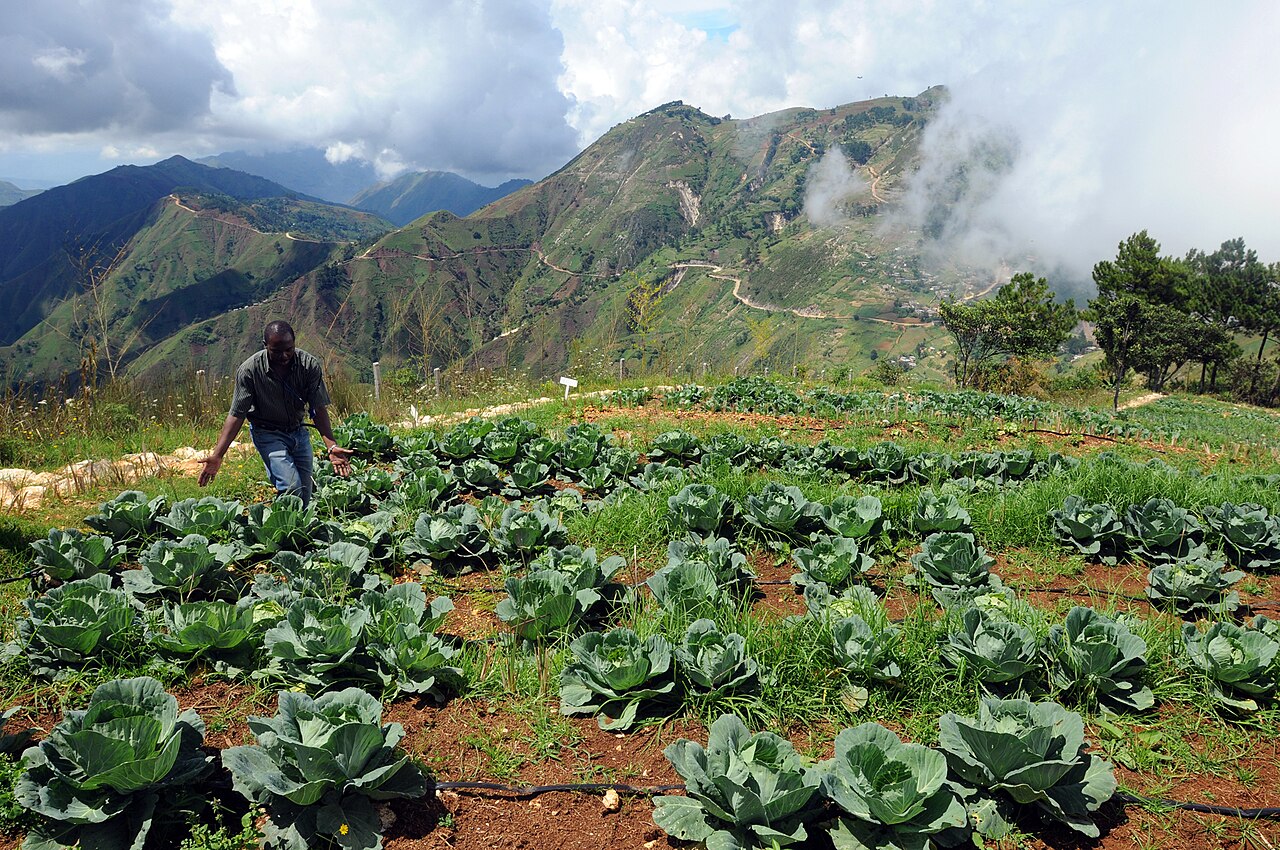
Helping about 240 million smallholder farming families in the Global South adopt regenerative agriculture and agroforestry could meet the extra food demand from population growth to 2050 while restoring land, development expert Hugh Locke argues in a new book, Whole Earth Farming: Smallholders and the Great Regenerative Transformation.
The book estimates that some 475 million smallholder farms, usually under two hectares, already produce about 30 percent of the world's food but lack access to training, finance, markets and inputs. "The world's smallholder farmers are too often treated as beneficiaries of development assistance when they should be recognized as architects of the next agricultural transformation," said Locke, co-founder of the Smallholder Farmers Alliance in Haiti.
The alliance, set up with Haitian agronomist Timote Georges in 2010, has about 10,000 members. Locke reports average yield gains of about 40 percent and household income rises of 50 to 100 percent among farmers receiving basic support, and a "tree currency" system in which members plant about one million trees a year in exchange for training, seed and services.
Locke argues regenerative practices should be judged by measured outcomes for soil, biodiversity, water, food production and livelihoods, pointing to the Regen10 Outcomes Framework, and estimates that a shift on 480 million hectares could remove 0.48 to 0.72 gigatons of carbon dioxide a year through soil carbon.
Photo: Kendra Helmer, USAID / Wikimedia Commons (Public domain)
Source: Seed World Europe
Comments
(0)