
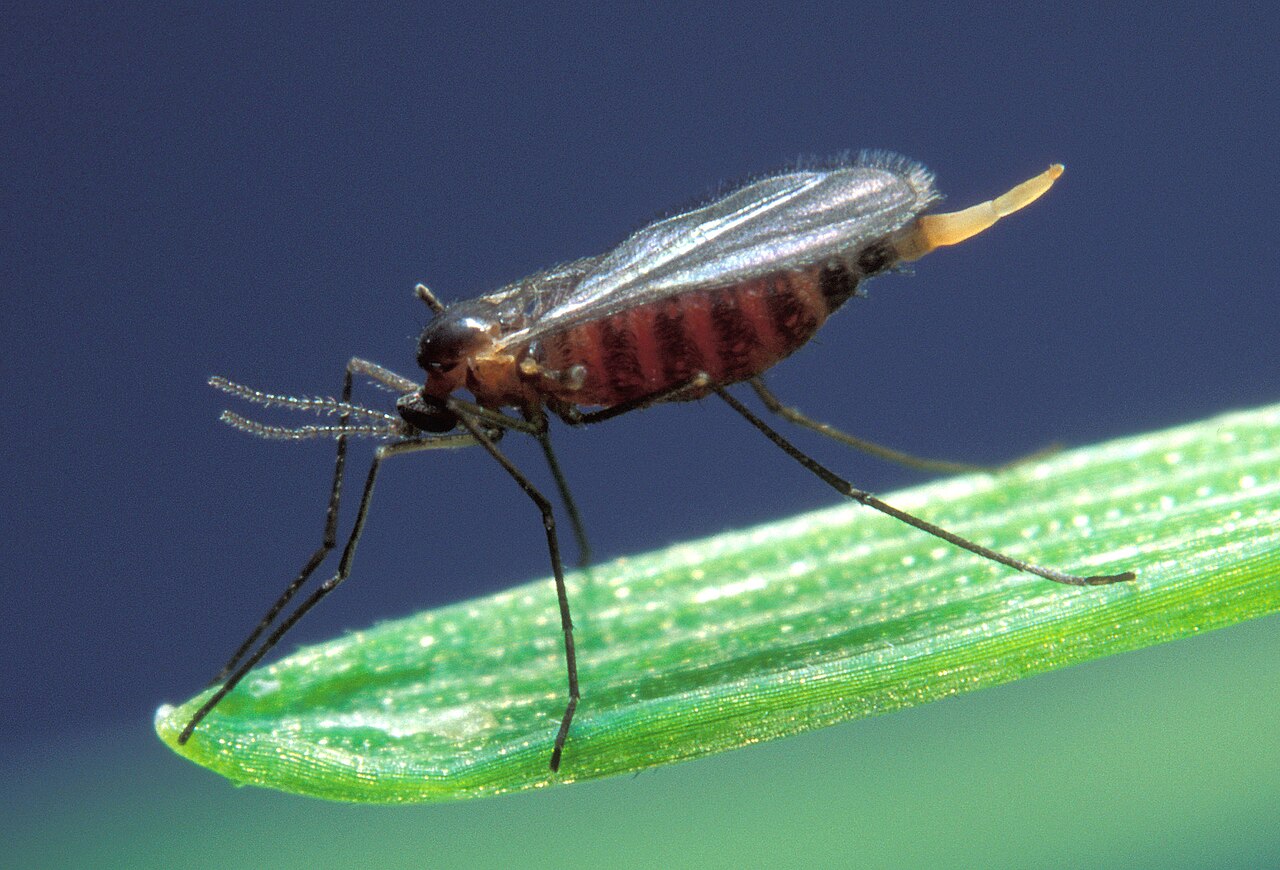
Researchers at the USDA Agricultural Research Service (ARS), Purdue University and Kansas State University have cloned the first Hessian fly resistance gene in wheat, a result published in the journal Science Advances.
The Hessian fly has troubled American wheat growers since it reached the United States during the Revolutionary War. It causes crop losses worth hundreds of millions of dollars a year across the country, and plant scientists have tried for more than half a century to pin down how wheat resists it.
The gene, named H13, works like a lock and key. When a Hessian fly larva starts to feed, it secretes a protein called vH13 to get past the plant's defences. The H13 gene makes a resistance protein that recognises vH13; once the two proteins meet, the plant sets off a defence response that kills the larva before it can stunt the crop.
"Our discovery provides the first definitive molecular validation of the gene-for-gene model in the wheat-Hessian fly system," said Subhashree Subramanyam, a research molecular biologist at USDA-ARS and adjunct associate professor of entomology at Purdue, who led the study with Bikram Gill of Kansas State. She said heat waves and changing temperatures can weaken wheat's own defences, and knowing the exact genetic mechanism lets breeders keep ahead of new fly strains.
The work rests on decades of research. In the 1940s and 1950s Hitoshi Kihara in Japan and Ernie Sears in the United States studied the wild ancestors of bread wheat, collecting wild Iranian goatgrass to trace how resistance traits arose. In 2014 Purdue and Kansas State researchers cloned the insect's matching gene and mapped the Hessian fly genome. Steve Scofield, a supervisory research geneticist at USDA-ARS, called genetic resistance the most promising way to fight the pest.
With global wheat production near 800 million metric tons, the researchers say durable field resistance matters. Through the federally funded Wheat Resiliency Initiative, backed by the National Association of Wheat Growers and the National Wheat Improvement Committee, scientists are using such gene discoveries to breed tougher wheat. Knowing the exact genetic target should let breeders bring seed with lasting insect resistance to market faster, protecting yields while cutting spending on chemical control.
The report on Michigan Ag Today was written by Eric Pfeiffer.
Photo: Scott Bauer, USDA / Wikimedia Commons (public domain)
Source: Michigan Ag Today


Comments
(0)