
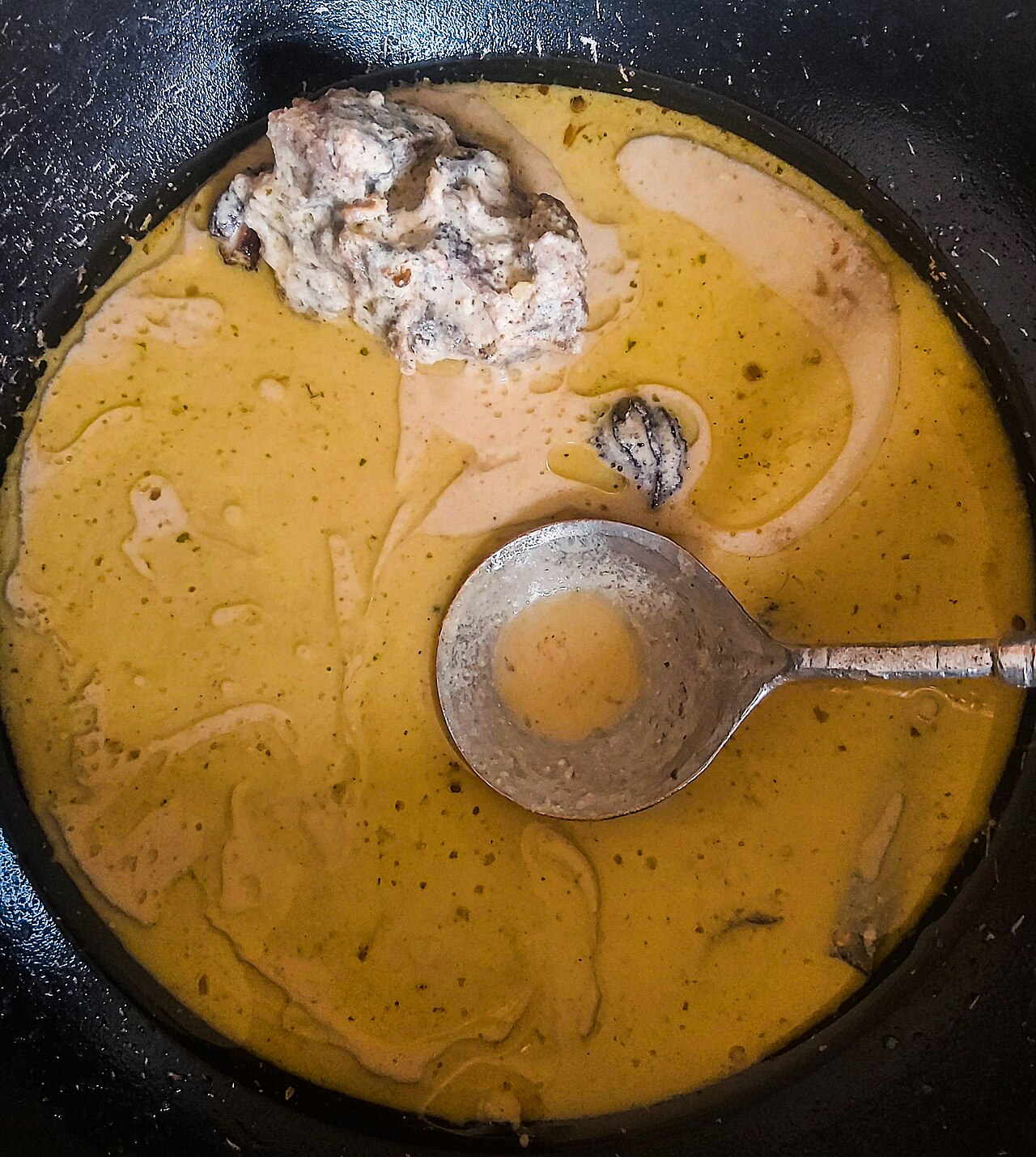
When autumn comes to the Kashmir valley, cooks are busy with the wedding season, preparing wazwan, the centuries-old royal mutton feast without which no wedding meal there is complete.
The feast came to Kashmir from Central Asia in the 14th century, when rulers who brought carpet and shawl weavers to the valley also brought skilled royal cooks, the waza. It has been part of Kashmiri folk culture and hospitality ever since.
Ghulam Nabi Baba, 74, of the Wazapora quarter of Srinagar's old city, has cooked at weddings for six decades. In his forefathers' time wazwan had just seven mutton dishes, he said; over the centuries new ones were added and it has grown to about 20.
The number of kilograms of meat cooked or dishes served often signals the host family's social standing. Forty years ago, he recalled, he cooked 4,500 kg of mutton on his own for a wealthy family's wedding in the village of Delina in north Kashmir. An ordinary wedding uses about 200 kg.
The basic technique has not changed in centuries. The meat is pounded smooth and soft with heavy wooden mallets on large wooden blocks, then rubbed with spices and cooked for hours over a slow wood fire.
Photo: Aadilrbhat / Wikimedia Commons (CC BY-SA 4.0)
Source: Ekattor TV

Comments
(0)