

Long-standing waterlogging has again kept aman rice off a wide stretch of Satkhira's farmland this season. About 12,685 hectares across five upazilas are under water, and 25,000 to 30,000 farmers could not plant.
According to the district office of the Department of Agricultural Extension, permanently waterlogged land covers 3,730 hectares in Sadar, 1,360 in Kalaroa, 7,065 in Tala, 450 in Assasuni and 80 in Shyamnagar.
The Shakdaha beel in Tala is the worst hit. Farmers Sohrab Hossain and Gobinda Das say they have not been able to grow aman for 8 to 10 years on land that once yielded plenty. Now only boro is possible each year, and flooded land has also shrunk the grazing for cattle.
Iqbal Ahmed, acting deputy director of the district extension office, says standing water prevents timely transplanting, so farmers lose the crop and face uncertainty over money spent on seed, fertiliser, labour and land preparation. Re-excavation of several canals last year, however, raised this season's aman area by about 450 hectares.
Ashek Elahi, a central leader of the Krishak Andolon Committee, calls for re-digging rivers and canals and opening government canals in the beels to ordinary farmers, alleging that canals held by influential people block drainage. Dr Shimul Mondal, chief scientific officer at the Bangladesh Agricultural Research Institute's Satkhira office, says a scientific study of local water flow and drainage is needed, along with varieties and cropping methods suited to waterlogged land.
Experts warn that unless drainage is cleared quickly, more of Satkhira's farmland could go uncultivated. Agricare24 published the report crediting Shomoyer Alo.
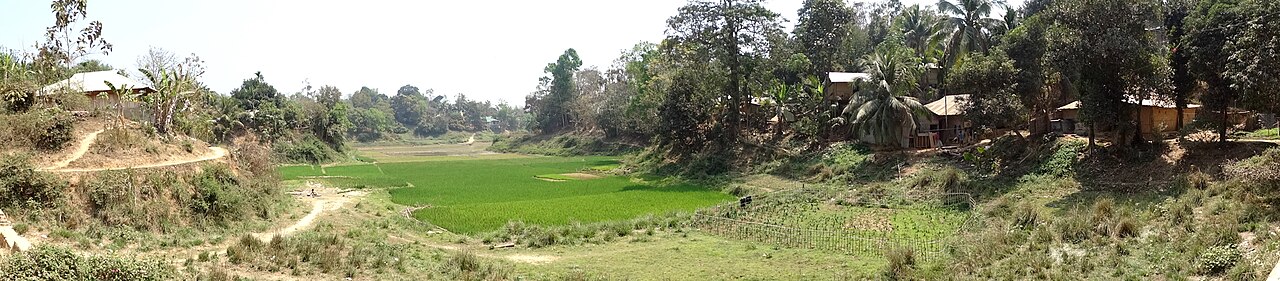
Photo: a waterlogged paddy field in Bangladesh, Muhammad Amdad Hossain / Wikimedia Commons (CC BY-SA 4.0)
Source: Agricare24


Comments
(0)