
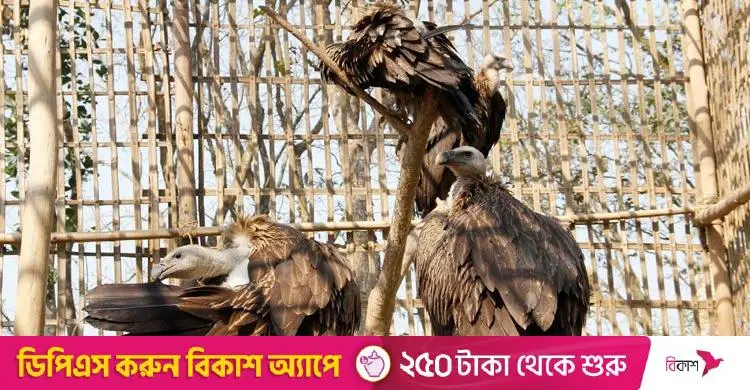
Every creature has its own important role in keeping nature in balance, and the vulture is an essential name on that list. Many people look on vultures with dislike, but in reality the bird makes a unique contribution to keeping the environment clean. By eating the stale, rotting, foul-smelling carcasses of dead animals, it cleans the environment and keeps people and other animals free of disease. That is why the vulture is called "nature's cleaner". But vulture numbers are now falling at an alarming rate, which has become a serious threat to the environment and public health.
There are 18 vulture species in the world, six of which are seen in Bangladesh: four resident and two migratory. Wildlife experts regard the "Bangla shokun" (white-rumped vulture) as one of the most important. Its scientific name is Gyps bengalensis. It is 90 centimetres long and weighs 4.3 kg, with dirty blackish-brown feathers. It breeds from September to March. The female lays a single white egg, which hatches in 40-45 days. Vultures have no feathers on the throat, neck or head. They soar on broad wings and usually nest out of sight in large trees such as banyans.
Vultures have very sharp eyesight. In flight they can clearly see every movement below, spot the location of a dead animal and quickly descend. By eating dead and decaying animals they keep the environment clean. They also help reduce the risk of at least 40 kinds of infectious disease, such as anthrax and tuberculosis, keeping people and other animals and birds healthy.
Vultures were once seen almost everywhere in the country, but for various reasons the bird is now heading for extinction. Today some vultures are found only in Moulvibazar, in the Kalenga forest of Habiganj and in the Sundarbans area. In 2014 the government declared two regions of the country safe zones for vultures: the first covering parts of Sylhet, Dhaka and Chattogram divisions, and the second parts of Khulna, Barishal and Dhaka divisions.
How vultures are disappearing
One of the main causes of the vultures' decline has been identified as the use of diclofenac and ketoprofen, drugs used for cattle. The effect of these two drugs remains in the bodies of dead animals, so the birds die after eating the meat. Diclofenac was banned in the country in 2010, but there are allegations that it is still sold. Experts believe the indiscriminate use of diclofenac has pushed vultures to the brink of extinction. The drug was banned long ago in India, Pakistan and Nepal.
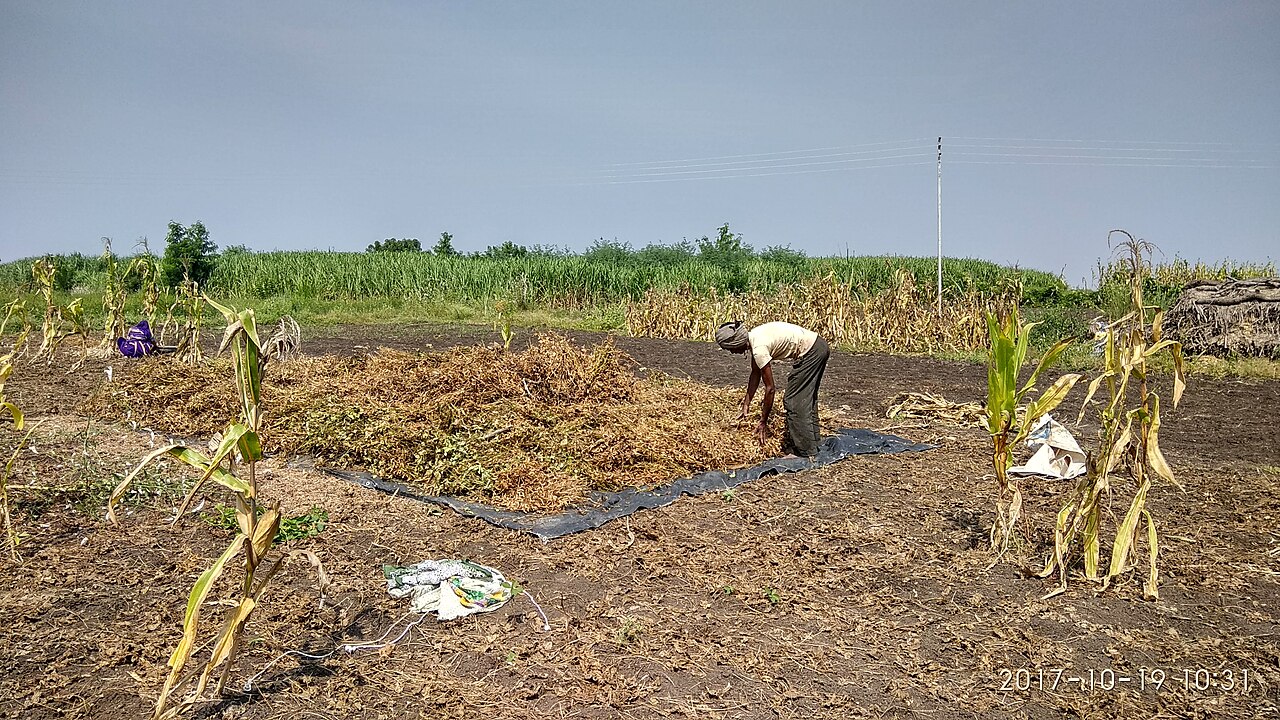
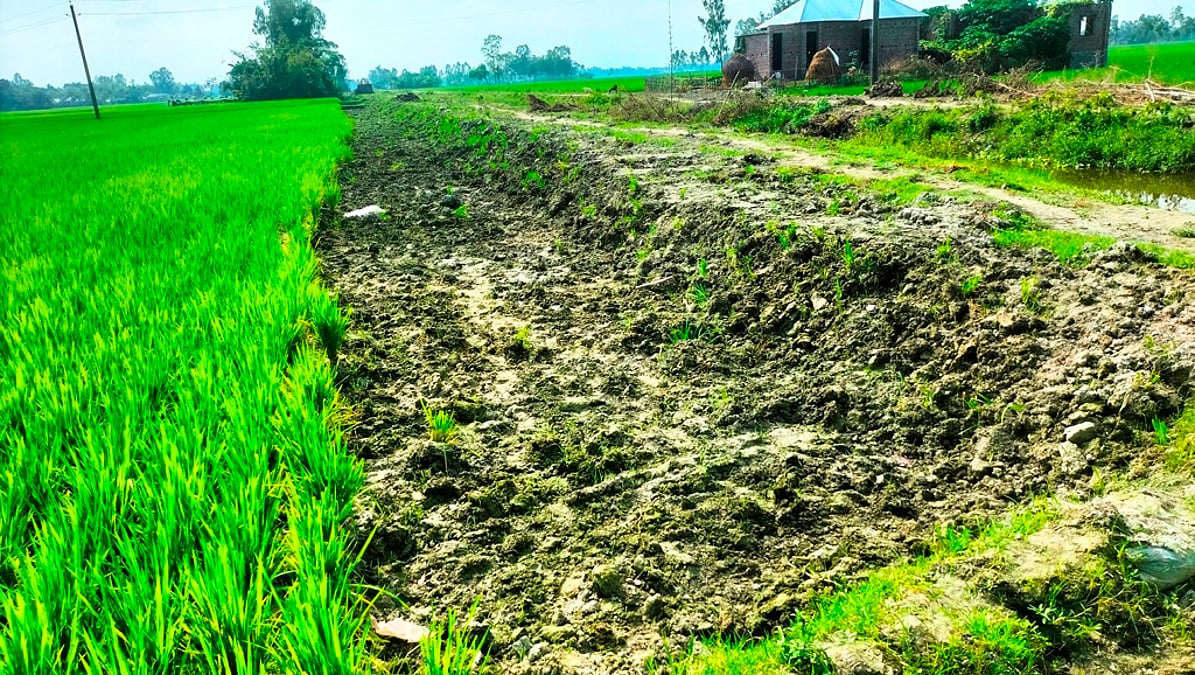
Vultures are also vanishing because of excessive pesticide use in farming, poisoned bait laid to kill rats and insects, collisions with the blades of wind turbines, and the felling of tall trees, which has sharply reduced their breeding sites. A vulture lays one egg a year, and only 40 per cent of eggs hatch successfully; sometimes they do not hatch at all. Their breeding rate is therefore very slow, which is itself a threat to the spread of the species.
What an expert says
Dr Animesh Chandra Roy, a professor in the Faculty of Veterinary, Animal and Biomedical Sciences at Sylhet Agricultural University, spoke to Jagonews about the vultures' decline and how to save them. "One of the main causes of vulture extinction is the veterinary drug diclofenac. Used to treat cattle, the drug remains in the animal's body and enters the vulture when it eats the meat of a dead animal. This causes the vulture's kidneys to fail and it dies quickly. Besides this, deforestation, the felling of big trees in rural areas, food shortages, entanglement in power lines and the fact that the bird looks black and frightening, which leads many people to kill it, are also to blame."
He said: "Thanks to better treatment, cattle do not die as they used to, and when they do die they are buried rather than left in the open field. This creates a food shortage for vultures. For these reasons vultures cannot breed, and this useful bird is moving closer to extinction day by day."
Stressing the vulture's importance, he said: "The vulture is not just a bird; it is extremely important for the environment. We only understand its benefits when, in its absence, various diseases spread through air pollution. So now is the time to become aware. To protect vultures we must ensure food, safe habitat and the right environment for breeding. At the same time, the use of harmful drugs in treating cattle must be strictly controlled."
The professor also advised: "Campaigns, posters and leaflets should be used to make the public and students aware of the importance of vultures. Without proper publicity, this bird so useful to the environment will not be found in future, and our environment and public health will come under further threat."
Source: Jagonews24. First published in Bengali on The Agro News.
Comments
(0)