
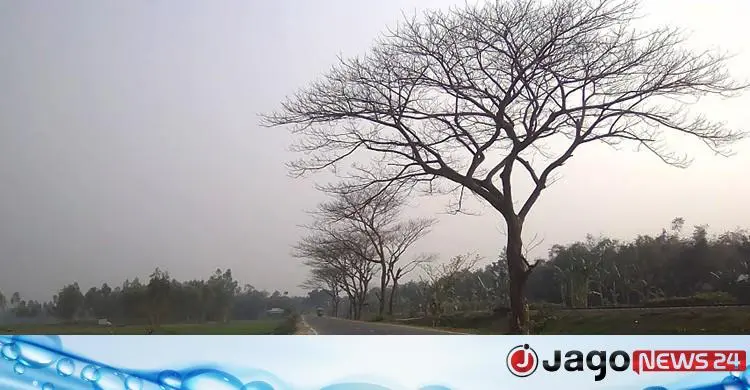
Villages were once full of ancient, giant trees. They were not just trees but an inseparable part of rural life, silent witnesses of nature whose branches spread in every direction and whose shade covered a wide area. On scorching summer afternoons, when the sun seemed to burn the earth, farmers and villagers of all ages took refuge in their cool shade to rest tired bodies. It was the favourite spot: some sat and chatted, some gathered for adda, and children filled the place with laughter and play. With changing times, that scene is fast disappearing.
A village once meant a green world wrapped in the shade of great trees. At village entrances, road junctions, school grounds, Eidgahs, pond banks and in the middle of wide crop fields stood mango, jam, jackfruit, banyan, pakur, shimul and many other trees, many of them more than 50 years old. Their shade was shelter, their branches part of play, and their silent presence a kind of symbol of security.
Shade at the heart of village life
Walking along village roads, the shade of trees gave a natural break from the sun. An old banyan by the road was a kind of milestone on the way to a distant village, where tired travellers stopped to rest. Farmers wiped their brows in the shade between spells of work and found some relief in the cool breeze.
School grounds had big trees too. At break time students ran out of classrooms to them: some ran, some played hide-and-seek, some climbed to look at distant fields, and some leaned against the trunk and dreamed. On hot summer afternoons these trees were the only refuge, and when classrooms became too hot, teachers sometimes taught in their shade.
The big old trees at Eidgahs and open fields were social meeting places. At Eid people said their prayers comfortably in their shade; at other times farmers rested there between work. Children, teenagers, young people and elders alike used the space under the trees as a meeting place, and many tied swings to the branches, especially on festival days.
In the heat of summer, village elders sat in the shade chatting about all sorts of things, and village arbitration (salish) was held under the trees. Children played games, and trees by the ponds were especially attractive to teenagers, who climbed into the branches to talk and then jumped into the water, a common sight on hot days.
Small shops stood under the big trees at village junctions, where people sat on benches talking politics, telling stories and discussing life. In many areas temporary market stalls were set up beneath big trees, with the shade as their roof.
Cut down and not replaced
Day by day, however, these large shade trees are dwindling. Countless old and big trees have been cut to build houses, widen roads and put up structures. Cyclones, nor'westers (kalbaishakhi), lightning and other disasters have also damaged or uprooted many trees, but the greatest damage has been done by people.
Sadly, efforts to plant new large shade trees are very limited compared with the rate at which big trees are cut or lost. The government, educational institutions and organisations run tree planting programmes on roads and open spaces, but in many cases these trees do not give enough shade. Some only grow tall, without spreading branches or dense shade, so even with rows of trees along the road, pedestrians do not get the relief they need on hot days. These trees have not been able to replace old banyan, pakur, rain tree or other large trees.
As a result, there are far fewer shady trees for pedestrians to rest under in the heat. Walking along a village road on a hot day, one no longer finds the cool shade of old; roads heat up in the open sun and walking becomes hard. The absence of trees that once gave comfort, coolness and peace is now clearly felt in rural life.
Lifestyles have changed too. People used to spend more time outdoors; now many spend more time indoors with mobile phones and technology-based entertainment. Where people once gathered under a tree at the village junction, there are now shops or cement structures. Children's play spaces have shrunk, and a childhood of climbing trees is largely a lost story.
Still, not everything is gone. Some villages still have old, big trees where people sit, and some schools and pond banks still have them, where children play. Planned tree planting is needed to reduce heat and ensure people's comfort. It is not enough just to plant trees: they must be long-lived, shade-giving and suited to the local environment.
Old and large trees did not only beautify the environment; they were deeply bound up with the social and cultural life of villagers, playing an important role in rest, recreation, gatherings and relationships. These shady village trees were an inseparable part of people's emotions, memories and heritage.
Source: Jagonews24. First published in Bengali on The Agro News.
Comments
(0)