
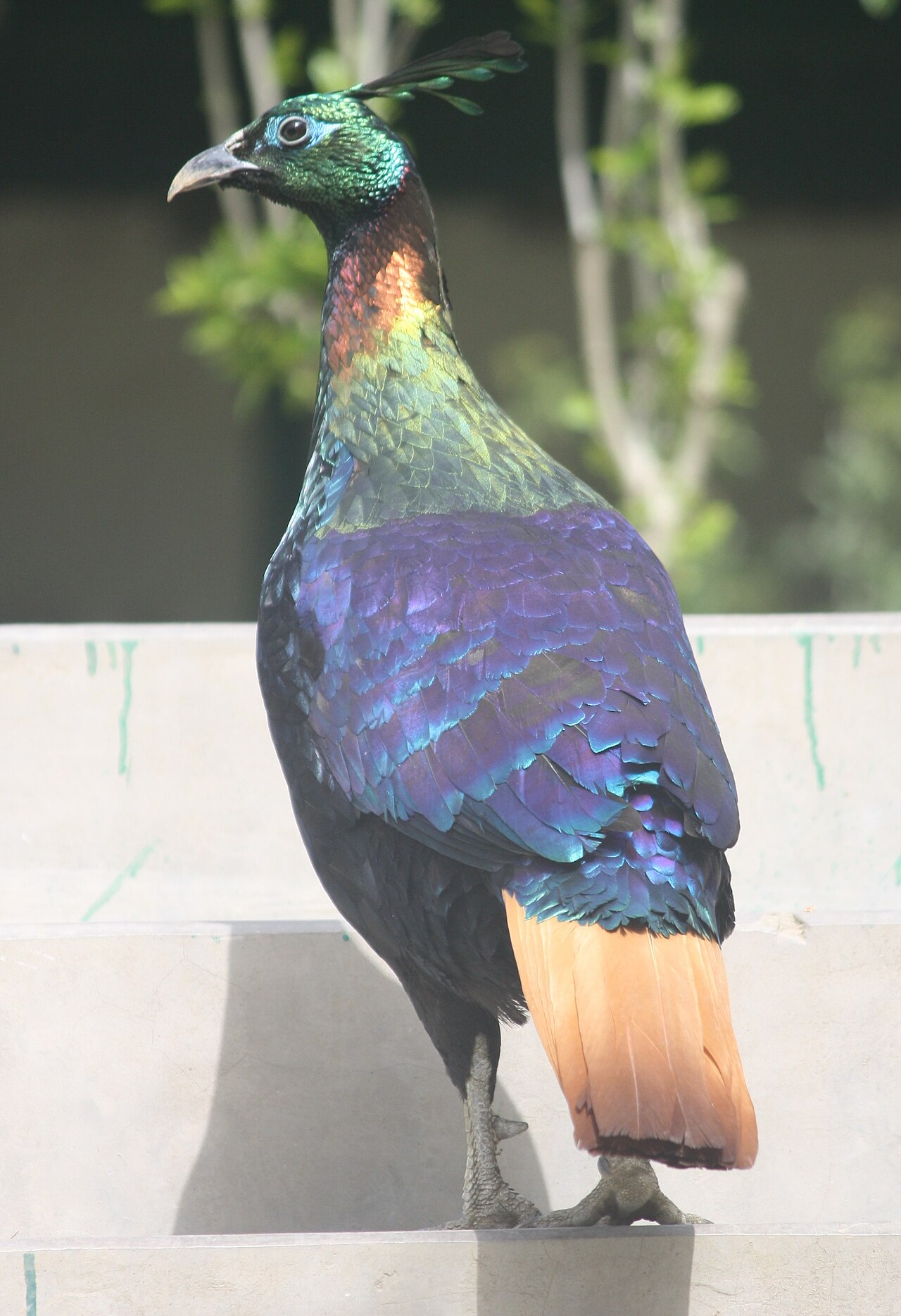
Under pressure from roads and buildings, tourism and rising noise, the Himalayan monal, one of the region's most striking birds, is shifting its habitat, and it is changing the way it calls so that it can be heard above the din. Two separate studies by Indian researchers, carried out over five years, found both.
The male monal, with green, blue and copper plumage, is the state bird of Uttarakhand in India and the national bird of Nepal. Dr Rajiv Lochan, one of the lead researchers, said the bird's range is fairly small and it moves seasonally between lower slopes and high alpine zones, which makes it an important indicator of the health of north-western Himalayan ecosystems.
The first study found that as people spread into the monal's natural habitat above the tree line, the birds are being forced higher. A model the researchers built of how climate change could shift suitable habitat in Uttarakhand and Himachal Pradesh shows melting snow and vegetation moving uphill gradually making higher ground suitable, while the birds lose their usual lower habitat to people. They fear that birds stuck in small, isolated patches will breed less and face a higher long-term risk of dying out.
The second study, led by Rajiv Lochan, Dinesh Kumar Sharma and Anand Kumar, was done in two valleys of Uttarakhand's Kedarnath Musk Deer Sanctuary: busy, touristy Chopta and much quieter Madmaheshwar. Over a year from April 2023, the team recorded more than 700 monal calls and analysed their pitch, length and the surrounding noise. Birds in noisy Chopta called at a sharper pitch and in shorter bursts than those in the quiet valley.
Dr Lochan said this does not mean a permanent or evolutionary change in the monal's voice; the birds are adjusting their calls as behaviour to suit a noisier world. Because calls carry communication and courtship, the change could affect breeding success over time. Vishal Singh, an environmentalist who works on the Himalayan environment, said both studies are a warning for more vulnerable species. The report is from Ittefaq.
Photo: VasuVR / Wikimedia Commons (CC BY-SA 3.0)
Source: Ittefaq

Comments
(0)