
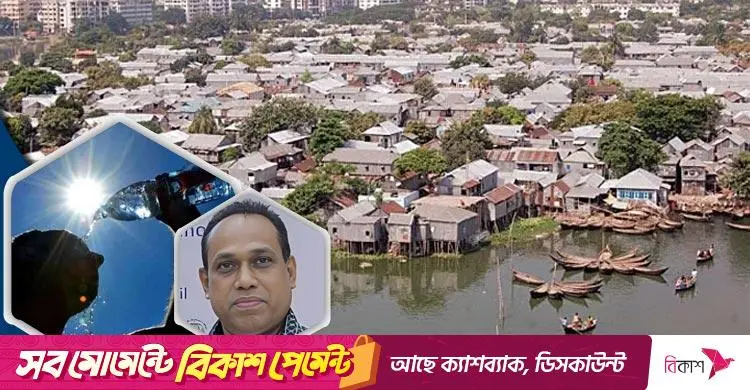
As a result of climate change and natural disasters, the world's cities face a growing environmental crisis. According to global statistics, about 58% of the world's people now live in cities, a share expected to reach 70% by 2050. Yet these same cities use 75% of global energy and produce more than 70% of carbon emissions.
Cities are exposed at once to the effects of climate change and to disaster risks such as heatwaves, air pollution, extreme rainfall and floods. 2024, one of the hottest years on record, seriously affected life and liveability in cities. Megacities such as Dhaka face a multi-dimensional crisis from dense population, air pollution and rising temperatures, which makes the most vulnerable and marginalised people even less safe.
New horizons for solutions
The time has come to tackle the urban climate crisis and disaster risk. Scientific analysis with the help of modern research and technology is needed. Participation of all must be ensured through inclusive policymaking and good governance. Capacity should be built and education expanded, and emphasis can be placed on community-led innovation and initiatives.
The six key themes for reducing risk are:
- controlling urban heat and air pollution
- the transition to renewable energy
- building green and resilient infrastructure
- using geospatial information technology
- climate justice and social equity
- emergency response and preparedness
Local innovation, global application
According to climate and environment experts, cities are now at the centre of change. Although they suffer the most damage, they are also hubs of innovation and adaptation. Acceptable and sustainable solutions must therefore be found through cooperation between science and local communities. In Dhaka, the depth of the climate-related crisis in city life grows every day.
Against this background, Oxfam in Bangladesh and Australia's Curtin University have jointly set up the Urban Climate and Disaster Risk Reduction Centre, which aims to strengthen urban climate resilience through research, innovation and awareness. The most effective solutions often come from local people, so what is needed is adaptive, practical strategies, cross-organisational leadership and community-based design and planning.
In today's complex urban conditions, climate resilience is not a luxury; it is a matter of principle. Integrated and cooperative adaptation is the only way to make the cities of tomorrow sustainable, safe and humanely prosperous.
Source: Jagonews24. First published in Bengali on The Agro News.

Comments
(0)