
Children who take more of their calories from ultra-processed foods show a stronger reaction to pictures of food in a part of the brain tied to habit and reward, and that reaction predicted how much body fat they gained over the following year, researchers at the Keck School of Medicine of the University of Southern California (USC) have reported.
The study, published on 23 October in the peer-reviewed journal JAMA Network Open, followed 46 children aged 7 to 10 who were all at a healthy weight when they joined the long-running BrainChild project. Each child had a functional MRI scan while looking at pictures of appetising foods, and body mass index, body fat and waist size were measured again a year later.
Ultra-processed products, classified under the NOVA system that groups foods by their degree of processing, supplied on average 67.7% of the children's daily calories. Higher intake went with a stronger response in the dorsal striatum, a region involved in forming habits and linking cues with rewards. The ventral striatum, more closely tied to pleasure, showed no statistically significant link.
A stronger dorsal striatum response at the start predicted larger gains in BMI and body fat over 12 months. When the researchers accounted for that brain activity, the association between ultra-processed food intake and BMI gain weakened by 31%, and the association with body fat gain by 44%, which suggests sensitivity to food cues may be one route between diet and weight gain.
The authors are careful about the limits. The study is observational and shows associations, not cause and effect; the sample is small; and one year of follow-up is too short to show whether the pattern lasts into adolescence. The senior author is Kathleen A. Page, professor of medicine and pediatrics at Keck, and the first author is Jasmin M. Alves. The work was funded by the American Diabetes Association and the US National Institutes of Health.
The findings feed a wider debate on ultra-processed foods, most of which are built from a few commodity crops, chiefly corn, wheat, soybeans and sugar crops, refined into flours, syrups, starches and oils before they are formulated into snacks, cereals, soft drinks and ready meals.
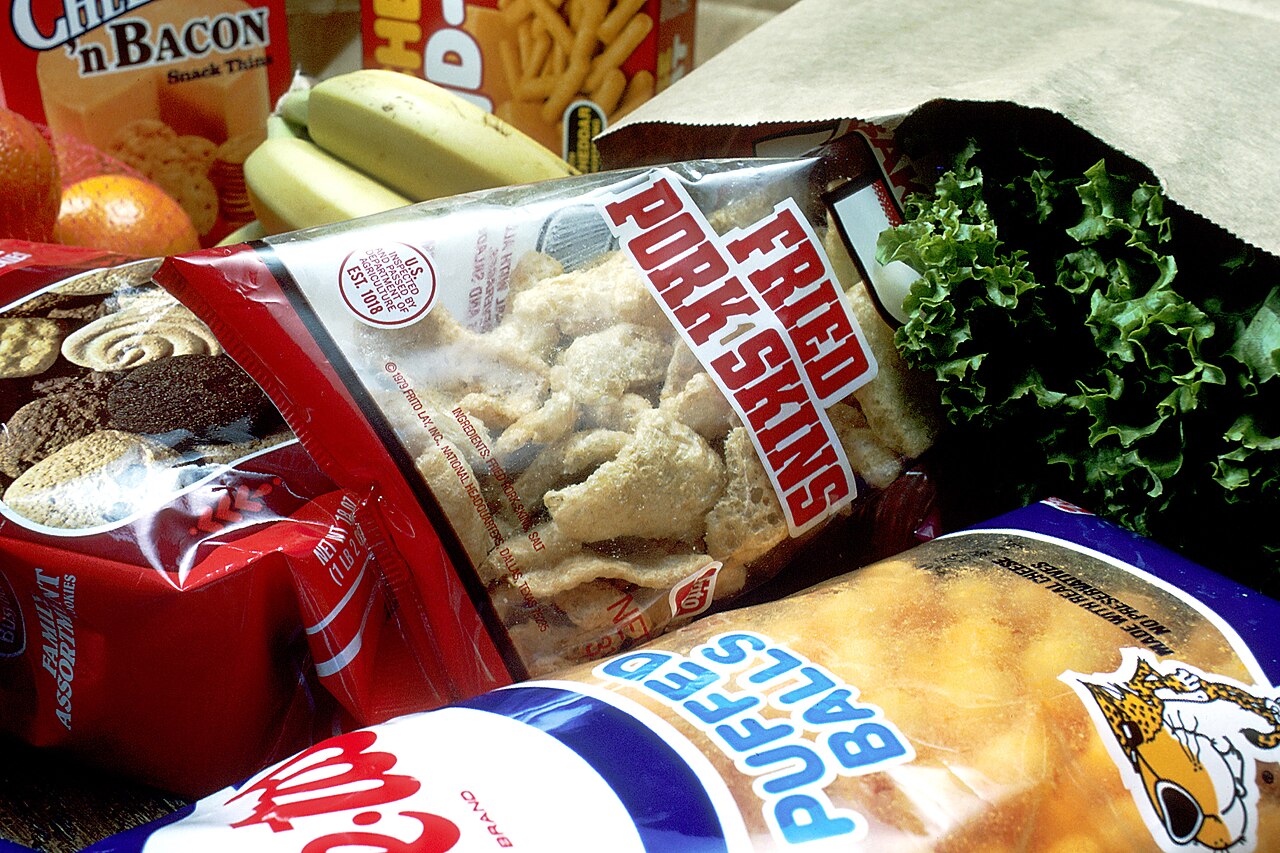
Photo: Bill Branson / Wikimedia Commons (Public domain)
Source: Global Agriculture




Comments
(0)