
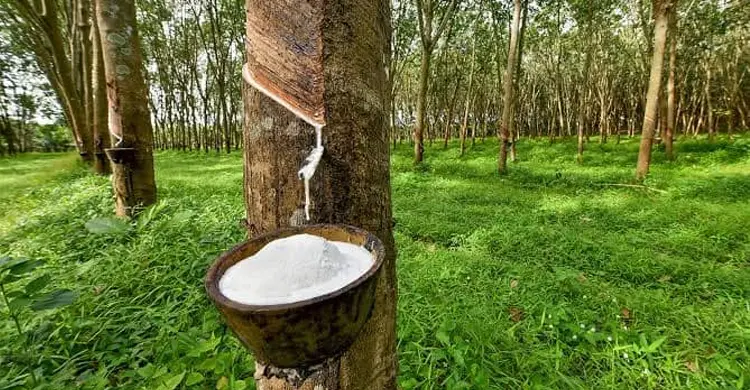
Tripura was once famous across India for rubber farming, but the state is now in distress. To make a living, farmers are having to leave rubber and turn to other crops. Most farmers in South Tripura district never imagined the picture would change so fast. Mainly because rubber prices have kept falling day after day, farmers no longer show any interest in it.
Tripura was once second only to Kerala in southern India in rubber production, and about half of the state's rubber came from South Tripura district. According to the figures, 90 per cent of India's rubber is produced in Kerala, followed by nine per cent in the north-eastern state of Tripura, especially South Tripura district.
But with prices falling steadily for about three years, farmers no longer find rubber profitable and are turning instead to crops such as rice and wheat. Farmers say rubber prices have almost halved in three years, while labour and other costs have doubled.
Wages up, latex prices down
Several people involved in rubber farming in the Mirza area of South Tripura said that workers employed for everything from nurseries and plantations to tapping used to be paid around 100 to 150 rupees. Three years on, the minimum wage is now 300 rupees, and the cost cannot be recovered by selling latex.
A kg of latex now sells for about 130 rupees in Tripura's markets. After other costs, rubber farmers can barely make ends meet, and because they cannot pay the wages demanded, they cannot find workers either. As a result, interest in rubber is fading.
Dulal Das has rubber plantations covering more than 25 acres near Mirza Bazar, a remote part of the district. For a long time rubber was his only source of income, but even he no longer thinks it profitable. He said small plantation owners are no longer keen on rubber because prices in the country have fallen so far, and he is certain that unless prices rise, people will lose interest even faster.
Turning to rice and vegetables
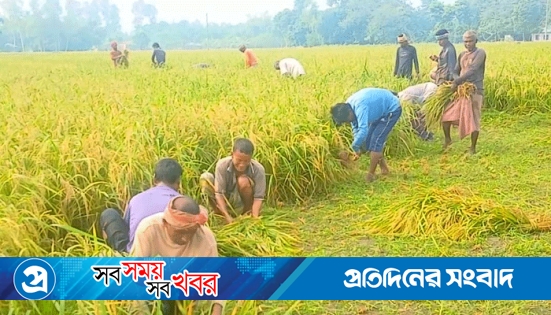
Shamukchhara village lies about five kilometres south of Mirza. With spring following the end of winter, most people there involved in rubber farming have become busy growing other crops on their own land, planting rice seedlings in each other's fields by turns almost every day.
Four women farmers growing boro, Suniti Riang, Piyali Das, Sabita Das and Archana Ghosh, said: "Each of us is getting a wage of 400 rupees for planting new rice seedlings. Often we plant seedlings in each other's fields by turns. Planting rice or growing other crops now pays more than rubber."
They said: "We were once involved in rubber farming ourselves, but because we did not get enough wages, we had to turn to other work." They argue that vegetable prices in most of the state's markets are now sky-high, so they grow vegetables when they can. After dusk, most farmers in the area sit in various markets selling vegetables, and everyone's income is improving.
Reported by the Tripura correspondent.
Source: Jagonews24. First published in Bengali on The Agro News.
Comments
(0)