
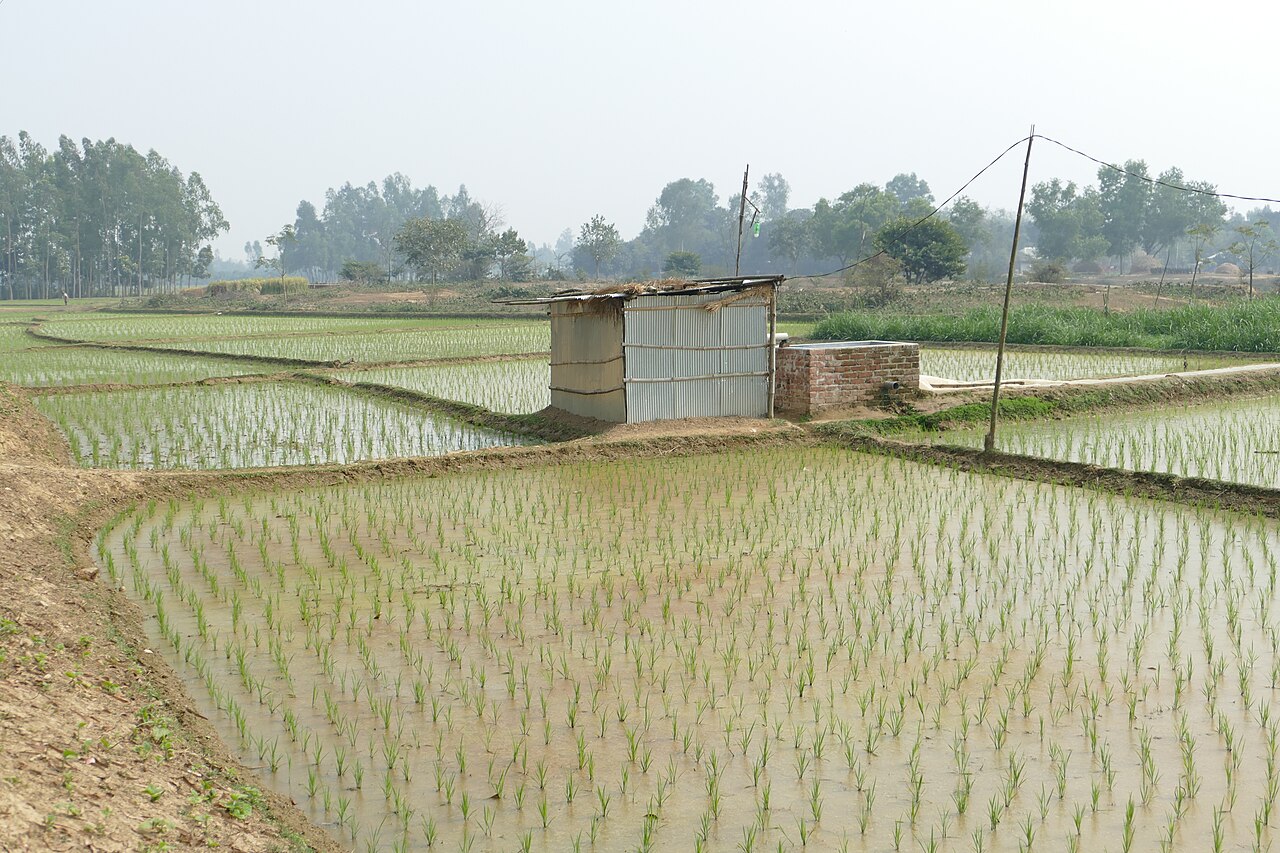
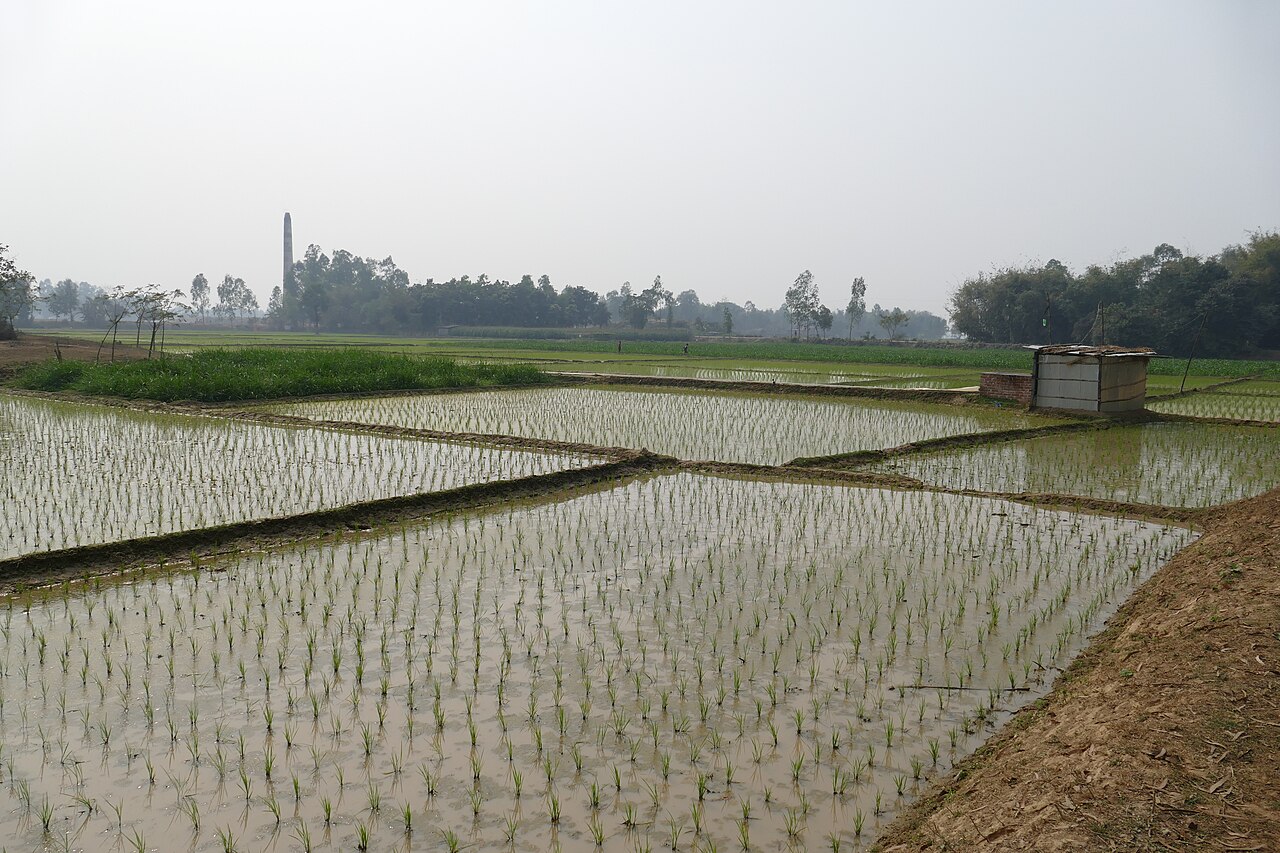
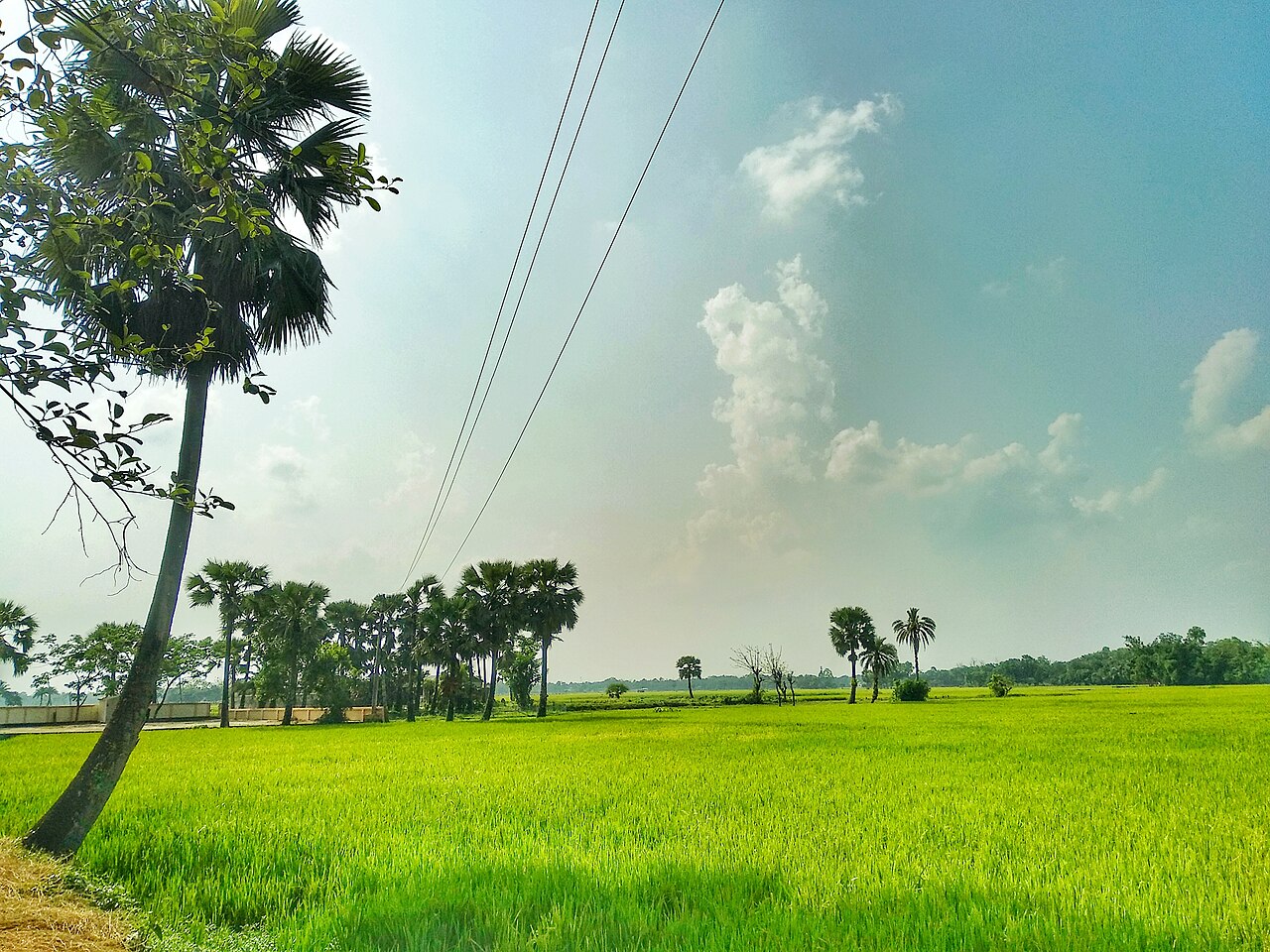
Thakurgaon's wide fields were a sea of golden paddy in early November 2025, and farmers in the northwestern district were pleased with a good aman yield. Behind the satisfaction, though, lay a quiet worry. On 8 November 2025 farmers in several upazilas told Jagonews24 that although the crop was good, the price of paddy in the local markets was too low to cover the cost of growing it, and they said they were disappointed at not getting a fair return. The district's agriculture office agreed that the yield was better than the year before, and said prices could rise somewhat once the government fixed its purchase price for paddy. At that point only about a tenth of the district's aman land had been harvested.
A good harvest overshadowed by prices
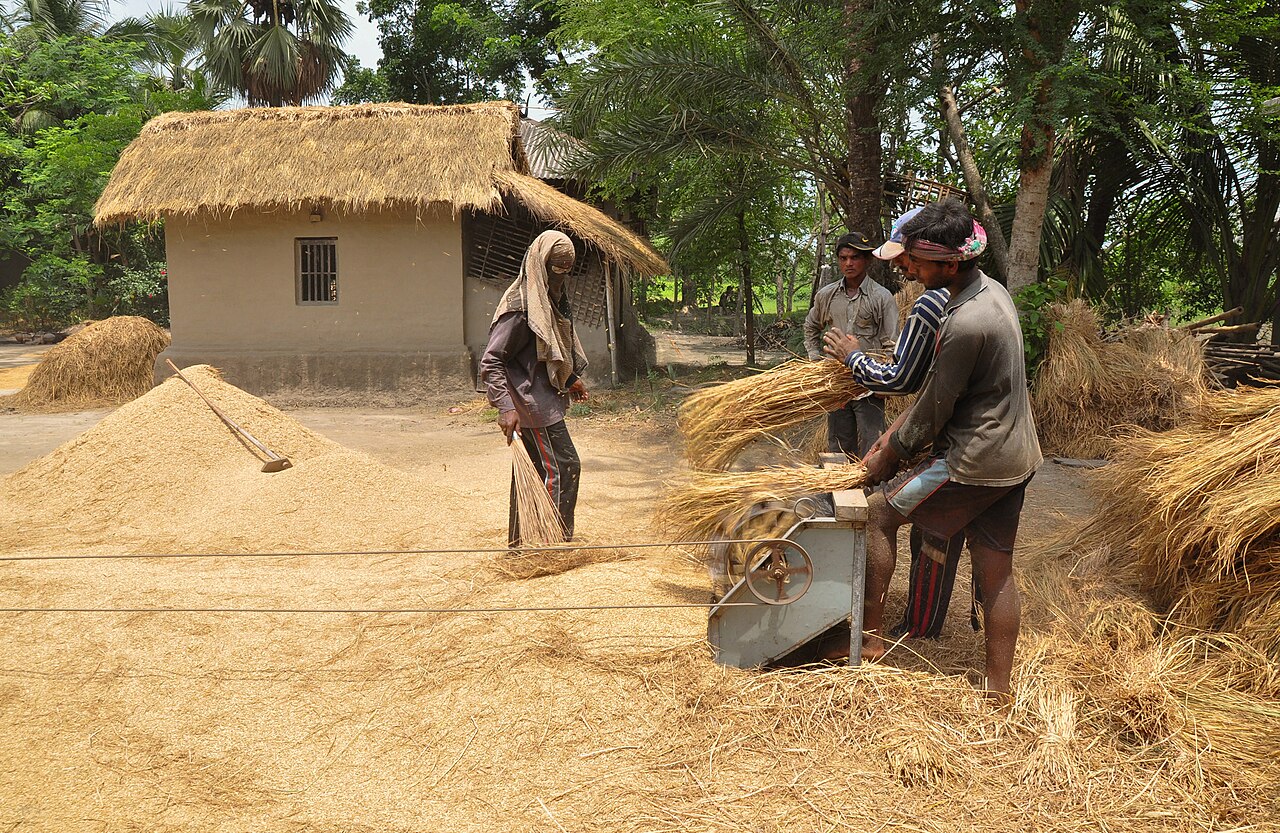
A tour of several upazilas of the district found farmers busy in the fields. Some were carrying paddy home on their shoulders, others were threshing it and turning it into rice. Yet because the market price of paddy was low compared with the cost of production, the farmers said, they were not seeing a profit.
Local farmers Shuvo, Ripon Ali, Ibrahim and Abul Hossain said that a bigha of 50 decimals had yielded 30 to 35 maunds of paddy this season. Production costs, which they listed as fertiliser, seed, labour, land lease and transport, came to about Tk 30,000 to Tk 35,000 per bigha. On the market, meanwhile, a two-maund sack of paddy was selling for Tk 2,200 to Tk 2,400, which, they said, did not even cover their costs.
They said the yield had been good but there was no price. If they could get Tk 3,000 a sack, there would be some profit. If the government fixed a fair price and bought paddy, they said, farmers would be able to survive on at least a minimum margin. The figures for yield, cost and price are the farmers' own, as they gave them to the reporter.
What the agriculture department said
Md Majedul Islam, deputy director of the Department of Agricultural Extension (DAE) in Thakurgaon, said paddy yields in the district were better this year than last year. Although prices in the market fluctuated somewhat, he said, farmers would be able to make up the loss through the next crop. Prices were also expected to rise somewhat once the government fixed the price of paddy.
According to the agriculture department, aman paddy had been grown on 1 lakh 37 thousand hectares of land in Thakurgaon district this season, and the production target had been set at 4 lakh 88 thousand tonnes of rice. About 10 percent of the land had already been harvested.
The department's figures had been reported in similar terms through the season. On 5 October 2025 DAE data cited by Ajker Patrika put the district's aman area at 1 lakh 37 thousand 300 hectares, alongside a target of 7,500 hectares of winter vegetables, of which about 200 hectares of early vegetables had been sown. At the end of October, DAE figures reported by Ajker Patrika and Jugantor gave the area as 1 lakh 37 thousand 290 hectares.
At upazila level, the Haripur agriculture office told the daily Karatoa in September 2025 that aman had been planted on 16,435 hectares, against 16,430 hectares the year before. Of this, the upazila agriculture officer said, hybrid aman of six varieties covered 2,100 hectares and high-yielding transplanted aman of 18 varieties covered 14,335 hectares. The paper noted that hybrid and high-yielding varieties give a good yield in a short time and leave the land free for potato, wheat or maize after the harvest, and a farmer who had planted two bighas with the BINA-17 variety said he planned to follow it with potato or maize.
A season tested by rain
The good yield came despite two spells of untimely rain in the weeks before the harvest. In early October 2025, three days of continuous rain left ripening aman flattened in water in several upazilas. DAE figures cited by Ajker Patrika on 5 October recorded 32.60 millimetres of rain in the district over three days. The DAE's additional deputy director in Thakurgaon told the paper that such continuous rain had not been seen at that time of year for several years, that waterlogging had caused some damage to aman and winter vegetables, and that the quality of paddy that had begun to ripen was suffering. He said the department was advising farmers to drain the water from their fields quickly, cutting channels where needed.
At the end of October, two days of rain and gusty wind brought by a depression over the Bay of Bengal flattened half-ripe aman across the district's five upazilas, Jugantor reported on 31 October. The district DAE said that by then paddy on 30 hectares in Sadar upazila alone had been flattened, while losses in the other upazilas were still being assessed; a day earlier Ajker Patrika had reported 18 hectares in Sadar. A farmer in the Kachubari area who had planted four acres told both papers he feared his yield could be halved, and a farmer from the Akhanagar area told Jugantor he had not got a good price for his paddy the year before.
Deputy director Majedul Islam told the papers that the department was advising farmers to gather the flattened plants and tie them into bundles, which would reduce the loss somewhat, and that the extent of the damage was being worked out. The same method had been used in the district a year earlier. In October 2024, when Cyclone Dana brought rain and gusts to Thakurgaon, the DAE's additional deputy director explained to Prothom Alo that the method, which he called 'lodging up' and which farmers call 'hura bandha', means gathering four or five fallen hills of paddy and tying them together with one of their own leaves so that they stand upright and do not lean in the wind. He said fallen plants lying in standing water can rot, that disease can spread to the panicles and that insect attacks increase at that stage.
Aman, the monsoon rice crop
Rice is grown in Bangladesh in three seasons, aus, aman and boro. Banglapedia, the national encyclopedia, gives the usual harvest times as July to August for aus, November to December for broadcast aman, November to January for transplanted aman, April to May for local boro and May to June for high-yielding boro. Transplanted aman is the most important of these and is grown throughout the country, while broadcast aman is grown mostly in the south and southeast.
Banglapedia records that in 2009-10 transplanted aman occupied about 46 percent of the country's rice land, with boro at 41 percent, aus at 9 percent and broadcast aman at 4 percent. Aman led all seasons by area, while boro led in production. Its table for that year shows total aman production of about 12.2 million tonnes.
Aman is the rain-fed monsoon crop. In its Grain and Feed Update of 25 August 2025, the U.S. Department of Agriculture's office in Dhaka reported that many farmers in the north of Bangladesh began transplanting aman at the beginning of July 2025 and that more than 80 percent of transplanting in that region was complete by the second week of August. In the south, it said, farmers typically start transplanting in early August and finish by the end of the month.
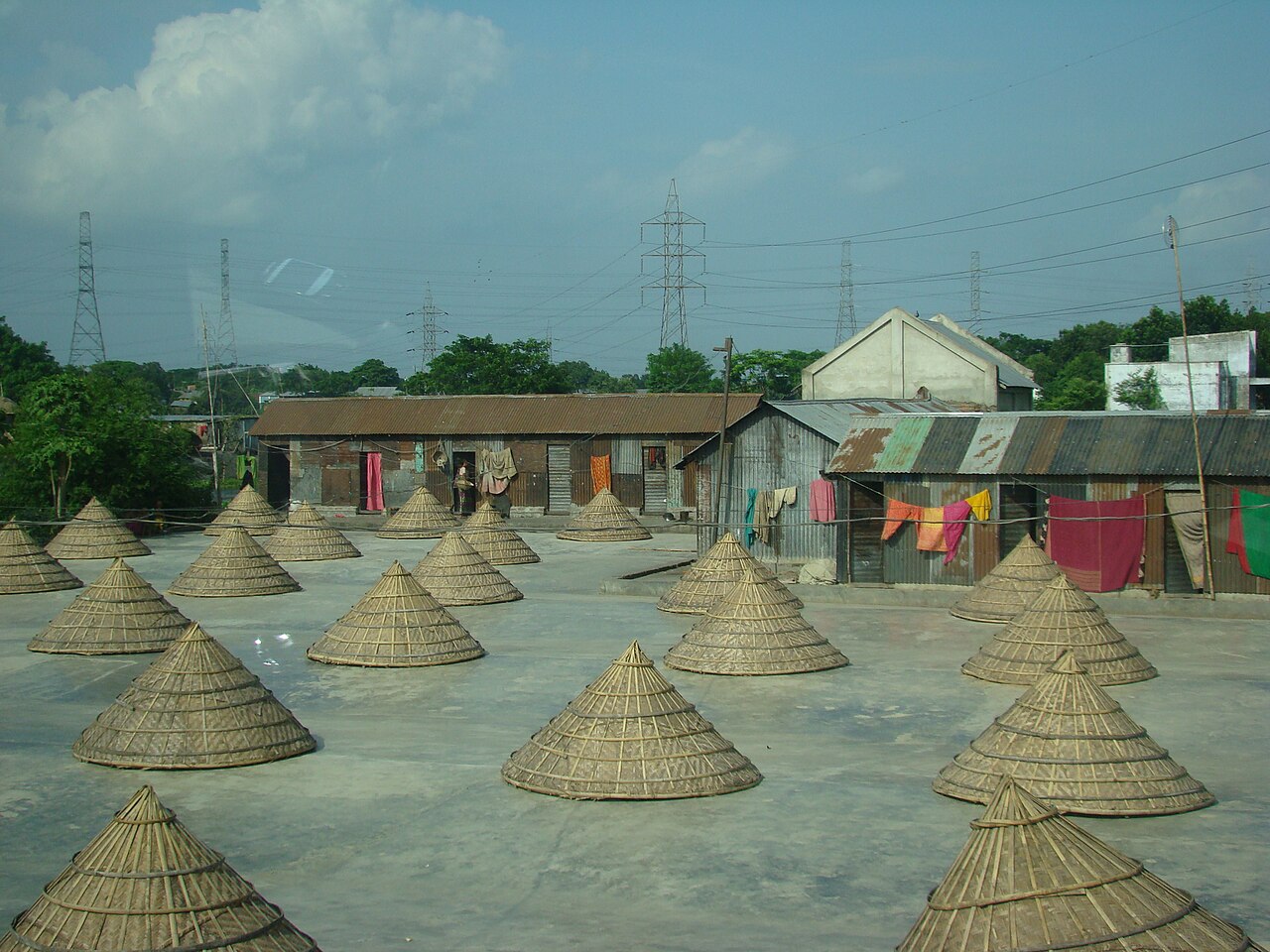
What happens after the harvest matters to the farmer's return. Banglapedia notes that freshly harvested rice has a moisture content of 20 percent or more and must be dried before storage: at 14 percent it can be stored safely for two to three months, and for longer storage it should be dried to about 12 percent. Among the purposes of storage it lists taking advantage of higher prices offered by traders. It also records that traditional and inefficient harvesting, threshing, drying, storage and processing cause a post-harvest loss of about 13 percent of the grain, estimated at about 3.51 million tonnes a year. In the aman season, it adds, traditional threshing is still widely practised, and the gap between the first and second stages of threshing can stretch up to three months because the weather is cool and dry.
The national aman picture in 2025
Thakurgaon's good yield matched the national outlook. On 20 October 2025 The Daily Star reported that farmers had transplanted aman on 59.28 lakh hectares that season, 6 percent more than the year before, according to a preliminary DAE estimate. Farmers and agriculturists told the paper that repeated floods had hit the previous year's aman, while in 2025 there had been no major flood and regular rainfall had supported the crop. A director of the DAE's field services wing said the crop looked excellent and a good harvest was expected.
The director general of the Bangladesh Rice Research Institute (BRRI) told the paper that 11 lakh tonnes of rice had been lost the previous year to floods and bad weather, and that because the weather had been favourable, with rain when the crop needed it and no terminal drought, overall production was expected to be higher than the year before. The Bangladesh Bureau of Statistics (BBS) had estimated aman production in fiscal year 2024-25 at 1.65 crore tonnes, nearly one percent below the previous year, and aman accounts for about 40 percent of the country's annual rice crop.
In July 2025 The Financial Express, citing BBS data, reported that aman production in FY2024-25 reached 16.5 million tonnes, just below the 16.6 million tonnes of FY2023-24, even though more than 350,000 hectares were inundated by floods and only 30,000 hectares were replanted. Average yield rose to 2.95 tonnes per hectare from 2.81 tonnes, and the DAE director general said the gain in yield had made up for a fall of 100,000 hectares in the area farmed. The USDA's August 2025 update forecast aman harvested area for 2025-26 at 5.8 million hectares and milled production at 14.7 million tonnes, on its own estimates based on DAE data.
Nearby northern districts were already harvesting. The Daily Star reported that farmers in char areas along rivers such as the Brahmaputra and Teesta had begun cutting aman in October, and a DAE additional director for the Rangpur region said the mainland harvest there would begin in the first week of November.
Prices in the shops and at the farm gate
The farmers' complaint came at a time of high rice prices for consumers. The USDA reported that according to the Trading Corporation of Bangladesh (TCB), the average retail price of coarse rice reached Tk 57.5 a kilogram in July 2025, the highest in the country's history, and that fine non-aromatic rice reached Tk 80. It attributed the rise mainly to higher paddy production and milling costs, inflation and an inefficient supply chain with many market actors. On 20 October 2025 The Daily Star, citing TCB data, reported coarse rice selling at Tk 55 to Tk 60 a kilogram in Dhaka, up 9.5 percent from a year earlier, and said the Bangladesh Trade and Tariff Commission had named higher production costs as a major reason.
Farm-gate prices for new paddy varied from place to place. In the neighbouring Rangpur agricultural region, where short-duration aman was harvested first, farmers told BSS on 4 October 2025 that new aman paddy was fetching Tk 1,200 to Tk 1,250 a maund, and in late October farmers in Rangpur told New Age they were getting Tk 1,250 to Tk 1,300 a maund. The Daily Star noted that a maund is about 40 kilograms. In Thakurgaon, the farmers quoted in the Jagonews24 report gave their price per two-maund sack, as above.
Low farm prices were not limited to paddy in the district that week. On 4 November 2025 Dhaka Post reported that vegetable growers in Thakurgaon were disappointed at the prices they were getting, even though, by the DAE deputy director's account, some 20 to 25 trucks of vegetables left the district for Dhaka every day. DAE figures cited by the paper put the district's vegetable area that year at 4,255 hectares. The deputy director said farmers had earlier got good prices and were now getting somewhat less, but were still in profit.
How government paddy procurement works
The farmers' central request was for the government to fix a fair price and buy paddy. The USDA describes the system: the government usually buys rice and paddy to build up its stocks after the aman and boro harvests, collecting rice from pre-contracted rice mills across the country and buying paddy directly from farmers. Prices and targets for each season are set by the Food Planning and Monitoring Committee (FPMC).
For the 2024-25 aman season, the FPMC decided on 6 November 2024 to buy 3.5 lakh tonnes of paddy at Tk 33 a kilogram, 5.5 lakh tonnes of parboiled rice at Tk 47 and 1 lakh tonnes of atap (non-parboiled) rice at Tk 46, a total of 10 lakh tonnes, the Dhaka Tribune reported. The paddy and parboiled rice drive was to run from 17 November 2024 to 28 February 2025, and the atap rice drive until 3 March 2025. The Daily Star reported that farmers would receive the Tk 33 rate if their paddy met specific standards for delivery to state warehouses, a 10 percent rise on the previous rate.
For the boro harvest of 2025, the USDA reported, the government set targets of 350,000 tonnes of paddy at Tk 36 a kilogram, 1.4 million tonnes of parboiled rice at Tk 49 and 35,000 tonnes of non-parboiled rice at Tk 48. By 13 August 2025 it had procured 376,942 tonnes of paddy, about 22 percent above the target, and by the end of July 2025 rice stocks in government granaries stood at 1.86 million tonnes, the highest since January 2022.
When the Thakurgaon report was published on 8 November 2025, the purchase price for the new aman harvest had not yet been announced. That is why the farmers were asking the government to set a fair price, and why the deputy director said prices could rise somewhat once it did.
Thakurgaon, a farming district of the north
Thakurgaon lies in the far northwest of Bangladesh, in Rangpur division. Banglapedia records its area as 1,781.74 square kilometres and says it is bounded by Panchagarh district to the north, Panchagarh and Dinajpur to the east, and India's West Bengal to the south and west. Thakurgaon subdivision was established in 1860 under Dinajpur district and became a district in 1984.
The district has five upazilas: Thakurgaon Sadar, Pirganj, Baliadangi, Ranisankail and Haripur. It has 3 municipalities, 51 unions and 641 villages, and the 2011 census counted 1,390,042 people, with an average literacy rate of 48.7 percent. Its main rivers are the Tangon, Nagar, Kulik, Tirnai and Pathari, and Katchna Beel is a notable wetland.
Farming dominates the local economy. Banglapedia, drawing on the 2011 census, puts agriculture's share of the district's main sources of income at 76.74 percent, against 9.05 percent for commerce. In Thakurgaon Sadar it lists the main crops as paddy, wheat, potato, sugarcane, pulses, mustard and vegetables, and records aus paddy, barley and jute as extinct or nearly extinct crops. The same entry lists rice mills, husking mills, a sugar mill and cold storages among the upazila's manufactories, and records 42.84 percent of the upazila's people as landless in terms of agricultural land.
Bigha, maund and the farmer's reckoning
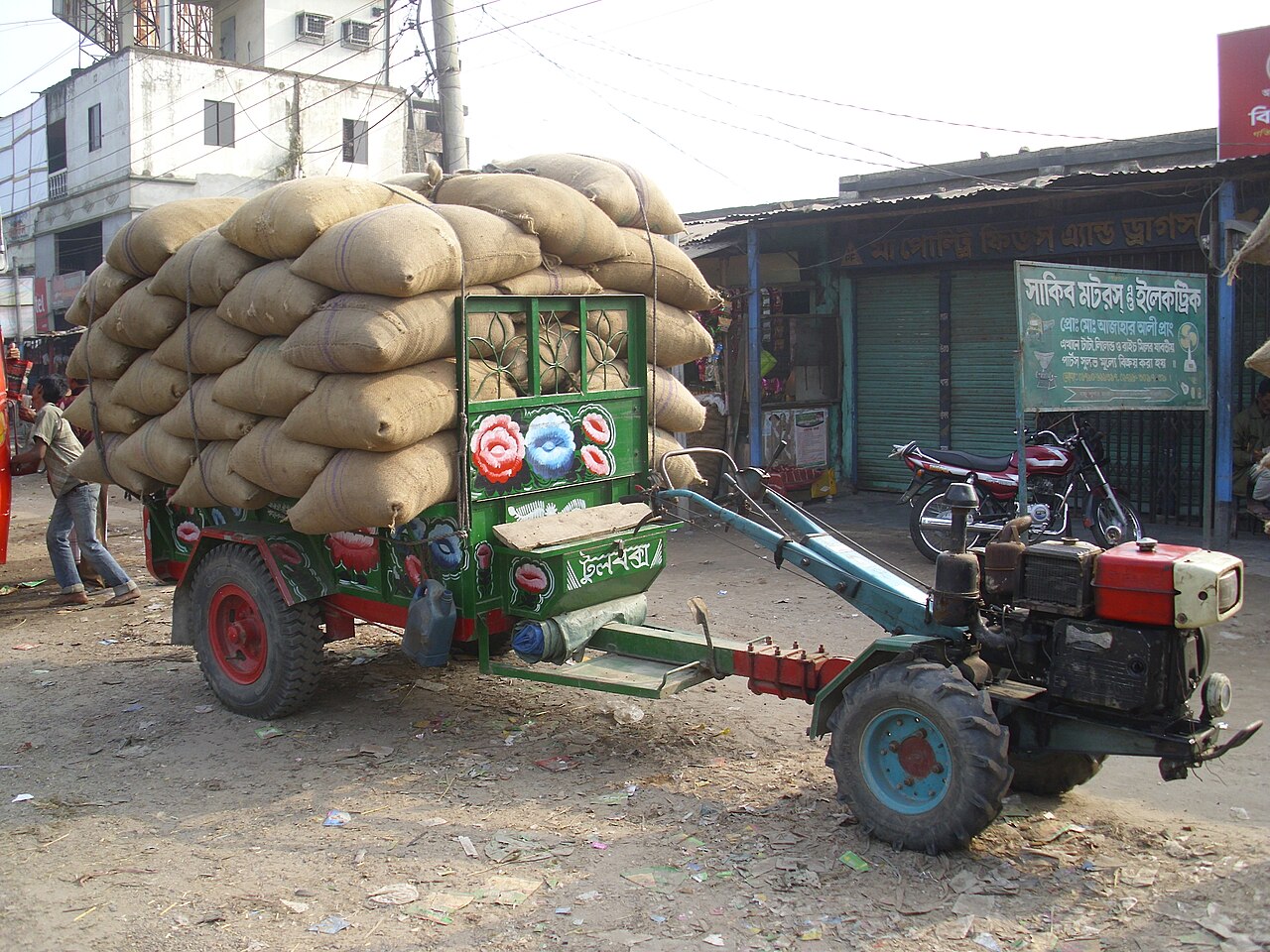
The farmers in the report measured their land in bighas and their paddy in maunds, the traditional units of rural Bangladesh. A maund is about 40 kilograms. The size of a bigha differs from region to region, which is why the Thakurgaon farmers specified that they meant a bigha of 50 decimals. Their sacks held two maunds each, and the price they quoted was for the whole sack.
Paddy is not the only return from an aman field. Farmers in the Rangpur region told BSS in October 2025 that the straw from one bigha was selling locally for Tk 5,000 to Tk 6,000 as livestock feed, giving them extra income. Many northern farmers also plant short-duration varieties so that a winter crop can follow. Rangpur farmers told New Age they mostly grew varieties such as BRRI dhan 90, BRRI dhan 95, BRRI dhan 75, BRRI dhan 71, BINA dhan 17 and BINA dhan 16, along with hybrids. DAE officials told BSS that expanded cultivation of short-duration aman was launched in 2006 to create work for farm labourers in 'monga', the seasonal lean period of the Bengali months of Ashwin and Kartik, and a former chief scientific officer of BRRI told the agency that large-scale cultivation of these varieties had eliminated that lean period in the region since 2010.
The BRRI dhan varieties come from the Bangladesh Rice Research Institute, which was established in 1970 at Gazipur, 36 kilometres from Dhaka, to carry out research on rice. Banglapedia records that it had developed 57 high-yielding varieties by the time of its entry and holds about 5,000 rice germplasms in its gene bank. With good seed, favourable weather and timely care, the Thakurgaon fields had delivered the crop. What the farmers were waiting for on 8 November 2025 was a price that would let them recover what it had cost to grow it.
Photo: Kritzolina / Wikimedia Commons (CC BY-SA 4.0)
Sources: Jagonews24, Ajker Patrika, Jugantor, Prothom Alo, Daily Karatoa, Dhaka Post, The Daily Star, The Financial Express, Dhaka Tribune, New Age, BSS, USDA Foreign Agricultural Service, Banglapedia
Comments
(0)